
3 Public Safety Communications Measures Clear House Committee With Bipartisanship
All 10 bills passed out of the markup, but measures addressing permitting reform only passed on party-line votes.

Eric Urbach
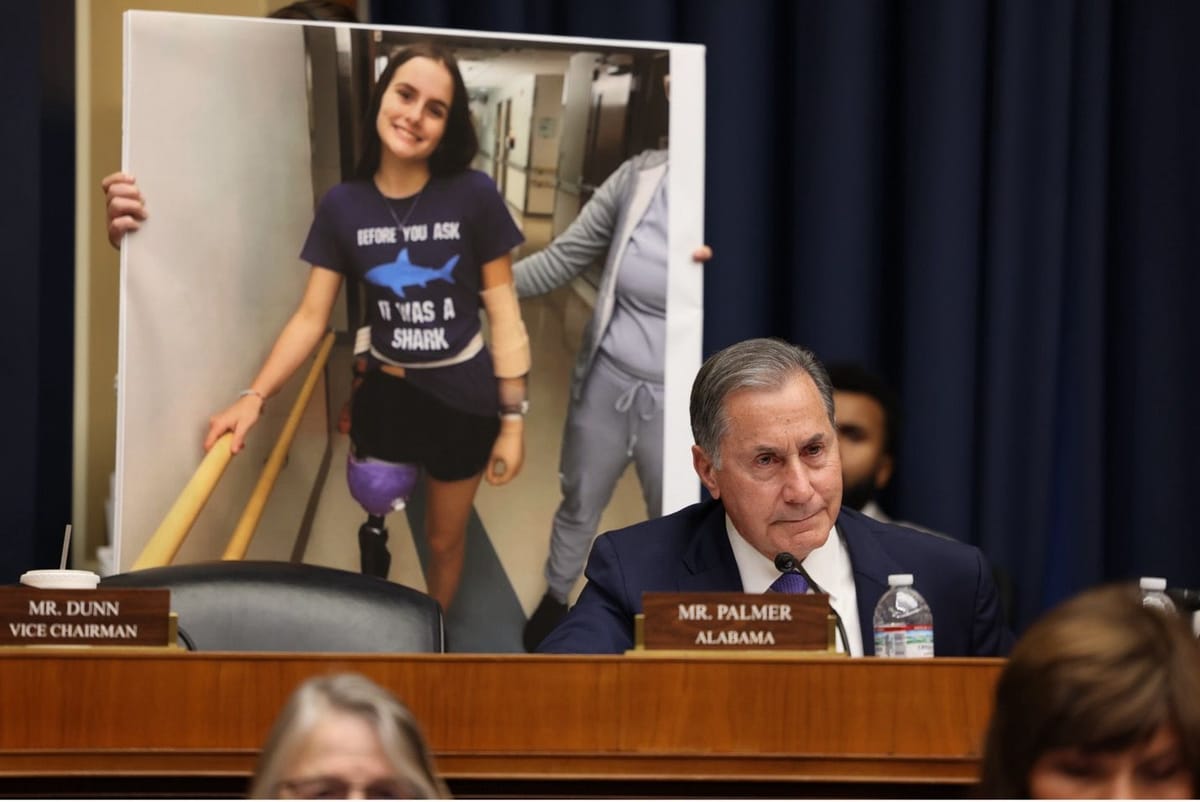
WASHINGTON, Jan. 21, 2025 – Bills designed to strengthen Federal Communications Commission reporting requirements, protect 911 systems from outages, and treat shark attacks as emergency events for wireless transmission purposes passed the House Energy and Commerce Committee Wednesday.
While there was bipartisan support for the three FCC related bills, bills addressing energy permitting remained a contentious topic and did not receive bipartisan support.
“An emergency can happen anywhere at any time, and it's in those moments that every second counts,” said Rep. Doris Matsui, D-Calif., speaking about the Emergency Reporting Act. “This [bill] is about reliable connectivity that saves lives.”
The measure would require the FCC to “issue reports after activation of the Disaster Information Reporting System and to make improvements to network outage reporting,” according to the bill’s text.
Matsui, a co-sponsor on the legislation, highlighted that 911 system outages are under-reported and that Congress often does not get clear answers about why communications fail, why they fail or how they are being prevented from happening again.
The bill aims to have the FCC produce better emergency reports, increase resilience and address the transparency gaps, said Matsui.
In his comments supporting “Lulu’s Law,” Rep. Gary Palmer, R-Ala., mentioned that the bill's namesake Lulu Gribbon, was attacked by a shark in 2024 and suffered significant injuries after another shark attack occurred a mile down the beach only 90 minutes before. This bill was first introduced in the Senate and was passed in that chamber unanimously in July. It would order the FCC to raise shark attacks to the level of a “Wireless Emergency Alert-eligible event.”
“One of our top priorities in congress should be keeping Americans safe,” Palmer said. H.R. 2076 “would enable authorities to quickly deploy wireless emergency alerts to the public if someone is attacked by a shark or conditions present for a shark attack are present nearby,” he said.
Kari’s Law sequel
The third FCC-related bill, the “Kari’s Law Reporting Act” would require the FCC to “publish a report on implementation of the Kari’s Law Act” within 180 days of being signed into law, according to the bill.
The Kari’s Law act, passed in 2018, requires multi-lined telephone systems to allow direct dialing of 911, without needing to dial an extra digit for an outside line, after Kari Hunt, a young woman whose mother died in a hotel room, couldn’t dial 911 from a hotel phone.
This “bill requires the FCC to report on compliance so we can ensure that hotels, offices and other facilities are meeting the law’s intent,” said Matsui. “This is about modernizing 911, improving public safety and saving lives”.
“It’s a good common sense bill, and I appreciate all the support we can get,” said Rep. Gus Bilirakis, R-Fla. “Let’s make it unanimous!”
Partisan battle over energy permitting
Despite the bipartisan nature of the FCC votes, the bills aimed at changing permitting law by amending the Clear Air Act were opposed by Democratic legislators.
One of the most thorny exchanges occurred during comments on the Air Permitting Improvements to Protect National Security Act between Palmer and Rep. Troy Carter, D-La.
The bill would amend the Clean Air Act to enable the president to waive permitting requirements “for an advanced manufacturing facility or a critical mineral facility to offset increased emissions of any air pollutant.”
Palmer argued that the nation has relied too heavily on adversarial nations for critical mineral production, and emphasized the importance of obtaining critical minerals to win the AI race against China.
Carter, who said he worried that this would establish a “pay to play” through payment of a nominal fee in lieu of reporting harmful pollution, offered an unsuccessful amendment to the bill.
On these and other energy-related matters, what the Republicans called "common sense reforms" were rebutted by the Democrats as “gifts to polluters.” All were enacted on a party-line vote
The only permitting reform bill that received bipartisan support was H.R. 2072, which “requires the Federal Energy Regulatory Commission to extend the time period during which licensees are required to commence construction of certain hydropower projects,” according to the text.
That bill passed without objection.







Member discussion