AT&T Wants Supreme Court to Find FCC Forfeiture Process Invalid

Verizon and the FCC have also asked justices to resolve a circuit split on the issue.

AT&T Wants Supreme Court to Find FCC Forfeiture Process Invalid
Photo by Stephen Talas published with permission

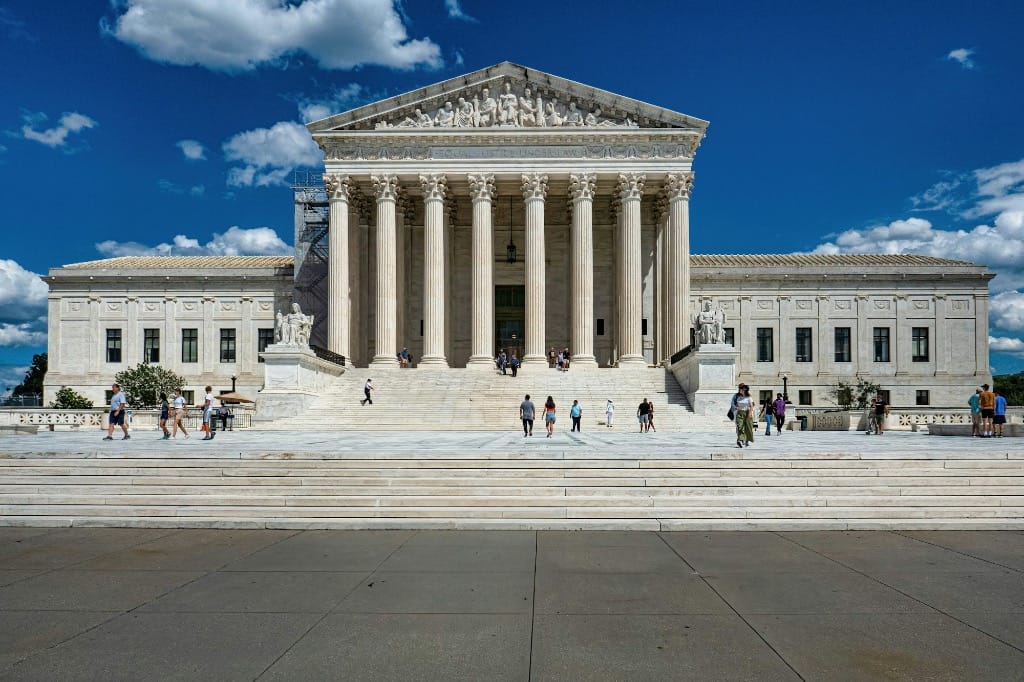
WASHINGTON, Dec. 9, 2025 – AT&T is asking the Supreme Court to resolve a split between circuit courts of appeal and find that the Federal Communications Commission’s process for issuing fines is unconstitutional.

Verizon has already asked justices to do the same, while the FCC has asked the high court to uphold its forfeiture process. Justices haven’t yet agreed to take the case, but a 2-1 circuit split on the issue makes Supreme Court review likely.

AT&T said in a Friday brief that justices should grant both the FCC and Verizon’s requests and combine the cases.

The agency had fined the three mobile carriers more than $200 million in total last year for, in the FCC’s judgement, not adequately vetting third parties before selling them customer location data. Each company appealed, citing the recent Supreme Court decision in SEC v. Jarkesy, which held that the Securities and Exchange Commission violated the Constitution by not providing a jury trial before collecting civil fines.

Judges on the Second Circuit sided against Verizon, and the D.C. Circuit ruled against T-Mobile. The conservative Fifth Circuit agreed with AT&T that carriers didn’t have a meaningful guarantee of a jury trial before paying FCC fines.

The agency’s process does allow fined entities a jury trial, provided they refuse to pay and wait for the Justice Department to bring a collection action. In practice companies almost always pay the fine in exchange for the ability to appeal the forfeiture order in federal court.

The FCC argued that was adequate because companies don’t have to pay anything until a collection action, even if they typically waive their jury trial right in pursuit of speedy appeals. 

“AT&T has a constitutional right to Article III judicial review and a constitutional

right to a jury trial when the government seeks monetary penalties. It cannot be forced to give up the latter in order to exercise the former,” the company wrote Friday. “Any purported claim of waiver of a constitutional right in such circumstances cannot be valid.”

Significant outcome of the case for the FCC

The case is significant for the FCC, as fines are one of its main enforcement mechanisms.

FCC Chairman Brendan Carr, a commissioner at the time, dissented from the fines – which came down before Jarkesy – and has said the agency should reform its enforcement process in light of the decision, but has been defending the agency’s ability to levy fines.

The agency told the Supreme Court in October that if the Fifth Circuit’s precedent stands it would have “no alternative avenue for seeking monetary penalties, seriously impairing the agency’s ability to enforce” its rules.

The FCC asked justice to overturn the Fifth Circuit case that sided with AT&T. The company maintained the decision was correct but agreed the issue had enough practical importance that justices should provide clarity.

“There is now uncertainty over the legal status of Commission forfeiture orders imposing massive civil penalties for common-law type claims,” the company wrote. “Only this Court’s definitive resolution of the question presented can ensure nationwide uniformity for all affected.”

Member discussion

Popular Tags