
Colorado, Wyoming Clear NIST Approval on BEAD Plans
June policy changes pushed deployment back by 18 months in Colorado, the state's broadband director said.

Jake Neenan
WASHINGTON, Jan. 16, 2026 – Colorado’s final spending plan under the Broadband Equity, Access, and Deployment program was recently approved by the program’s grants manager, the final step before states can sign contracts with grant winners and draw down their federal funding.
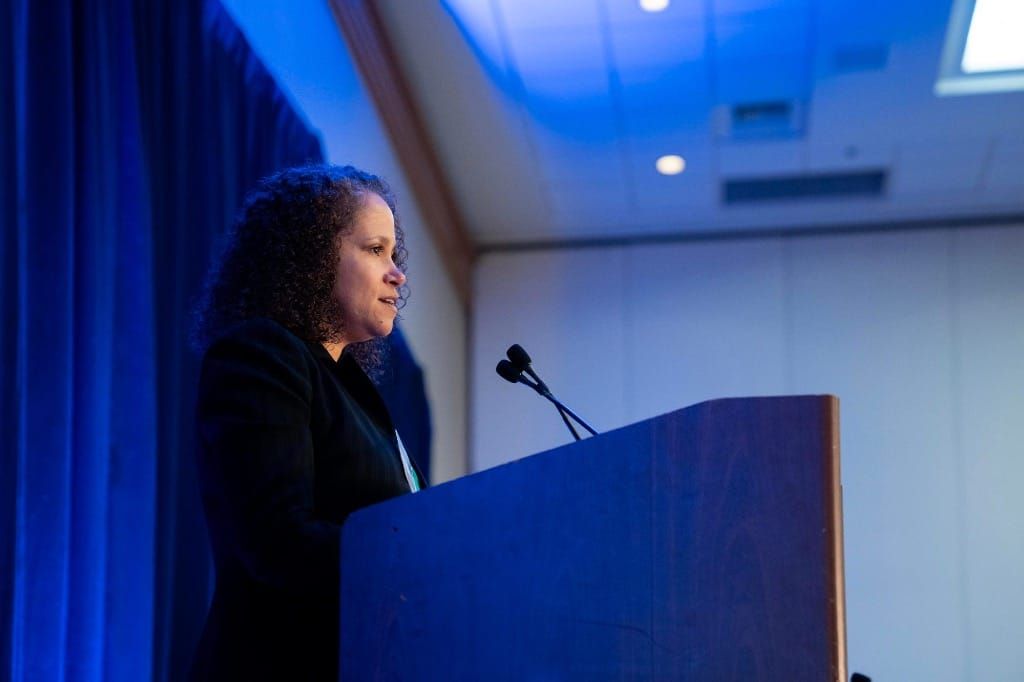
“NIST recently approved our final proposal,” Brandy Reitter, executive director of Colorado’s broadband office, said Wednesday. “So we’re off to the races this year.”
She spoke on a Fiber Broadband Association webinar. The National Institute of Standards and Technology has to sign off on state spending plans after the National Telecommunications and Information Administration, which is handling the program, gives its approval.
Wyoming also said Thursday it had cleared NIST approval. At least one other state has been given the agency’s green light since NTIA began approving plans in November: Louisiana, which said last week it had started signing grant agreements.
Reitter said Colorado had completed two rounds of bidding before the NTIA restructured the program on June 6, 2025. The unofficial results would have got fiber to 70 percent of the state’s eligible locations, she said, with fixed wireless getting the remaining 30 percent.
After rebidding under the new rules, the state is getting fiber to nearly 48 percent of its locations, with most of the rest getting low-Earth orbit satellite from Amazon’s nascent Leo service. Reitter said fixed wireless ISPs lost out in non-fiber areas because LEO providers submitted much lower bids.
Reduced spending was a chief goal of the Trump administration rule change. States that had their final spending plans approved under the Biden administration – those were revoked in June – also saw less fiber after rebidding. Most of the program’s funded locations, about two-thirds, are still in line to receive fiber.
Reitter said without rebidding, deployment under the program could have started a year and a half ago in Colorado. States had to complete additional bidding rounds and submit new plans to NTIA within 90 days.
“We were hoping at the time that it wasn’t a complete redo, but it was,” she said. “Moving anything forward in 90 days in government is really challenging to do, but we were up to the task.”
NTIA has approved spending plans from 42 of the 56 states and territories. While those plans have to go through NIST before money can flow, NIST won’t review them from a policy perspective like NTIA and the approved plans are unlikely to change significantly.
Locations getting LEO are, like all BEAD-funded locations, ineligible for future federal grants. LEO providers under the program have four years to begin offering service – the time terrestrial grante winners have to finish deployment – followed by an additional ten-year period of performance in which satellite grantees will be reimbursed, either over time or based on subscriber numbers.
Reitter said the state was figuring out how to do compliance monitoring for Amazon and SpaceX. Amazon took about 95 percent of the locations getting LEO in Colorado.
“I’ve talked to a couple of vendors that do this really well, where you can do remote sensory testing of LEO service and LEO capacity,” she said.
She said it was likely terrestrial providers would try to deploy into BEAD’s LEO areas and compete with higher speeds.
“It’s a very long period of performance, and ISPs are always innovating,” she said.
Permitting
Gary Bolton, FBA’s CEO, said the group met with NTIA earlier this week for workshops on “permitting reform, and on BEAD project completion and success milestones.”
NTIA also recently published its updated BEAD terms and conditions. As flagged by the Benton Institute for Broadband & Society, the document instructs states to assist local permitting authorities to ensure permits are processed within 90 days.
That includes by helping those agencies set up a point of contact for broadband permits, “providing deference to the construction techniques chosen by BEAD Subgrantees (without
seeking to influence those decisions), absent any identified safety concerns,” and setting up regular roundtables to identify disputes.
The agency has been working for years to streamline federal permitting for BEAD participants in an effort to avoid a bottleneck, but state and local permitting processes are a separate issue.
Broadband trade groups have been pushing both the Federal Communications Commission and Congress to preempt state and local permitting fees and impose processing shot clocks, among other things.





Member discussion