
Congress Tried Twice to Reduce Prison Phone Rates
The House’s first attempt spelled out detailed limits; the final law left those details to the FCC.

WASHINGTON, Nov. 11, 2025 – Two years before Congress directed the Federal Communications Commission to rein in the cost of prison phone calls, lawmakers in the House tried to impose their own limits on the industry.
That House effort began in 2021 when Rep. Bobby Rush, D-Ill., introduced the Martha Wright Prison Phone Justice Act. The bill sought to reform the incarcerated communications marketplace by setting interim call rates at just four to five cents per minute, explicitly banning payments telecom providers make to correctional facilities in exchange for exclusive contracts, and imposing strict limits on ancillary fees.
While House lawmakers' more prescriptive approach never made it out of committee, it paved the way for a narrower Senate version that became law on January 5, 2023, after passed by the Senate on Dec. 21, 2022, and passage by the House on Dec. 22, 2022.
The Martha Wright-Reed Just and Reasonable Communications Act, the January 2023 law, required that all prison and detention communications rates be “just and reasonable,” but left it to the FCC to decide what that means – authority the FCC has since used to revisit and scale back its own rules.
While both measures directed the FCC to set “just and reasonable” rates, they differed sharply in how much guidance Congress provided.
The FCC responded to Congress’s mandate under former FCC Chairwoman Jessica Rosenworcel, adopting rules in 2024 that advanced many of the same priorities the 2021 House bill had envisioned.
Those included an effective ban on site commissions, the payments providers make to prisons in exchange for exclusive contracts; and the elimination of ancillary fees, extra service charges imposed for administrative tasks. The rules capped audio calling rates between 6 and 12 cents per minute depending on facility size.
Just a year later, the FCC reopened many of these issues for discussion. In October under Chairman Brendan Carr, the FCC proposed raising audio rate caps to between 10 and 18 cents per minute, and signaled that it may no longer defend the site commission ban in court.
Final FCC version released Thursday proposes to keep prohibitions on site commissions and ancillary service fees
In the final version of its 2025 Incarcerated People’s Communications Services Order, released Thursday, the FCC proposed to keep the 2024 prohibitions on site commission payments and ancillary service fees in place for now, but seeks comment on whether to modify them.
“Specifically, the Commission proposes to retain the prohibition on site commission payments and seeks comment on the extent to which its adoption of an industry-wide, per-minute rate additive, either uniform or non-uniform, would eliminate any need for site commission payments,” the Order states.
“The Commission asks whether facilities could use a rate additive to recover their used and useful costs of allowing access to IPCS in lieu of, or in addition to, site commission payments. Alternatively, the Commission seeks comment on whether, if the Commission were to permanently allow providers to pay site commissions, it should cap or otherwise limit the amount or type of site commissions providers may pay,” it states.
Meanwhile, litigation in the First Circuit Court of Appeals continues to shape the debate. Prison telecom providers have urged the court and the FCC to revisit restrictions on ancillary fees, while several state correctional systems have pressed the FCC to relax or eliminate the site commission ban altogether.
In its Order issued Thursday, the FCC also sought comment on whether to retain the prohibition on ancillary service charges adopted in the 2024 IPCS Order.
“The Commission also seeks comment on whether the benefits of retaining the prohibition on separate ancillary service charges would outweigh the burdens. Further, the Commission seeks specific comment on two types of ancillary service charges—automated payment fees and third-party financial transaction fees—and asks whether they should be reinstated. Lastly, the Commission seeks comment on whether any alternatives… exist,” the Order asks.
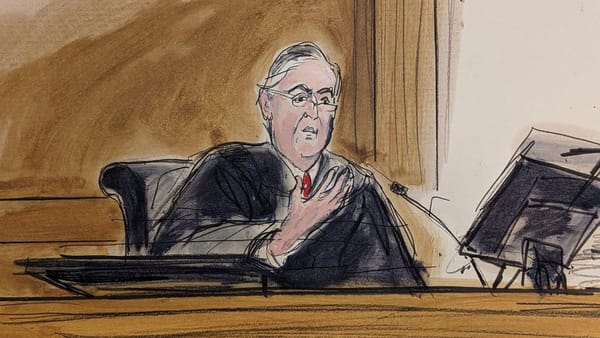
In a separate filing to the First Circuit on Thursday, the FCC reiterated its argument that the case challenging its 2024 IPCS order was now moot, since the FCC adopted new rules substantially revising the rate framework.
Bans on site commissions and ancillary service charges a central pillar of 2021 measure
The bans on site commissions and most ancillary service charges, which the FCC has reopened for public debate, were a central pillar of the 2021 House bill.
“Charges for confinement facility communications services that have been shown to be unjust and unreasonable are often a result of site commission payments that far exceed the costs incurred by the confinement facility in accommodating these services,” the 2021 bill states.
The 2021 measure also sought to outlaw per-communication or per-connection fees, along with most ancillary service charges. It would have required the FCC to reassess every two years “whether the rates and ancillary service charges authorized by [its] rules remain just and reasonable.”
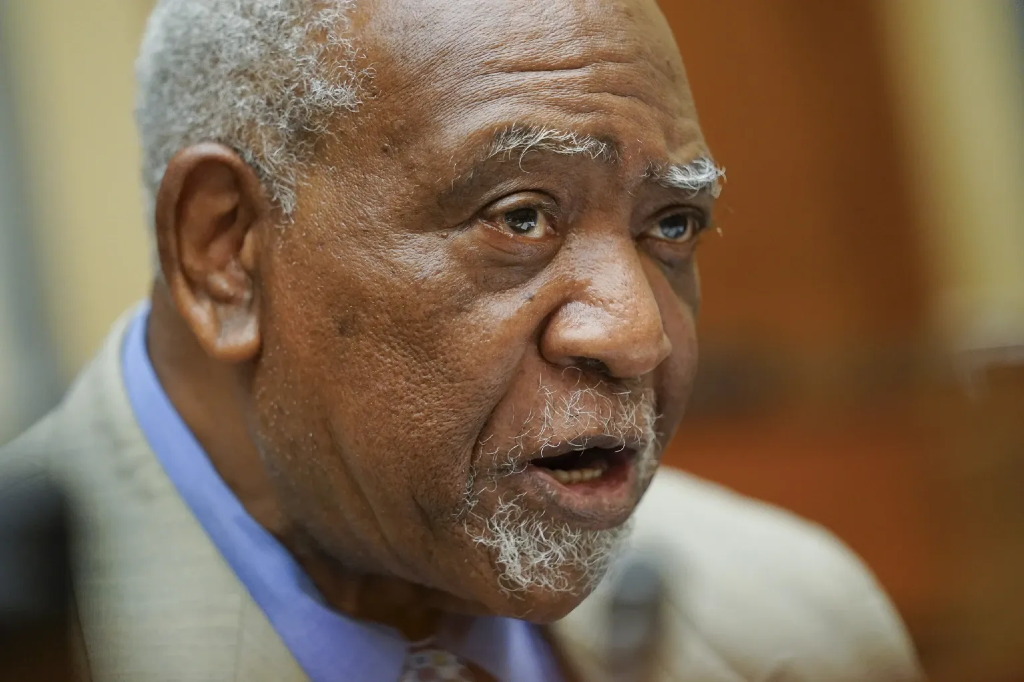
A co-sponsor of the 2021 House bill, Rep. Danny Davis, D-Ill., will join Broadband Breakfast for a live online event on Wednesday to discuss the origins of the 2021 Martha Wright Prison Phone Justice Act, as well as the future of correctional communications.
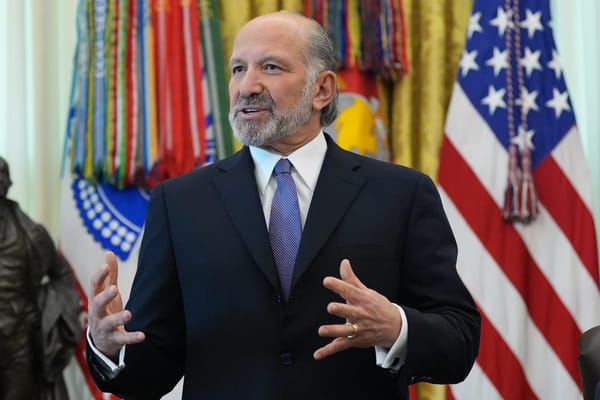
He will be joined by Tony Parker, former commissioner of the Tennessee Department of Correction, Salvatore Taillefer, partner at Blooston Law, and Kevin Elder, president of Securus Technologies. The discussion will be moderated by Drew Clark, CEO of Broadband Breakfast.
 Tony Parker


Member discussion