
Consumers’ Research Still Says Portions of Universal Service Fund Unconstitutional
The group argued that two provisions of the Telecom Act cannot stand because otherwise they would give the FCC ‘virtually unbounded authority’

Jake Neenan
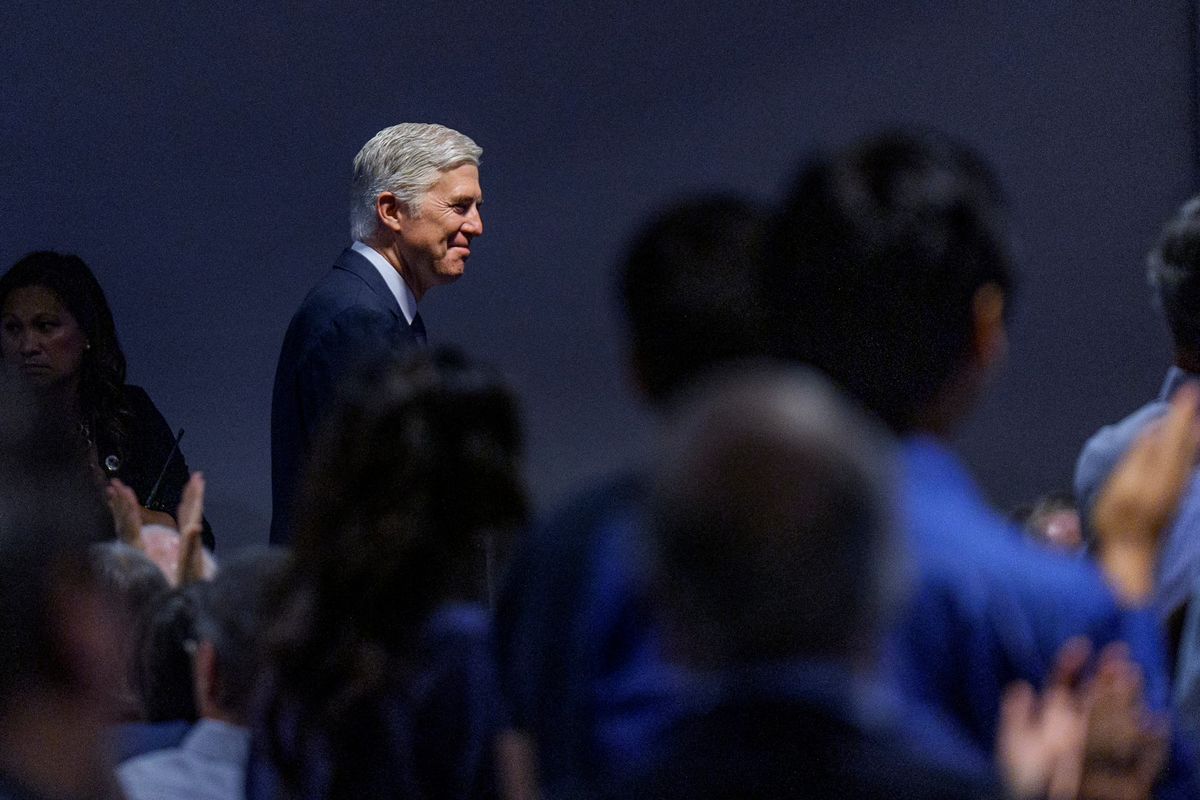
WASHINGTON, Jan. 16, 2026 – Despite the program being upheld by the Supreme Court last year, Consumers’ Research told federal judges this week parts of the law creating the $8 billion-per-year Universal Service Fund are still unconstitutional.
Those two provisions “give FCC virtually unbounded authority to raise funds for schools, libraries, and health care providers, unconstitutionally delegating to FCC the taxing power reserved to Congress by Article I” of the U.S. Constitution, the group argued in a Monday brief.
The nonprofit lost 6-3 at the high court last year after a previous challenge to the broadband subsidy. The majority said that the Telecom Act of 1996 put adequate guardrails on the Federal Communications Commission’s management of the fund and the program thus did not illegally take taxing power away from the legislature.
The program is funded by fees on interstate and international voice revenue, with the accounting work done by a nonprofit set up by the FCC for the purpose. Lawmakers are working to modernize the fund as voice revenue continues to shrink.
In its new legal challenge, Consumers’ Research is taking up arguments from the dissent, written by Justice Neil Gorsuch and joined by Justices Clarence Thomas and Samuel Alito. They argued two sections of the law not explicitly cleared by the majority opinion were unconstitutional.
Those sections allow the agency to fund “additional” and “advanced” services with USF programs that support schools, libraries, and rural health care centers. Consumers” Research is arguing that they give the FCC the ability to fund essentially whatever it likes, and assess limitless fees from telecom companies in the process.
The group filed its challenge in the Fifth Circuit, the only court to have ruled in favor of the group during its previous attempts to overturn the fund. A three-judge panel initially ruled against the group, but the full court reheared the case and, in the decision the Supreme Court overturned, ruled 9-7 that the program was unconstitutional.
Multiple entities have already intervened on the FCC’s behalf, including the Schools, Health, and Libraries Broadband Coalition and NTCA, which represent entities who participate in USF, and consumer advocates like the Benton Institute for Broadband & Society, the National Digital Inclusions Alliance, and the Center for Media Justice.
Joey Wender, SHLB’s executive director, said last year the group was “confident that we would once again prevail in court” if COnsumers’ Research pursued another challenge.
The USF contribution factor, the amount of assessable revenue telecoms will pay into the fund, is expected to be 37.6 percent for the first quarter of 2026, down from a record high of 38.1 percent.
Curtailing agency power
Consumers’ Research and others in the conservative legal movement had urged the Supreme Court to use the previous USF case to reinvigorate the nondelegation doctrine, the idea that Congress can’t delegate its powers to other entities, and make it even harder for federal agencies to issue sweeping rules.
But the Supreme Court, having already issued decisions aimed at curtailing agency power in recent years, did not have an appetite to do so.
“Many of the broader structural concerns about expansive delegations have been substantially mitigated by this Court’s recent case law in related areas – in particular (i) the Court’s rejection of so-called Chevron deference and (ii) the Court’s application of the major questions canon of statutory interpretation,” Justice Brett Kavanaugh, a conservative, wrote in a concurrence to the USF decision.
Last year, the FCC the agency voted along party lines to reverse two Biden-era decisions that allowed its E-Rate program, funded by USF, to support off-campus Wi-Fi for students and library patrons. Gorsuch had pointed to the programs in his dissent, arguing they were evidence the agency could arbitrarily expand its programs beyond the universal service goals outlined in the Telecom Act.
FCC Commissioner Olivia Trusty said her vote in favor of axing the programs was partly motivated by a desire to make those arguments less compelling.
“Staying firmly within the heartland of our authority both honors the majority’s reasoning and avoids the concerns that led the dissenters to a different conclusion,” she said.



Member discussion