
White Paper
Enterprise Wi-Fi Innovation and Future Spectrum Allocation
White Paper by ABI Research
Executive Summary
- This analysis of the enterprise market for Wi-Fi shows a sharp upward trajectory for Wi-Fi network and device demand in business environments, providing justification and urgency for retaining full use of existing unlicensed spectrum bands, as well as a need for promptly identifying more spectrum to accommodate future needs.
- Market adoption of the full 6 Gigahertz (GHz) band for Wi-Fi has been rapid, and a vast ecosystem of 6 GHz-enabled Wi-Fi devices is already in the market and growing. Annual global shipments of 6 GHz-enabled Wi-Fi chipsets soared from 200 million in 2022 to 1.1 billion in 2025, and are projected to reach 2.6 billion in 2030.
- ABI Research’s 2024 study on the state of Wi-Fi in residential markets demonstrated a robust existing and expanding household demand for the entire 6 GHz band with a corresponding skyrocketing demand for Wi-Fi devices. This highlighted the need to protect 6 GHz access and identify additional unlicensed spectrum to match residential market demand and innovation for years to come. This new study of the enterprise market and Wi-Fi shows a comparable demand curve for businesses across a wide range of industries.
- Wi-Fi devices and Access Points (APs) are increasingly equipped to access the entire 6 GHz spectrum band, and enterprises are taking full advantage of all of the channels enabled by 6 GHz, particularly in dense networking verticals described below. In fact, the upcoming Wi-Fi 8 protocol is designed, in part, to harness the potential of the full 6 GHz band by enterprises.
- Policy support for the use of the 6 GHz band on an unlicensed basis has advanced U.S. leadership in the development and deployment of innovative Wi-Fi technologies, giving U.S. businesses that adopt 6 GHz networking a competitive edge, and boosting global commercial opportunities for the U.S. Wi-Fi industry as other countries have followed U.S. spectrum decisions in whole or in part.
- Those overseas markets failing to provide access to the entire 6 GHz band will not be able to fully take advantage of the 6 GHz band’s benefits or the new capabilities of Wi-Fi 8, and will inevitably suffer from inferior Wi-Fi performance as a result.
- In-depth analysis of the U.S. economy has revealed the immense value of 6 GHz. Among its many uses, the band can help grow U.S. manufacturing capabilities to enhance healthcare delivery and widen access, improve educational outcomes, and facilitate wireless connectivity in stadiums and arenas to enhance the fan experience and build revenue.
- As an unmitigated success, U.S. policymakers should hold firm to their forward-looking vision and continue supporting the use of the full 6 GHz band for unlicensed Wi-Fi use and resist disruptive calls to partition, reallocate, or otherwise reduce the amount of spectrum available for Wi-Fi in the 6 GHz band. Marketplace demand firmly supports this position.
- To meet growing and projected demand for unlicensed spectrum, the time is now for policymakers to explore extending unlicensed spectrum into adjacent bands. Assigning the 7125 – 7250 Megahertz (MHz) frequencies for unlicensed use is a logical place to start given its optimal propagation characteristics, proximity to the 6 GHz band, existing compatibility with Wi-Fi 8, and the fact that it would make possible an additional 320 MHz channel for unlicensed use when paired with existing unlicensed spectrum.
Wi-Fi in Enterprise Environments
In 2024, ABI Research’s report on the sharply upward trajectory of residential Wi Fi market demand also highlighted the importance of additional spectrum resources in meeting that demand, stimulating the rapid growth, innovation, and evolution of the digital economy, and strengthening American leadership in Wi-Fi technologies. This report builds upon that prior work by providing an in-depth analysis of Wi-Fi device and spectrum demands within the enterprise market. Like the residential marketplace, this report reveals skyrocketing device demand in the business market, the vitality and necessity of the full 6 GHz band to American businesses, and reinforces the need to identify more unlicensed spectrum now to satisfy the ongoing and future demand curve and innovation in the Wi-Fi industry for years to come.
Virtually all businesses, from sprawling multinational enterprises to independent mom and pop shops, depend on Wi-Fi for daily communications and commerce. Wi-Fi also serves as the key enabler of the disruptive innovations that will define the economy of tomorrow. Within enterprises, Artificial Intelligence (AI) workloads can be most efficiently transferred over Wi-Fi, and Wi-Fi also facilitates the collection of data from devices, sensors, and applications throughout enterprise networks, which is essential for AI inferencing and continuous model training. Industrial automation similarly relies on Wi-Fi, as it supports the localized, cost-effective, seamless, and resilient connectivity necessary for mission-critical use cases like mobile robotics. The Internet of Things (IoT) is another technology that heavily utilizes Wi-Fi, with Wi-Fi connecting a diverse range of IoT devices, and Wi-Fi APs throughout enterprise networks acting as the core IoT hubs. This trend should continue as evolving Wi-Fi standards continue to incorporate additional features that better support IoT use cases.
While enterprises rely on Wi-Fi, Wi-Fi, in turn, relies on unlicensed Radio Frequency (RF) spectrum. An abundance of unlicensed spectrum resources enables seamless, reliable connectivity for enterprises, and the high-throughput, low-latency, and deterministic connectivity necessary for industrial automation and AI applications. On the other hand, environments lacking sufficient and predictable unlicensed spectrum resources to meet demand will face network congestion, which degrades user experiences with unreliable networks, transmission delays, or the failure of applications altogether.
In Wi-Fi’s early years, when the number of connected Wi-Fi devices was limited and the performance demands of applications was rudimentary, the spectrum available in the unlicensed 2.4 GHz and 5 GHz bands was sufficient to meet the demands of the limited number of devices and applications in use. But by the late 2010s, an explosion in the volume of Wi-Fi devices and their performance/data requirements, alongside a greatly increased reliance on Wi-Fi for both business and leisure, meant that this limited amount of spectrum was no longer sufficient. As a result, interference and congestion increased, which led to challenges including unreliable connectivity, choppy video conferencing, and an inability to support a growing number of connected devices or innovative new applications demanded by businesses and residential consumers alike. Ultimately, in many cases, insufficient spectrum resources were directly responsible for an inability of enterprises to achieve their business objectives.
In April 2020, the Federal Communications Commission (FCC) made the bold and forward-looking decision to release an additional 1200 MHz of spectrum within the 6 GHz band for unlicensed use. A fresh pipeline of unlicensed spectrum now available unleashed a fresh wave of Wi-Fi innovation, powered new Wi-Fi protocols, such as Wi-Fi 6E and Wi-Fi 7, and further cemented U.S. leadership in this area throughout the world. Other nations around the world soon followed the United States’ lead and also allocated spectrum in the 6GHz band for unlicensed use.
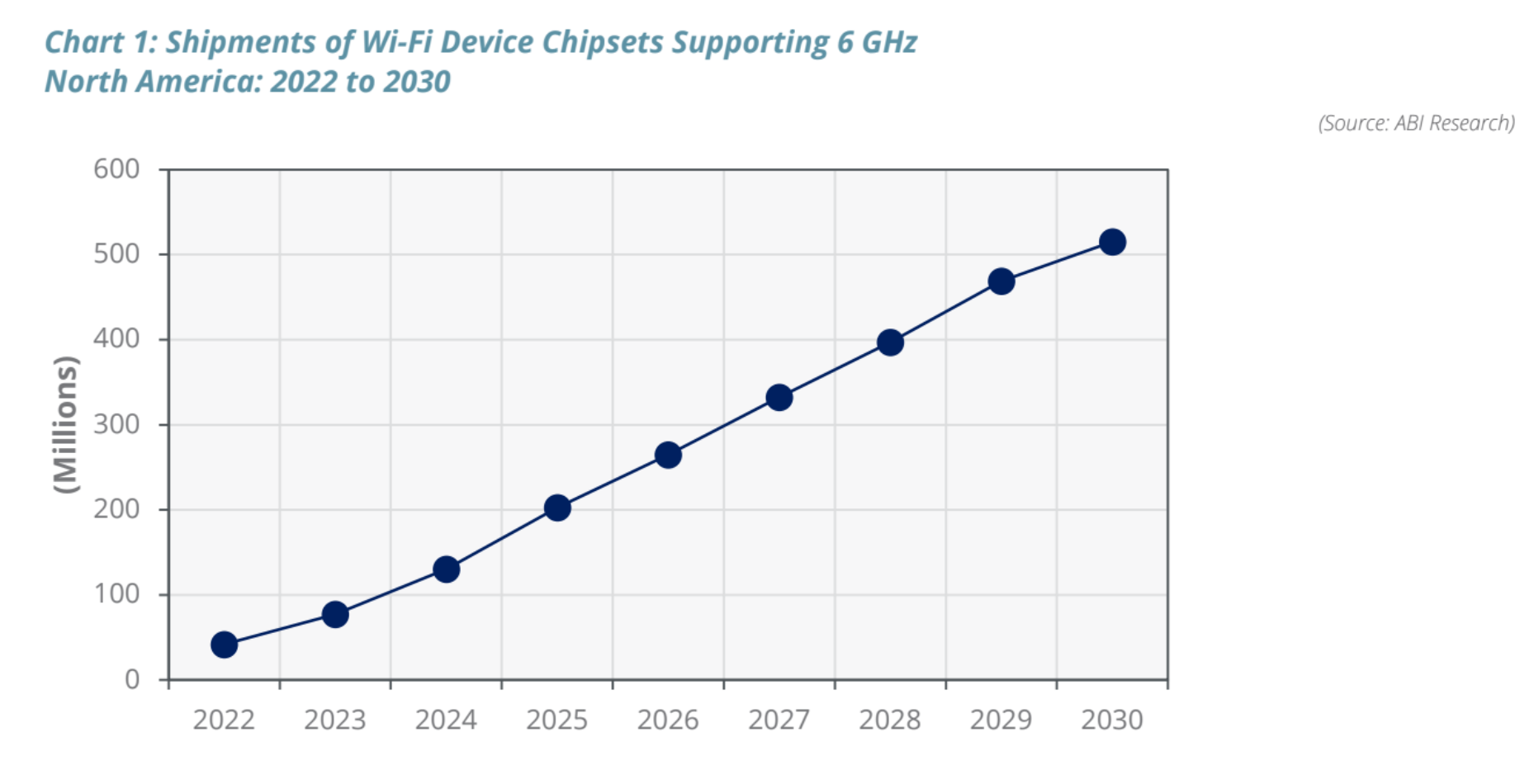
The Wi-Fi industry quickly moved to make substantial investments to incorporate the new 6 GHz band into its plans to meet ever increasing Wi-Fi demand. This is illustrated in Chart 1, which shows North American shipments of 6 GHz-enabled Wi-Fi chipsets soaring from 41.8 million in 2022 to 202.8 million in 2025, an increase of almost 500%. Remarkably, the size of the shipments projected in this report are approximately 25% higher than those contained in our 2024 report “Wi-Fi Innovation and Future of Spectrum Allocation,” indicating a more rapid ramp-up of 6 GHz adoption than anticipated 2 years ago. This report’s forecasts indicate that shipments will continue to increase, with 515.2 million 6 GHz-enabled Wi-Fi chipsets projected to ship in 2030 alone. Significantly, this massive proliferation of 6 GHz-enabled Wi-Fi chipsets being deployed to meet Wi-Fi demand highlights an inescapable reality. Given the vast ecosystem of 6 GHz-enabled Wi-Fi devices and infrastructure already in the market and with even more on its way over the next few years, it is only a matter of time before the 6 GHz band is fully utilized and even more unlicensed spectrum will be needed to match demand in the enterprise market.
FCC’s leadership in creating multiple 6 GHz operating classes for operations in the 6 GHz band hascaused demand and use of the 6 GHz band to remain strong and growing. Specifically, as of January 2026 the FCC has given enterprises and consumers the following 6 GHz device operating classes that support a wide range of uses throughout the 6 GHz band:
- Low Power Indoor (LPI): Ideal for indoor use cases. This is the only device class that restricts operation to indoor environments, allowing up to 30 Decibel Milliwatts (dBm) maximum power levels across the whole band without the need for Automated Frequency Coordination (AFC) systems or geofencing.
- Standard Power (SP): Designed for use cases requiring high throughputs and wide coverage areas. Higher 36 dBm power levels are permitted in U-NII-5 (5925 – 6425 MHz) and U-NII-7 (6525 – 6875 MHz) via AFC systems, which confirm the absence of incumbents in the band before authorizing transmissions.
- Very Low Power (VLP): Suited for short-range use cases with low to moderate throughput demands. Devices can be used indoors or outdoors across the whole band without the need for AFC systems or geofencing, but maximum power levels are capped at 14 dBm to prevent interference with incumbents in the band.
- Geofenced Variable Power (GVP): GVP, which was introduced by the FCC in January 2026, is particularly valuable for data-intensive applications and for overcoming the potential impact of attenuation faced by body-worn applications. 24 dBm power levels are permitted indoors and outdoors in U-NII-5 (5925 – 6425 MHz) and U-NII-7 (6525-6875 MHz), with incumbents protected by a geofencing system.
The decision to allocate the full 1200 MHz of contiguous, uninterrupted spectrum in the 6 GHz band now gives enterprise and residential markets the valuable flexibility of multiple channel sizes, including the 20 MHz, 40 MHz, 80 MHz, 160 MHz, and now 320 MHz channels, which would not be available without the 6 GHz band spectrum. This channel flexibility enables a wide range of different enterprise uses serving diverse needs. These wider 320 MHz channels, in particular, are vital for enabling the higher throughputs and lower latencies that next-generation enterprise applications such as Augmented Reality (AR)/Virtual Reality (VR), automation, and other mission-critical applications require. As a result, it has not been surprising to see the significant enterprise demand for Wi-Fi increase in the wake of the FCC’s 6 GHz decision.
Enterprises have responded by taking full advantage of all of the new Wi-Fi channels available to them in the 6 GHz band. Major enterprises, such as the verticals described in this report, are routinely dealing with tens of thousands of clients each business day, which are connecting with up to several thousand APs in
some cases. The number of client devices utilized daily has grown alongside the emergence of Bring Your Own Device (BYOD), which allows individuals to connect their personal clients to enterprise networks. At the same time, the Wi-Fi infrastructure is servicing high-bandwidth, low-latency, and demanding mission-critical applications, such as those found in research labs or specific medical applications, requiring an enterprise’s priority. With thousands of APs and many multiple more clients all seeking spectrum, enterprises are already deploying the maximum number of channels in the 6 GHz band, with many deploying 80 MHz channels at a minimum.
Access to the entire 6 GHz band allows for a greater number of wider channels, which, in turn, supports consistently higher throughputs and lower latencies. The benefits of additional channels is most apparent during periods of intense network usage, when more channels allow for self-coordination systems to distribute demand to maintain performance. In contrast, fewer channels increases the probability of packet collision, reduces area capacity, and negatively impacts latencies, throughputs, and reliability. While network densification can go some way to expanding capacity, its impacts are limited, and the only viable method to providing the necessary boost in capacity that enterprises need is to increase channel width.
Put simply, next-generation performance is dependent on unlicensed access to the entire 6 GHz band. Without it, enterprise networks will face constrained capacity, greater interference, and, ultimately, poorer Wi-Fi Quality of Experiences (QoE). Enterprises based in countries with regulators that have failed to assign the entire 6 GHz band for unlicensed will increasingly suffer from inferior Wi-Fi connectivity, and as we transition to Wi-Fi 8, this divergence in spectrum policy will increasingly lead to divergent connectivity outcomes.
In sharp contrast to the United States, not all countries in the world are able to enjoy the full benefits of 6 GHz Wi-Fi because their regulators have not released the entire band for unlicensed use. Notably, Europe has only assigned the lower portion of the band, which spans from 5925 – 6425 MHz, for unlicensed use. Due to this narrower level of 6 GHz access in Europe, Wi-Fi’s capabilities in the region are limited, and 6 GHz infrastructure is in lower demand, with only 67.3% of all APs shipped to Europe in 2026 expected to support the band, compared to 98.7% in the United States.
Europe’s failure to fully commit to Wi-Fi’s use of the entire 6 GHz band has meant that Europe’s business (and residential) users have been unable to fully access and unlock the cost-efficiency, reliability, high data throughput, and low-latency capability that the growing volume of Wi-Fi devices within enterprises require. Whereas U.S. enterprises can move to 20 MHz, 40 MHz, 80 MHz, 160 MHz or 320 MHz channel plans, Europe is locked into 40 MHz channels, which fail to support the higher throughputs and lower latencies necessary for modern Wi-Fi and enterprise applications leveraging Wi-Fi 7 and Wi-Fi 8. Ultimately, the failure of regulators to provide sufficient unlicensed spectrum resources for European businesses acts as yet another drag on European economies.
Europe is not alone in limiting unlicensed spectrum for enterprise use. Indeed, enterprise networking is even more hobbled in Mainland China, where the government’s propensity for centralized control has resulted in 6 GHz spectrum access being reserved for the exclusive use of state-backed companies operating 5G networks. This heavy dependance on 5G leaves Chinese businesses without an efficient and effective solution to their indoor networking needs. It also prevents Chinese businesses from assuming more control and leveraging the advantages, efficiency, and innovation of 6 GHz Wi-Fi. As a result, the broader Chinese economy is deprived of Wi-Fi’s permissionless innovation. The U.S. enterprise experience with 6 GHz Wi-Fi stands as strong and persuasive evidence of the benefits of opening the full 6 GHz band.
Due to the availability of the full 6 GHz band in the United States for Wi-Fi, Wi-Fi innovation is not standing still, but it is already looking forward. Work is well underway on the creation of a new Wi-Fi protocol, Wi-Fi 8, which will be built from the ground up to harness the full range of capabilities of the 6 GHz band. Leading developers of this upcoming protocol include the U.S. fabless semiconductor design companies, Broadcom and Qualcomm, which have already unveiled their portfolio of Wi-Fi 8 chipsets for both APs and client devices. The next section examines the core objectives, technological foundations, and potential enterprise market impact expectations for Wi-Fi 8.
Wi-Fi 8
Technical Foundations
Pre-certification Wi-Fi 8 product announcements are already occurring. Understanding how Wi-Fi 8 will harness and need access to the full 6 GHz band to further drive enterprise device demand and unleash a new era of enterprise networking is important.
While prior generations of Wi-Fi technology were built to deliver faster throughputs and lower latencies, Wi-Fi 8 is concerned instead with guaranteeing resilience and determinism—that is, an improved ability to deliver a packet flow where it is needed and on time. Wi-Fi 8’s emphasis on “ultra-high reliability” represents a significant shift in the core value proposition of a Wi-Fi protocol, and this focus aligns closely with the connectivity needs of modern enterprises. The guaranteed resilience and determinism of Wi-Fi 8 also provides traffic management capabilities typically reserved for licensed 5G, at only a fraction of the cost. With Wi-Fi 8, 5G is no longer the only solution for mission-critical tasks.
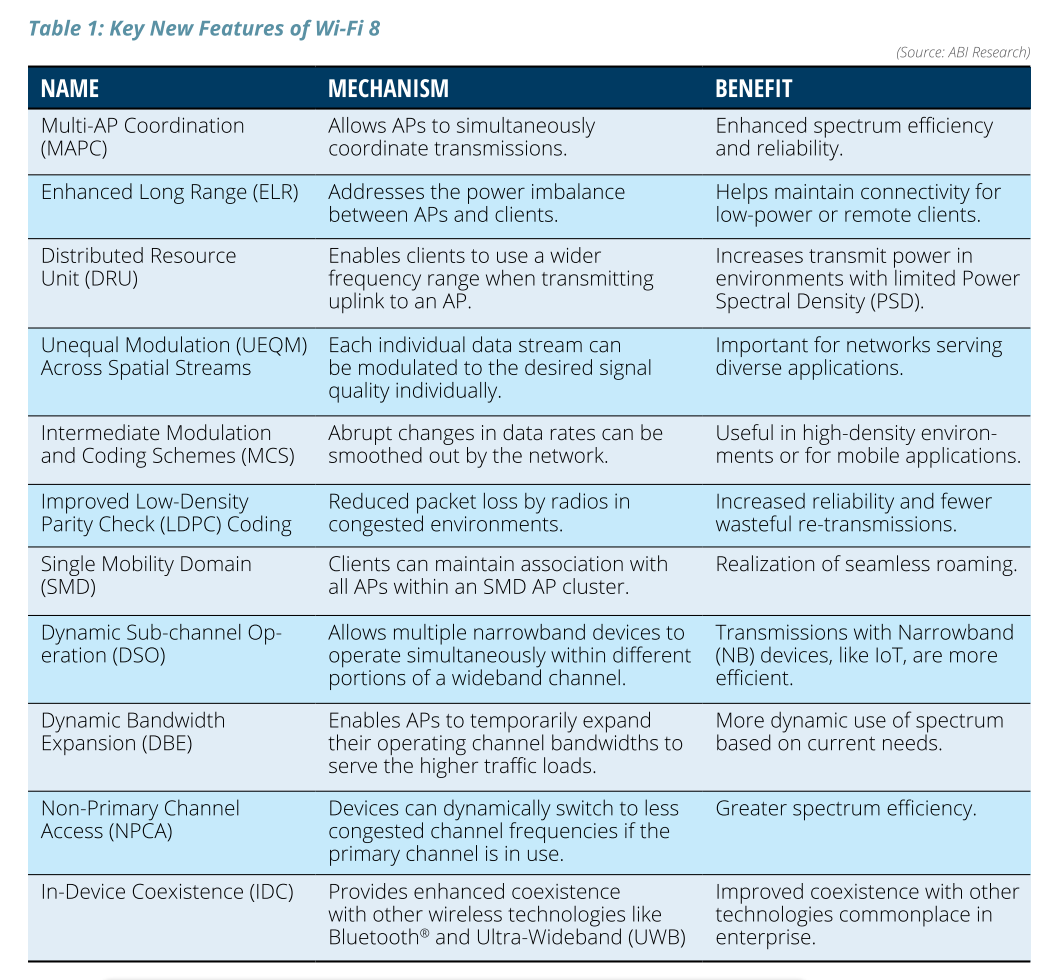
The realization of Wi-Fi 8’s “ultra-high reliability” will be made possible through a large and groundbreaking collection of new capabilities addressing actual data transmissions and how devices interact with the network. The key features of Wi-Fi 8 are summarized in Table 1.
Wi-Fi 8, like Wi-Fi 7 before it, is designed to operate up to 7250 MHz, enabling Wi-Fi 8 devices and infrastructure to utilize an additional 125 MHz of spectrum on top of the existing 6 GHz band (which spans 5925 – 7125 MHz). This is important, because if the 7125 – 7250 MHz frequencies are made available for unlicensed use in the future, then both Wi-Fi 7 and Wi-Fi 8 will be capable of delivering a fourth 320 MHz channel in a Wi-Fi network. This additional capacity would allow for more robust use of advanced and data-intensive applications, such as factory automation, AI and AR/VR.
Collectively, the advanced new capabilities of Wi-Fi 8 represent a major milestone in the history of Wi-Fi, and have the potential to transform how enterprises can leverage wireless technologies to grow their businesses and revenue, improve customer outcomes, and enable innovative next-generation applications. Significantly, Wi-Fi 8’s features and benefits were designed on the basis that at least the entire 6 GHz band would be available for Wi-Fi use, enabling 320 MHz channel bandwidths to be leveraged. Without access to the full 6 GHz band and the use of 320 MHz channels, Wi-Fi 8 will not be able to deliver on its next-generation capabilities for the American enterprise market. For example, dynamic bandwidth expansion only works if there is spectrum to expand into. Markets that preserve the full 6 GHz band for Wi-Fi, and take the step of also opening 7125 – 7250 MHz for Wi-Fi to enable yet another 320 MHz channel, will provide their enterprise us-
ers with the maximum benefits and cost efficiency of Wi-Fi 8, along with a competitively advantaged position in the world marketplace.
Market Adoption
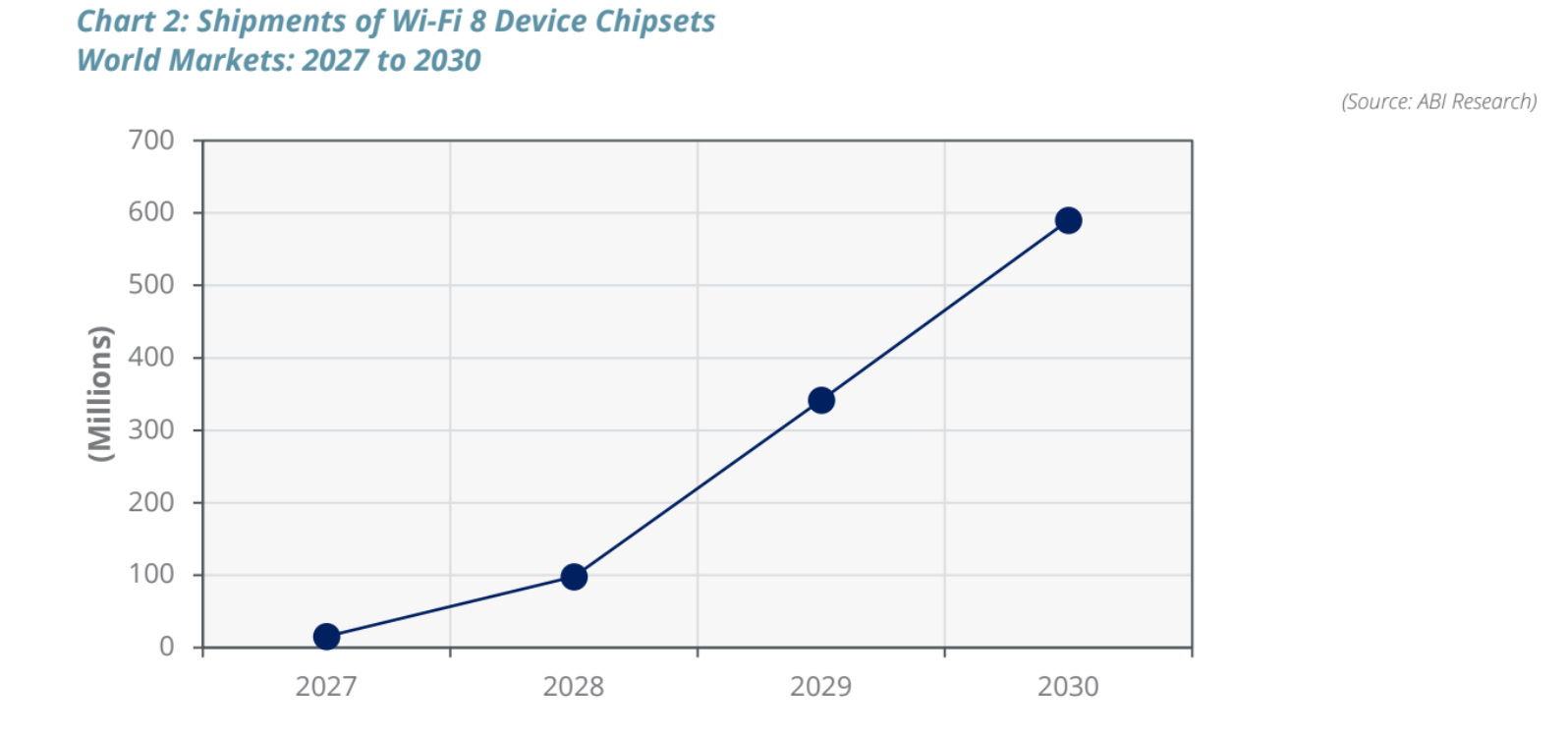
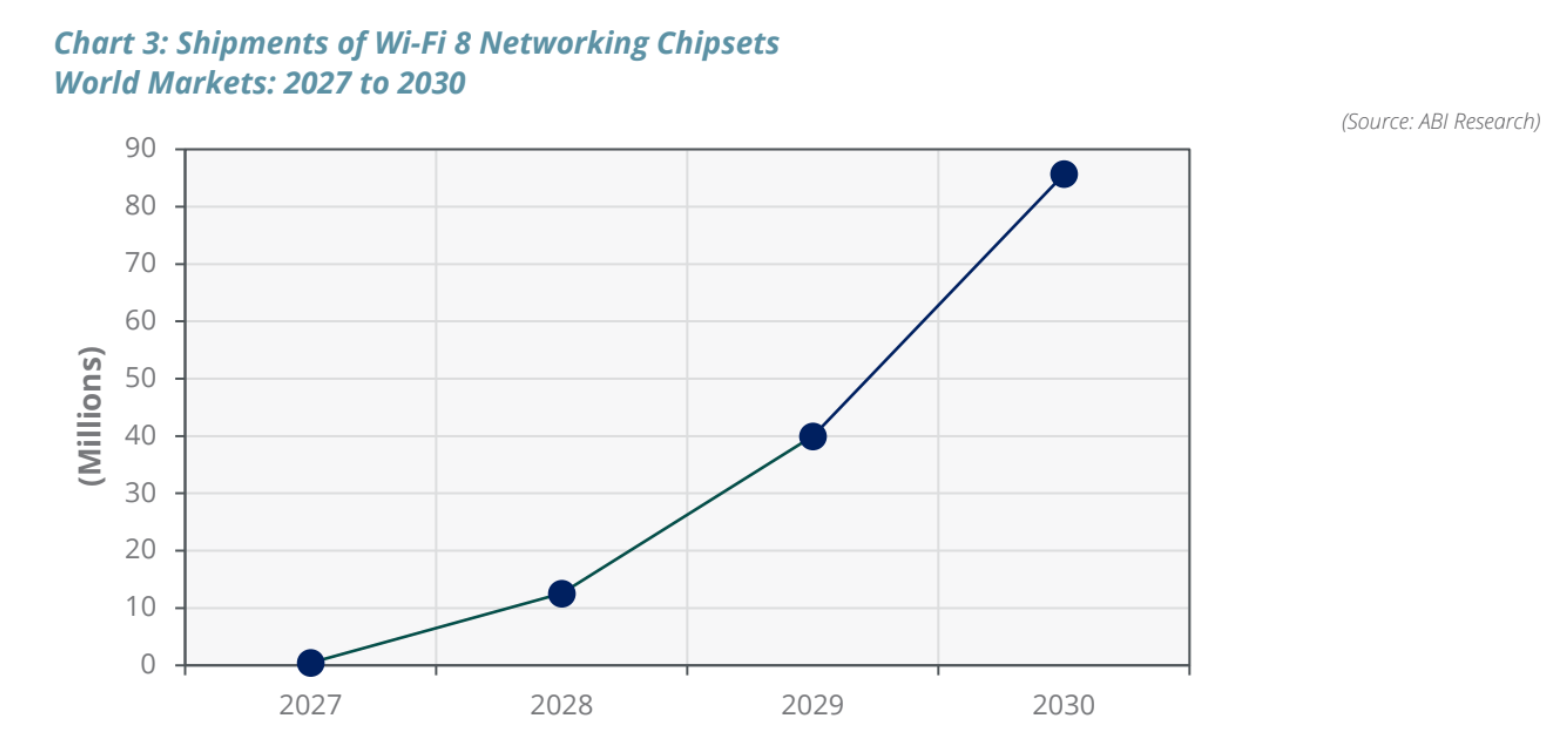
Even when compared to the strength of demand associated with prior generations of Wi-Fi, demand for Wi-Fi 8 devices is projected to be very strong. ABI Research’s data show that in 2027, even prior to the scheduled finalization of the Wi-Fi 8 protocol, Wi-Fi 8 device chipset shipments worldwide are projected to hit 15.5 million. As illustrated in Chart 2, shipments of Wi-Fi 8 device chipsets will then jump sharply to reach 98.2 million in 2028 and will continue to expand to close to 600 million in 2030—an increase of over 600% in just a few short years. Chart 3 similarly highlights how worldwide shipments of Wi-Fi 8 network chipsets—destined for Wi-Fi 8 infrastructure—will experience a similarly rapid level of growth, climbing from 12.6 million in 2028 to 85.6 million in 2030.
Wi-Fi 8’s “ultra-high reliability,” when coupled with sufficient spectrum (e.g., the full 6 GHz band and lower 7 GHz), will further enable Wi-Fi to satisfy the new mission-critical enterprise applications that have low-latency, high reliability, and high-throughput requirements. This includes, for example, Automated Guided Vehicles (AGVs) in industrial environments. The improved reliability of Wi-Fi 8 will also allow machines that have traditionally relied on Ethernet, such as Collaborative Robots (cobots), to transition to wireless, helping to reduce installation costs, operational complexity, maintenance requirements, and physical footprint. Enabling new use cases and the transition away from traditional Ethernet connectivity toward wireless will act to expand the Total Addressable Market (TAM) for Wi-Fi, which will be used more intensively in enterprise
networking. Accordingly, the total number of annual enterprise Wi-Fi AP shipments is expected to swiftly climb from 26.0 million in 2025 to 42.0 million in 2030.
The United States is the undisputed leader in Wi-Fi innovation, and many of the industry’s largest suppliers are U.S. companies. The same is not true for 5G/6G, as this is a field in which Chinese companies currently dominate. Consequently, an expansion of the total market for Wi-Fi through Wi-Fi 8 and unlicensed spec-
trum policy leadership will be a boon for the U.S. economy, as new broad-based commercial opportunities for the industry are created both domestically and abroad, particularly where the full 6 GHz band is made available. In contrast, a spectrum policy geared toward an expansion in the market for 5G/6G would likely
only benefit a narrow set of U.S. competitors. Therefore, in order for the United States to maximize the benefits of this leadership and to retain its dominant position in Wi-Fi technologies globally, regulators must continue their widespread support for unlicensed spectrum access in the 6 GHz band, and should extend unlicensed access into adjacent bands to match growing demand.
Vertical Deep Dives
ABI Research’s in-depth analysis of the Wi-Fi industry has revealed that 6 GHz adoption is robust across all enterprise verticals in the United States, and that Wi-Fi 8 has the potential to improve user experiences, enable new use cases, and further facilitate growth once it fully hits the market. To better highlight the growing enterprise Wi-Fi demand in enterprise environments and the important role of spectrum availability, this section explores the ever-expanding role of Wi-Fi, adoption trends for 6 GHz, and the prospects for Wi-Fi 8 in four of the largest enterprise verticals—education, stadiums and arenas, healthcare, and industrial
manufacturing. We will also explore some of the use cases that these new Wi-Fi technologies will underpin for each vertical, and their impacts on the overall U.S. economy.
Education
Students at U.S. universities now depend on reliable, dependable, and robust Wi-Fi daily. Indeed, in one survey of over 16,000 undergraduate students across 71 U.S. institutions, 96% responded that access to Wi-Fi was the most important technological feature for studying. It is incumbent upon the network operations at universities to meet this ever-growing Wi-Fi demand from the campus community. Four out of five U.S. students connect at least two devices to the campus Wi-Fi network daily—a number that is only trending sharply upward. Reliance on Wi-Fi within education is only going to become more entrenched going forward, as Wi-Fi increasingly serves as the enabler of new learning tools such as Extended Reality
(XR) applications and digital twins. Furthermore, AI depends far more on Wi-Fi in education settings than on licensed 5G networks, and accordingly, Wi-Fi networks on campuses will need to keep pace or risk falling behind.
Security is another element within education that is increasingly reliant on the more advanced generations of Wi-Fi, such as Wi-Fi 6, Wi-Fi 7, and now Wi-Fi 8, as the technology underpins both physical security, like security cameras and motion sensors, and cybersecurity, in the form of innovations like the Wireless Intrusion Prevention System (WIPS). Further compounding the challenge is that the emergence of new device types and form factors, such as wearables and AR glasses, is driving the number of connected devices that students connect to the Wi-Fi network daily to climb further.
The incessant increase in the number of connected devices in educational environments has pushed the 2.4 GHz and 5 GHz bands to their limits, and so it is no surprise that the education vertical was among the earliest to embrace the 6 GHz band. The University of Michigan was one such 6 GHz band early adopter, completing a costly installation of 15,500 HPE Aruba Networking Wi-Fi 6E APs across its Ann Arbor and Dearborn campuses in June 2022, at the time the world’s largest Wi-Fi 6E deployment. Large-scale education deployments have ramped up since then, with recent announcements including the news that Georgetown University has committed to deploying 6 GHz-enabled Cisco Wi-Fi 7 hardware across its campus network.
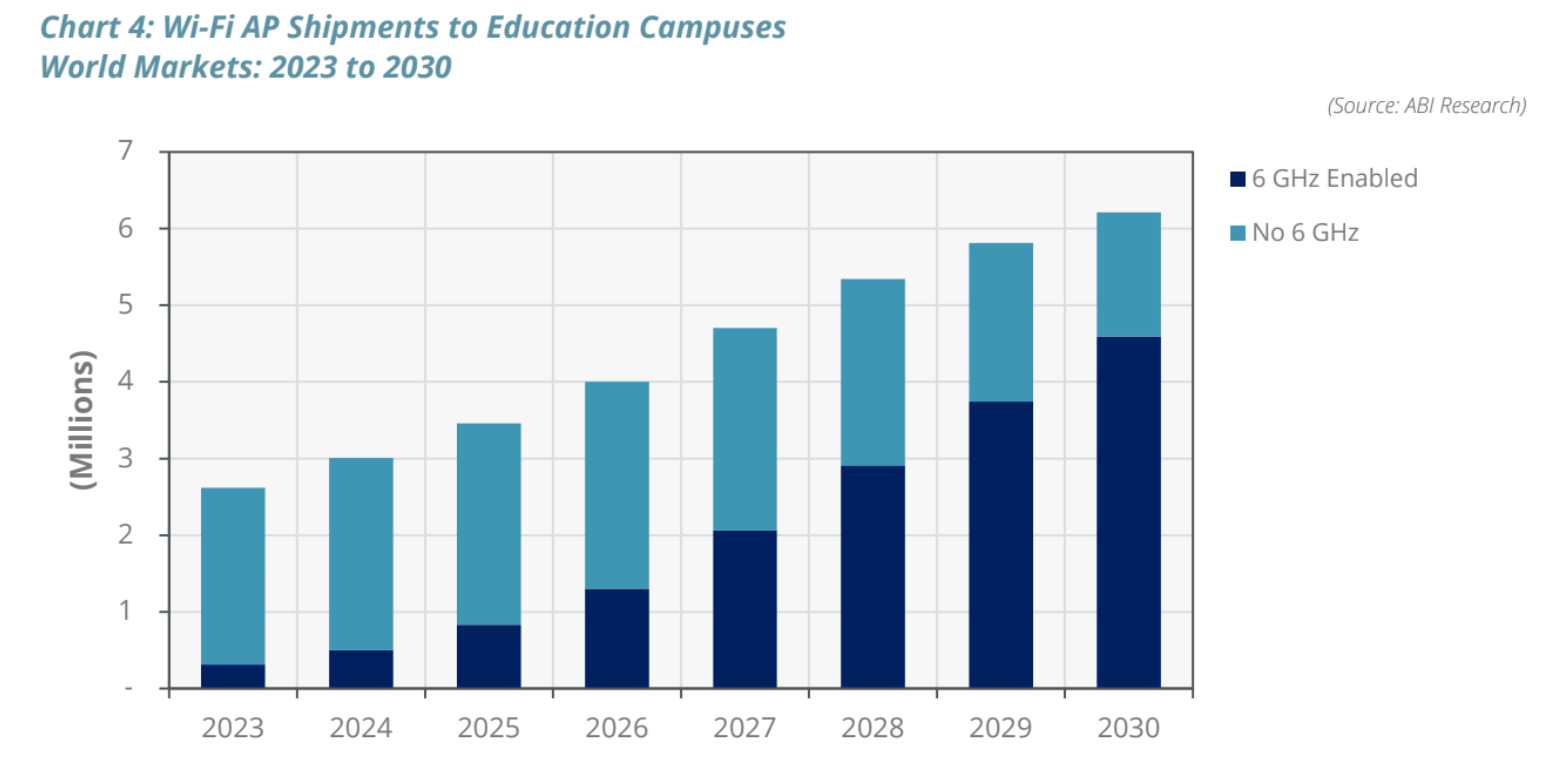
Global shipments of 6 GHz Wi-Fi APs to education campuses has ballooned, reaching close to 1 million shipments in 2025 alone. Furthermore, as Chart 4 highlights, the majority of the education market is expected to transition to 6 GHz-enabled APs, with 73.9% of all Wi-Fi AP shipments into the education vertical in 2030 projected to support 6 GHz. Driven by favorable unlicensed spectrum regulation in the North American market, the portion of Wi-Fi APs shipped to campuses that support 6 GHz in 2030 is forecast to reach 98.1%.
Wi-Fi in the education vertical is particularly complex, as it must accommodate countless, unpredictable roaming devices active in high-density environments, alongside the need to connect potentially thousands of devices in many large indoor spaces. Wi-Fi 8 and its use of the 6 GHz band is able to address, account
for, and control this complexity. Features such as Wi-Fi 8’s Single Mobility Domain (SMD) and Intermediate Modulation and Coding Schemes (MCS) have been designed specifically to provide the seamless, uninterrupted roaming that students crave as they and their devices move across campus. Furthermore, features like Enhanced Long Range (ELR) and Distributed Resource Units (DRUs) will help to ensure uninterrupted connectivity for students in large open spaces, such as lecture halls. Moreover, the greater resilience and reduced interference made possible by the Multi-AP Coordination (MAPC) features of Wi-Fi 8 will help to further improve spectrum efficiency and reliance within the high-density localities of the campus.
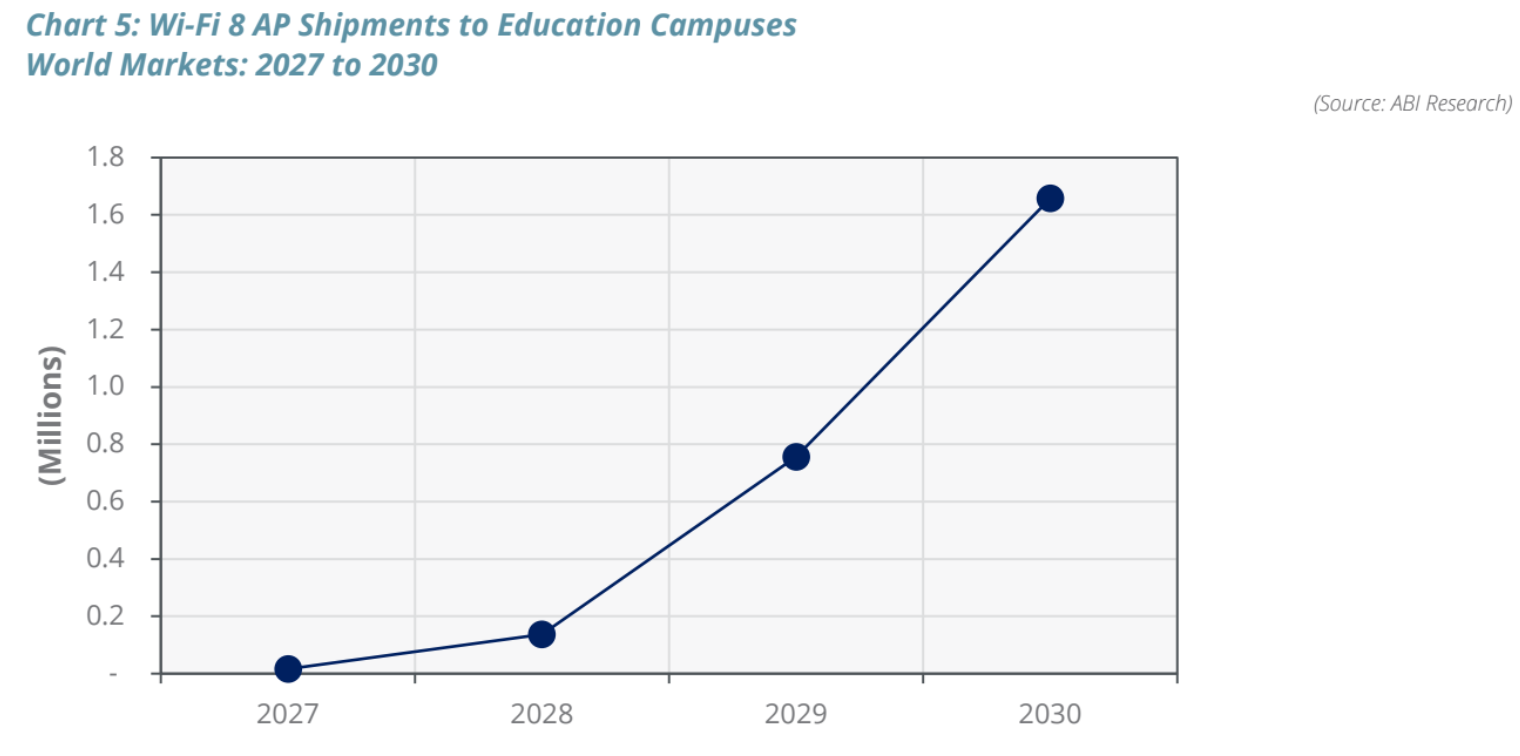
Due to education’s strong need for Wi-Fi 8’s features, Wi-Fi 8 demand is projected to increase exponentially within the education vertical from next year, as displayed in Chart 5. Having unlicensed spectrum available in the 2.4 GHz, 5 GHz, and throughout the 6 GHz band (and setting aside more spectrum to meet future needs) is vital to meeting the education vertical’s demand for years to come.
Wi-Fi is not only central to higher education, but also in K–12, with 81% of all U.S. K–12 students receiving Wi-Fi-enabled devices, such as a laptop or tablet, for use in the classroom. Adopting 6 GHz and deploying Wi-Fi 8 are the important tools in enabling resilient, reliable Wi-Fi, and therefore must be considered as part of any forward-thinking education strategy. Conversely, should the education vertical be deprived of the existing Wi-Fi spectrum resources it currently has access to, or is not provided with additional spectrum resources to match growing demand, then educational outcomes will likely be negatively affected as institutions and students are forced to seek alternative, less efficient, and more costly means of supporting communications needs.
Stadiums and Arenas
Wi-Fi has now become an integral element of the overall customer connectivity experience at stadiums and arenas. Visitors have come to expect constant, high-capacity connectivity throughout the duration of a stadium/arena event, so they can take advantage of the recent explosion of data-intensive applications, like the live-streaming of footage, as well as reliably connecting with work and family. Networks at major events, such as the Super Bowl or the World Cup, must manage tens of thousands of clients simultaneously, with many multiples of that number over the course of the event. Users at these events require not only robust downlink capacity, but also heavy use of uplink capacity for applications such as uploading content.
Event organizers are increasingly leveraging Wi-Fi to deliver new interactive services that both raise customer satisfaction and increase revenue. At the same time, Wi-Fi’s role in event management is expanding, as the technology is being leveraged by staff for tasks ranging from real-time digital ticketing, internal communications, and visitor engagement activities such as quizzes or special promotions, to the sale of merchandise, food, and beverages. Event organizers are also increasingly relying on Wi-Fi for valuable visitor traffic data analytics, which is harnessed for network optimization, crowd management, security, and to support targeted sales promotions.
The increase in bandwidth demands necessary to support the expanded role of Wi-Fi within stadiums has far exceeded the capacity available within the legacy 2.4 GHz and 5 GHz frequency bands. Consequently, stadiums were among the earliest investors and adopters of the 6 GHz spectrum, with shipments of 6 GHz-enabled Wi-Fi APs shipments into the vertical undergoing an almost 300% growth in 2 years.
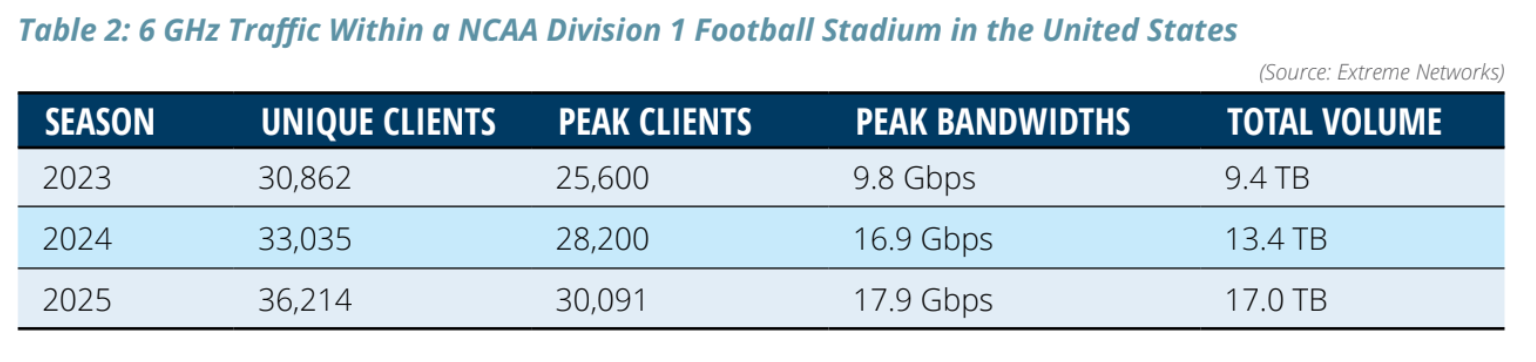
Stadiums that adopted 6 GHz band networks were able to offer their visitors far superior connectivity experiences, as the more robust network was able to handle a greatly expanded number of devices and volume of traffic. This is illustrated clearly in Table 2, which displays Wi-Fi network traffic data over the span of 3
years at a National Collegiate Athletic Association (NCAA) Division 1 Football Stadium in the United States, which was provided by Extreme Networks. The venue enabled 6 GHz for the 2024 season, which helped support a 72.4% increase in peak bandwidths and a 42.6% increase in the total volume of traffic for that
year.
Further benefits from deploying the 6 GHz band in stadiums is shown in data from a RUCKUS Networks deployment at a recent sold-out K-pop band concert, held at a major arena in the United States, where 45% of the 5,280 clients were using the 6 GHz band, and 50% of the 4.16 Terabytes (TB) of traffic during the event was sent over the 6 GHz band. Going forward, 6 GHz will become increasingly necessary to handle the increasing volume of traffic occurring at these event venues. Highlighting the scale of the increase in traffic, long-term connectivity partner of the Super Bowl, Cisco, has shared that the total data upload at Super Bowls has jumped from 300 Gigabytes (GB) in 2012, to 35 TB to 40 TB today. As more stadiums and arenas seek to meet the ever-increasing Wi-Fi demands of venue operators and attendees, 6 GHz-capable networks hold the key to delivering an enhanced user experience, so the 6 GHz deployment numbers are projected to increase substantially.
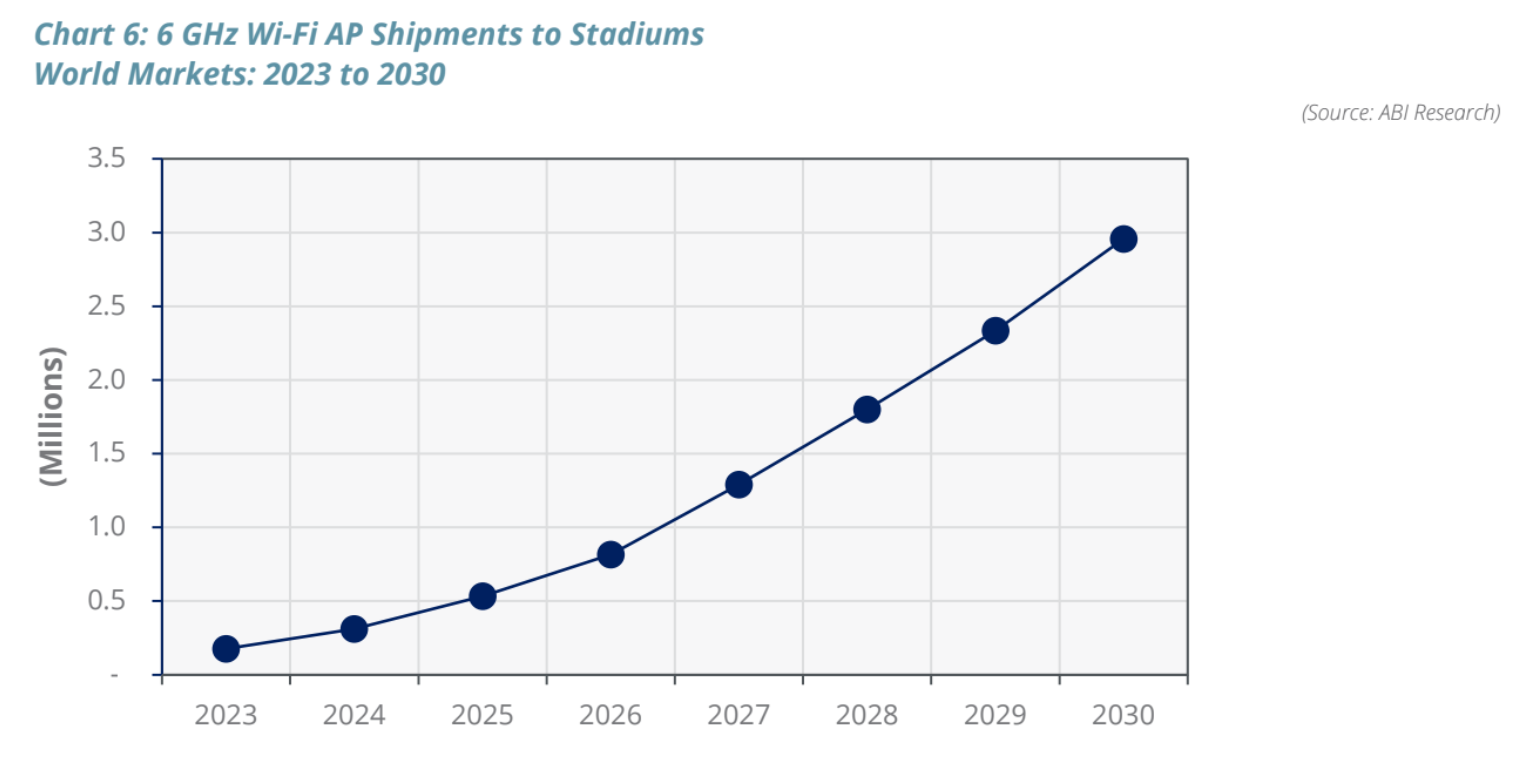
The installation of 6 GHz has now taken place at numerous stadiums across the United States, including Levi’s® Stadium, Honda Center, and Oracle Park, all in California, as well as at MetLife Stadium in New Jersey. The 6 GHz band is now critical for enabling modern stadium experiences, so demand for 6 GHz-enabled Wi-Fi APs from the vertical is projected to grow exponentially at a 40.8% Compound Annual Growth Rate (CAGR) between 2024 and 2030, as Chart 6 illustrates. In the North American market, in the year 2030, 97.4% of all Wi-Fi AP shipments into the stadiums vertical are forecast to support the 6 GHz band.
Stadiums’ need to cover vast crowded spaces has also driven strong interest in Standard Power 6 GHz in the vertical, which can provide greater range thanks to its elevated power levels. At present, stadiums in North America are uniquely able to benefit from Standard Power 6 GHz due to the spectrum policies established by the FCC and the Canadian Radio-television and Telecommunications Commission (CRTC). This enables North American stadiums to deliver superior connectivity experiences to their visitors and to extract further value from their Wi-Fi investments.
The technological advancements of Wi-Fi 8 will only further enhance Wi-Fi’s ability to tackle the new challenges posed by the high-density, mobile nature of Wi-Fi devices in stadiums, alongside the extreme demands on both downlink and uplink capacity that next-generation applications pose. For example, the SMD feature will help deliver seamless roaming, whereas the Intermediate MCS feature will support more consistent, reliable connectivity experiences. These key Wi-Fi 8 features will, however, be handicapped without access to the full range of the 6 GHz band.
Ultimately, the introduction of the 6 GHz spectrum has been transformative for stadiums across the United States to meet consumer demand, providing the additional capacity they so desperately need, and facilitating the enablement of new services that improve customer experiences and drive revenue growth. The continued proliferation of data-intensive applications, increasing number of Wi-Fi use cases, and growing number of connected devices will only further cement the necessity of the full 6 GHz band in modern stadiums. Any reduction in the current level of access to the 6 GHz band would greatly reduce reliability, diminish existing and planned network investment by industry, and, ultimately, hurt customer satisfaction.
Healthcare
The days of Wi-Fi within hospitals merely being a “nice to have” platform for staff and patient connectivity are long gone. Today, Wi-Fi is utilized for a wide range of core medical and administrative tasks, spanning real-time patient monitoring, Real-Time Location Systems (RTLSs), and the Internet of Medical Things (IoMT),
supporting the reliable operation of mission-critical medical devices, and facilitating the secure transfer and management of patient data, among others. Patient treatment is also increasingly being performed virtually, either by a specialist over a video conferencing platform, or through remote monitoring via healthcare devices like smartwatches and other wearables.
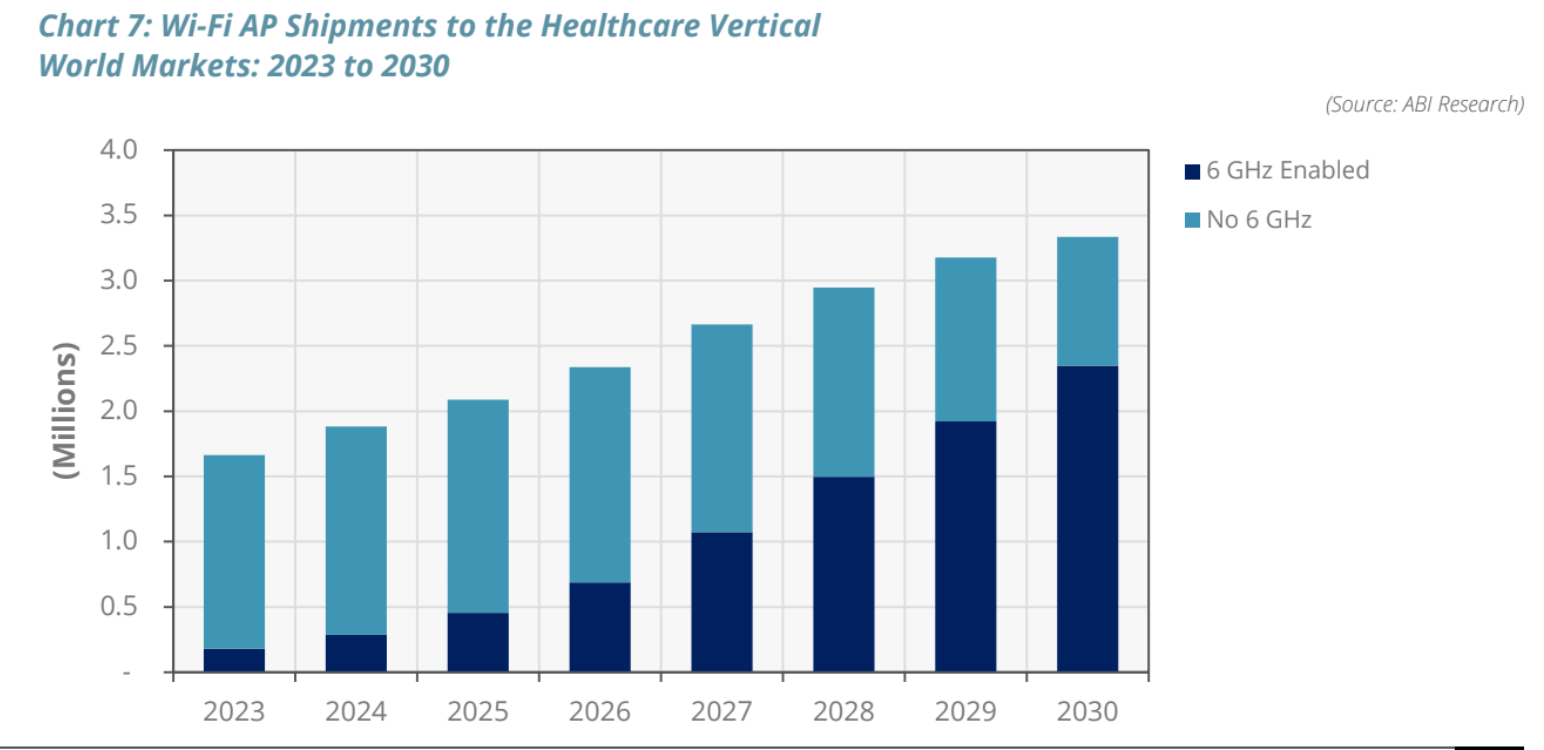
Acceptance of virtual treatments in the United States is strong, highlighted by a recent survey that saw 71% of participants respond that they were comfortable with virtual care for treating common illnesses, and 66% for treating chronic disease management. These new innovations, coupled with growing patient expectations for virtual treatments, are creating an enlarged role for Wi-Fi within the healthcare sector to meet these expectations. This, in turn, will drive a 59.7% projected increase in annual Wi-Fi AP shipments to the vertical between 2025 and 2030, from 2.1 million to 3.3 million.
The 6 GHz band is especially important for ensuring that healthcare networks can enable the reliable, seamless connectivity that new and expanded healthcare applications demand. This significant demand is reflected in the 151.2% jump in annual shipments of 6 GHz-enabled Wi-Fi infrastructure into the healthcare vertical between 2023 and 2025. The adoption drivers were varied within the sector, suggesting broad adoption within the vertical. In the case of the University of Massachusetts Chan Medical School, 6 GHz APs were purchased and deployed to provide the additional bandwidth necessary to support the Medical School’s dense network of Wi-Fi devices. On the other hand, the Novant Health group made a significant investment and commitment in 6 GHz technology throughout its hospitals across the Southeast United States to provide more reliable connectivity for mission-critical healthcare applications and medical devices. Going forward, as more and more hospitals turn to the 6 GHz band to satisfy their spectrum capacity and reliability needs, the proportion of Wi-Fi APs shipped into the vertical that support 6 GHz is projected to grow strongly. As illustrated in Chart 7, ABI Research projects that the percentage of global Wi-Fi AP shipments that are 6 GHz compatible will increase from 21.8% in 2025 to 70.4% in 2030. In North America, the increase will be even more dramatic, with 6 GHz-enabled APs representing 97.9% of shipments in 2030.
Wi-Fi 8 also has a lot to offer the healthcare sector. Wi-Fi 8’s “ultra-high reliability” features will prove to beparticularly valuable for supporting the operation of mission-critical healthcare equipment, such as Intensive Care Units (ICUs), and facilitating an expansion in the use of AGVs, which can be used to reduce manual labor and improve logistical efficiency by transporting items such as medicines, medical utensils, meals, and even hazardous waste. Another eagerly anticipated feature is Wi-Fi 8’s In-Device Coexistence (IDC). This will help mitigate any potential interference between Wi-Fi and other complementary IoT technologies like Bluetooth® Low Energy (LE), which is utilized throughout the healthcare sector for tasks such as asset tracking, access control, indoor navigation, and staff safety applications. Preventing interference between the two technologies will improve the performance and reliability of both.
Adopting the latest healthcare innovations discussed above and rolling out virtual healthcare solutions are crucial steps toward the improve delivery of healthcare services in the United States. The low-cost, widely deployed, and highly efficient nature of Wi-Fi has been instrumental in enabling these solutions. However, Wi-Fi’s capabilities, in turn, hinge on access to sufficient spectrum resources, both to guarantee adequate network capacity and to support the operation of high-throughput, low-latency mission-critical applications.
Given Wi-Fi’s vitality to the healthcare industry, it is vital that regulators factor in the importance of 6 GHz to Wi-Fi’s performance and reliability, and recognize the implications it has for the health of the U.S. population. Compared to Wi-Fi’s widespread implementation in healthcare environments, the adoption of carrier and private 5G in healthcare has been minimal, and even in the instances where it has been adopted it is typically done so in a way that is complementary to Wi-Fi. A turn away from the full use of the 6 GHz band for Wi-Fi use and a failure to identify even more spectrum for future Wi-Fi demand would have harmful effects on healthcare investment in the band, to date, and negatively impact healthcare outcomes and efficiency more generally.
Manufacturing & Industrial
In the past, the limited pool of unlicensed spectrum accessible by Wi-Fi, coupled with the uncertainty of Wi-Fi protocols, led to the widespread reliance on wired connectivity within North American manufacturers. Wired solutions have several major drawbacks over wireless approaches, including higher installation costs, a
larger physical footprint, and both increased operational complexity and maintenance requirements. Wired connectivity is also physically unable to support the innovative new industrial applications that are essential for improving manufacturing efficiency, enabling advanced manufacturing processes, and assisting industrial manufacturers with overcoming labor shortages.
Consider the example of Autonomous Mobile Robots (AMRs). It is not possible or practical to connect machines that are designed to roam freely with physical cables, which are restrictive and prone to failure due to their high levels of wear and tear. Wireless is, therefore, the only feasible enabler. However, in the days
when only the legacy 2.4 GHz and 5 GHz spectrum bands were available for unlicensed use, Wi-Fi did not have the capabilities and reach to reliably support autonomous robot, and so their adoption remained sluggish. Yet now, with the addition of the 6 GHz band, Wi-Fi has the spectrum resources and variety of channel sizes to satisfy the low-latency, high-throughput, and seamless roaming requirements that mission-critical industrial applications like autonomous robots demand.
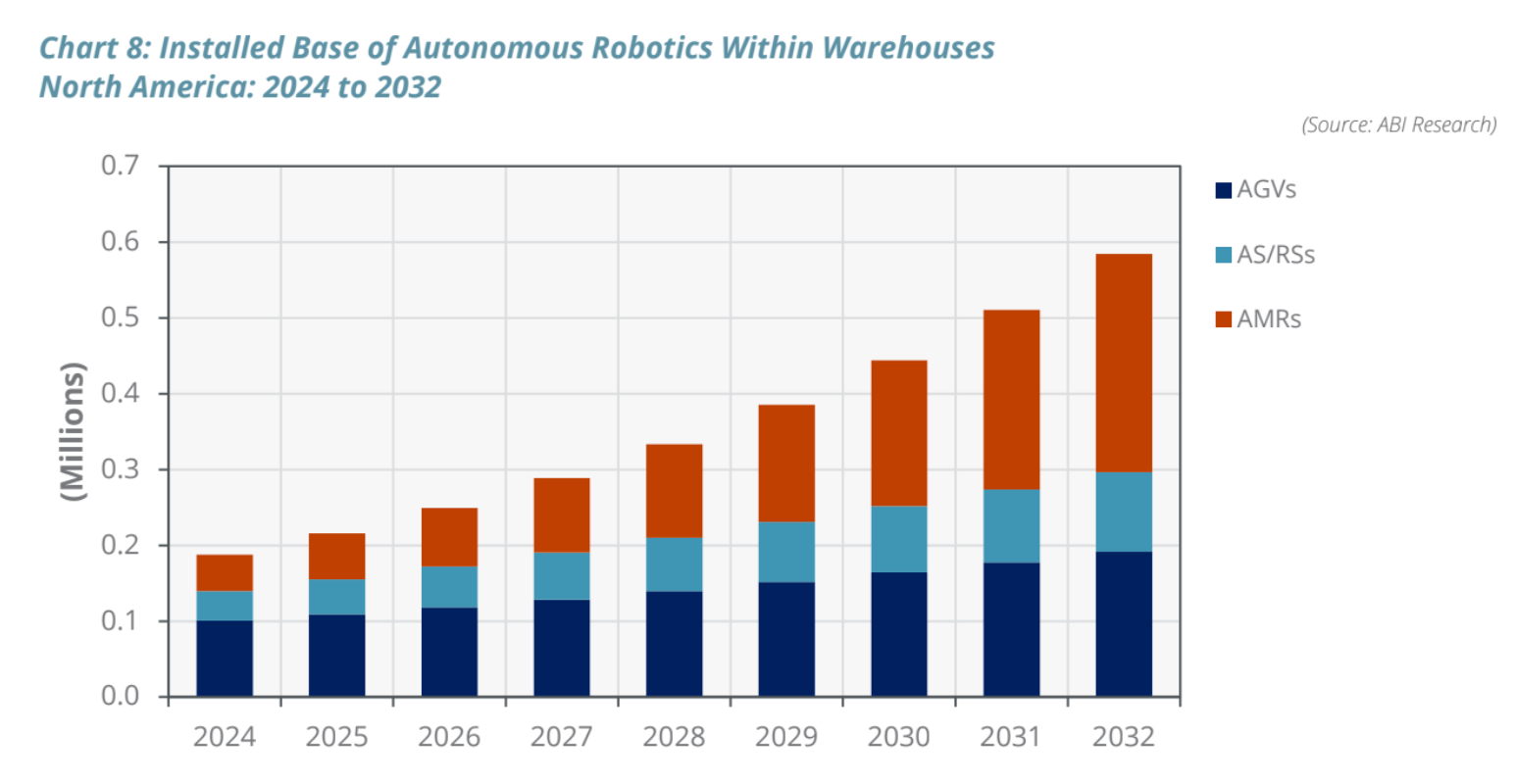
Spurred by the availability of 6 GHz, the number of warehouses in North America deploying autonomous robotics is projected to nearly double over the next 6 years, increasing from 13,648 at the end of 2025 to 26,982 in 2032. The adoption of autonomous robotics will help warehouses achieve greater efficiency, realize cost savings, and compensate for a lack of skilled workforces. As highlighted in Chart 8, this growth includes wider adoption of Automated Storage and Retrieval Systems (AS/RSs) that automatically place and retrieve loads from defined storage locations, AGVs that move around using fixed guidance systems located within their environment, and AMRs that can navigate and move autonomously without the assistance of external infrastructure.
The ability of 6 GHz to help to relieve network congestion and improve overall reliability will allow machines that have traditionally relied on Ethernet, like robots, to transition to Wi-Fi. 6 GHz will also facilitate the adoption of other innovative technologies like the Industrial Internet of Things (IIoT) and RTLSs.
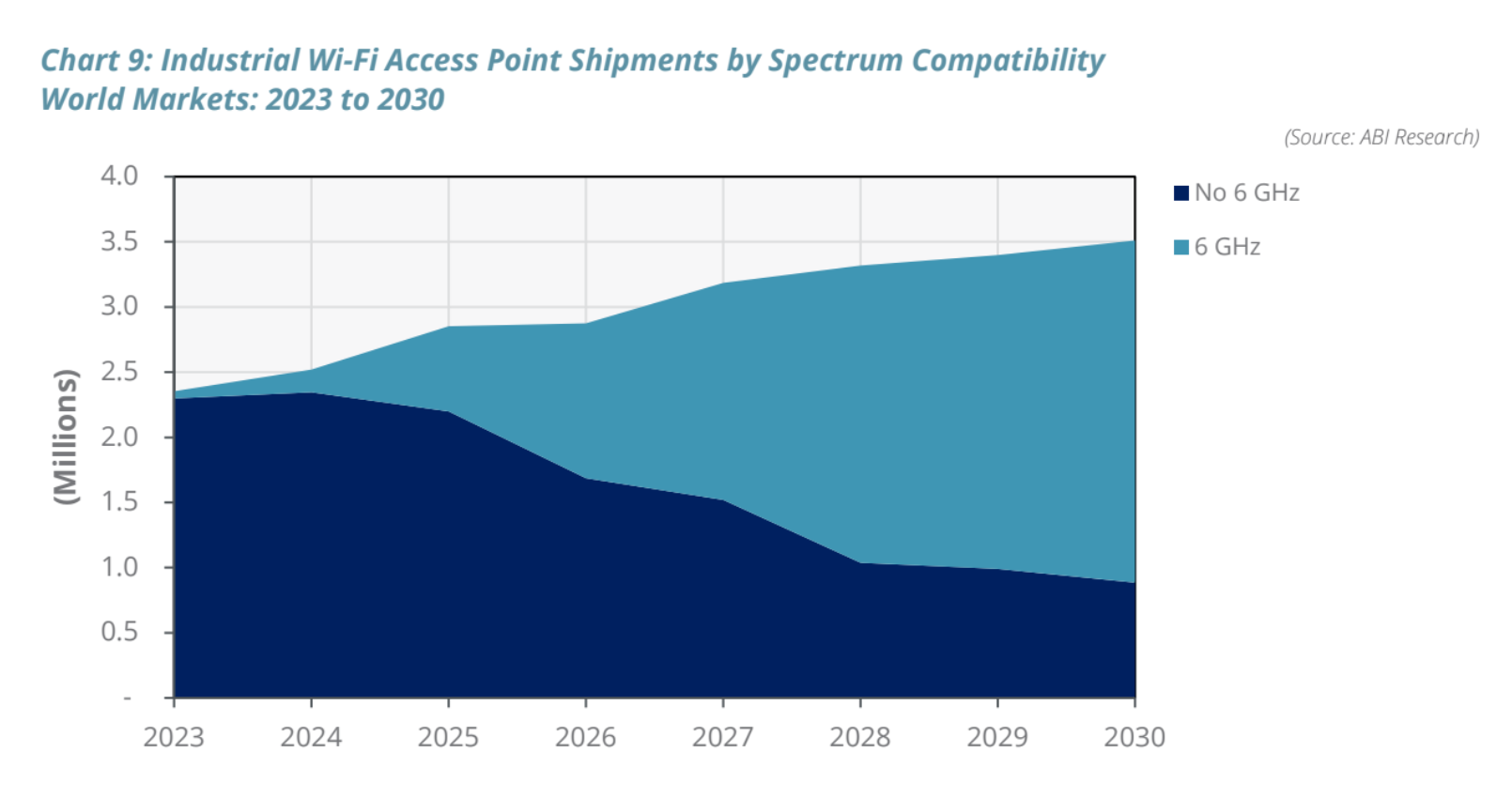
Reflecting the incredible value that 6 GHz offers industrial environments, the proportion of ruggedized industrial Wi-Fi APs shipments worldwide that support 6 GHz is projected to skyrocket from 6.9% in 2024 to 74.8% in 2030, as illustrated in Chart 9. In North America, the percentage will increase from 18.4% to 88.9% over the same period. Furthermore, 6 GHz will enable Wi-Fi to address new use cases and handle more devices, expanding the Total Addressable Market (TAM) for the technology in manufacturing. As a result, the total overall number of ruggedized Wi-Fi AP shipments to industrial environments will increase at a 7.6% CAGR between 2024 and 2030.
U.S. leadership on Standard Power 6 GHz also offers the country a significant opportunity to improve its manufacturing competitive edge. U.S. manufacturers are uniquely able to take advantage of the significant range and penetration improvements that Standard Power 6 GHz’s higher 36 dBm limit offers. Perhaps even more important is the fact that Standard Power 6 GHz authorized equipment can utilize external antennas, which are typically fine-tuned to highly specific industrial settings to deliver optimal performance and avoid interference hazards. U.S. manufacturers can and should capitalize on this advantage if they wish to stimulate efficiency and productivity in U.S. manufacturing.
The results of ABI Research’s Industrial and Manufacturing Survey 2H 2024/1H 2025: Industrial WLAN Insights (PT-3738) revealed that U.S. manufacturers consider the performance of network infrastructure to be a pressing technology challenge they face. Fortunately, the release of the full 6 GHz band allows Wi-Fi technology to finally deliver the cost-efficiency, enhanced performance, and improved reliability that will address this challenge for U.S. manufacturers. The availability of the 6 GHz band for Wi-Fi serves as a key advantage for U.S. industrial markets, helping to sharpen their future competitiveness and, ultimately, success on a worldwide stage.
Strategic Policy Recommendations
The findings of this report are clear—enterprise demand for Wi-Fi networking and devices is strong and growing significantly. The low-cost, accessible, and robust nature of Wi-Fi networking effectively meets the needs of the enterprise market in a changing economy and marketplace where new technologies and developments are forcing businesses to adapt quickly. The introduction of the 6 GHz spectrum band, in particular, has played a pivotal role in meeting the connectivity demands of modern enterprises in the United States. 6 GHz has proven indispensable in facilitating the operation of disruptive new innovations across U.S. industries, and in advancing U.S. leadership in Wi-Fi technologies. The rapid and widespread adoption of 6 GHz Wi-Fi as shown in this study—with annual shipments of 6 GHz enabled Wi-Fi chipsets skyrocketing more than 500% between 2022 and 2025—shows that the 6 GHz band is already firmly entrenched within the Wi-Fi ecosystem, and that Wi-Fi’s use of the spectrum is unleashing considerable value to businesses across the United States.
As policymakers in the United States look to match growing enterprise demand for wireless technologies, ABI Research recommends that U.S. regulators should:
- Support Unlicensed Access to the Full 6 GHz Band: Use of the 6 GHz band is already widespread among both U.S. businesses and consumers, and demand for the band is projected to continue growing at a substantial pace. Disrupting unlicensed access to the full 6 GHz spectrum band (i.e., splitting the band, taking away the upper portion of the band for licensed use, etc.) would destroy the business value that the band has already and will continue to unleash, jeopardize the substantial investment already made in the band, and endanger U.S. leadership in Wi-Fi technologies more generally.
- Open the Lower 7 GHz Band for Unlicensed Use: The rapid adoption and utilization of 6 GHz suggests that it is also on track to become congested, as recent studies have highlighted. Regulators should be proactive now in identifying additional frequencies for unlicensed use. The lower 7 GHz band is a logical place to start given its optimal propagation characteristics, proximity to the 6 GHz band, and existing compatibility with Wi-Fi 8. Even allocating just the 7125 – 7250 MHz portion of the band would make a substantial impact, especially because it is contiguous with the existing 6 GHz band, allowing for the enablement of an additional fourth 320 MHz channel. 320 MHz channels are vital for enabling the higher throughputs and lower latencies that next-generation enterprise applications demand, and making available four such channels would put the United States ahead of the rest of the world for years to come.
- Support the Deployment of 6 GHz Wi-Fi and Wi-Fi 8: U.S. government bodies should encourage the adoption of the latest Wi-Fi technologies internationally in order to both assist U.S. industry and help the country maintain its leadership in Wi-Fi technologies. This should include consideration of trade policies that would favorably impact U.S. manufacturers of Wi-Fi, as well as adjustments to federal procurement rules that can accelerate the deployment of new technology domestically. Additionally, government platforms that face the private sector, such as the U.S. Department of Commerce or Small Business Administration, should be used to call attention to the benefits of 6 GHz Wi-Fi.