Federal Communications Commission Wants to Allow Wi-Fi School Buses to Receive Funding
FCC Chairwoman Jessica Rosenworcel announced the proposal at a meeting of the National Coalition for Technology in Education and Training.

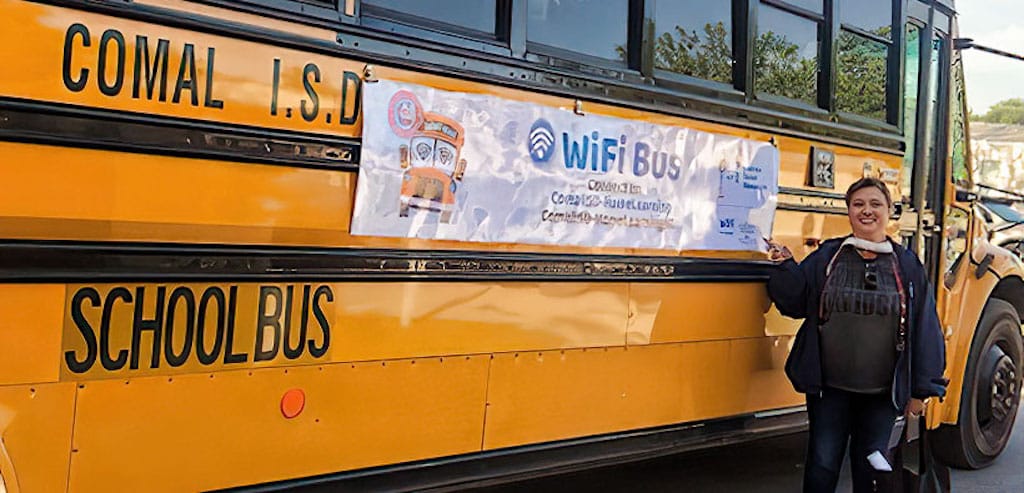
WASHINGTON, May 11, 2022 – Federal Communications Commission leadership on Wednesday announced a proposal to allow for the federal funding for Wi-Fi-enabled school buses.
During a meeting of the National Coalition for Technology in Education and Training, Federal Communications Commission Chairwoman Jessica Rosenworcel announced that E-rate funding could be allocated to bring Wi-Fi to buses.
“Wiring our school buses is a practical step we can take that is consistent with the history of the E-rate program,” she said. “This commonsense change could help kids who have no broadband at home.”
The E-rate program was authorized in 1996 to bring enhanced telecommunication services to anchor institutions like libraries and schools, but it was expanded in 2014 to include wi-fi services.
The announcement was lauded by the Schools, Health and Libraries Broadband Coalition Executive Director John Windhausen. “School buses take students to the in-person classroom, so why shouldn’t they also bring students to the virtual classroom? Learning happens beyond the four walls of a school building,” he said. “If today’s proposal is given the green light and E-rate funding is made available, the Homework Gap will become much smaller than it is today.”
During the pandemic, concerns about the homework gap became especially pronounced as many children without access to broadband at home were forced to sit in parking lots and other public spaces to take advantage of Wi-Fi.
By mid-2024, Denmark had spent only about 1 percent of the $224 million in pledged funds.
Prisoners are now taking regular trips to far-flung, exotic locales such as Thailand. No passport required, just a virtual reality headset.
The agency said the move would improve SpaceX’s satellite broadband service.
Democratic lawmakers cite broadband gaps, data security, and autonomous vehicle safety as concerns that are not being addressed
Member discussion