Gigi Sohn’s Political Purgatory and the Prospect of Reintroducing Net Neutrality Rules in 2023
If Sohn is sworn in, it would break the FCC’s party deadlock and allow the Democrats to potentially bring back net neutrality.


November’s midterm elections saw the Democrats hold on to power in the Senate, where executive and judicial appointments are confirmed. But Democrats also held to power in the previous term, yet the upper chamber did not hold votes on the prospective fifth commissioner of the Federal Communications Commission, Democrat Gigi Sohn.
Sohn, who was nominated by President Joe Biden in October 2021, has been in a bit of a political purgatory since making it through the Senate commerce committee in March. Former FCC commissioners were concerned about her prospects of making it to Senate votes before the midterms, with the lingering possibility that the Republicans would win the chamber and nuke her nomination over concerns that she would not be able to remain non-partisan on the issues the FCC addresses.
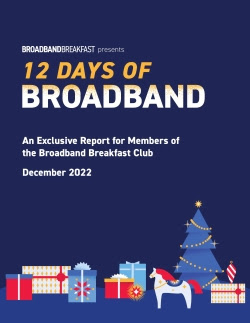
The 12 Days of Broadband 2022 (click to open)
- On the First Day of Broadband, my true love sent to me:
A Symmetrical Gigabit Network - On the Second Day of Broadband, my true love sent to me:
24 Reverse-Preemption Pole Attachment States (2022 edition) - On the Third Day of Broadband, my true love sent to me:
Section Two-30 of the Communications Decency Act - On the Fourth Day of Broadband, my true love sent to me:
$42.5 billion in Broadband Equity, Access and Deployment funds - On the Fifth Day of Broadband, my true love sent to me:
5 Federal Communications Commissioners - On the Sixth Day of Broadband, my true love sent to me:
Wi-Fi 6E - On the Seventh Day of Broadband, my true love sent to me:
7.7% annual inflation rate - On the Eighth Day of Broadband, my true love sent to me:
8,132,968 census blocks and a national Broadband Fabric - On the Ninth Day of Broadband, my true love sent to me:
$9 Billion Universal Service Fund - On the Tenth Day of Broadband, my true love sent to me:
$10 Billion Remaining in the Affordable Connectivity Program - On the Eleventh Day of Broadband, my true love sent to me:
11th Year of Xi Jinping’s rule in China - On the Twelfth Day of Broadband, my true love sent to me:
12 or More State Broadband Officers
But the predicted red wave sweeping Washington didn’t come to bear this November, and the Democrats have maintained control of the upper chamber – with an opportunity for another Senate representative when Georgia holds its run-off election on Tuesday. Analysts are now speculating that Sohn has a real shot at breaking the party deadlock at the FCC, which consists of two Democrats (Nathan Simington and Brendan Carr) and two Republicans (Chairwoman Jessica Rosenworcel and Geoffrey Starks). That could happen as early the “fist few months of 2023,” New Street Research wrote in a recent note.
Swearing Sohn in would allow the Democrats on the commission to resurrect old but important issues impacting the broadband industry and that has deeply divided the parties, notably reversing the Republican reversal in 2017 of net neutrality rules instituted during Barack Obama era. That would mean classifying broadband under Title II of the 1934 Communications Act, which would give the commission greater regulatory muscle to make providers respect the principle of common carriage, in which traffic on their networks cannot be tampered with, sped up or given preference.
But Democrat senators aren’t waiting for the commission. This summer, Senators Doris Matsui, Ca., Edward Markey, Mass., and Ron Wyden, Ore., introduced the Net Neutrality and Broadband Justice Act, which would codify net neutrality into law so that it wouldn’t bend to the changing personnel of the regulatory body. Simington has said he welcomes congressional, not FCC, action on the item.
Nor are some states. California had its net neutrality law upheld after industry trade groups challenged it at the U.S. Court of Appeals.
As Rosenworcel has firmly committed to bringing back those rules, the lag on Sohn’s nomination has given the Republicans a possible legal mechanism to challenge that authority. That’s because the Supreme Court ruled this summer that only Congress has the power to decide “major questions” of “vast economic or political significance,” though some are skeptical as to the impact on the FCC.
Despite that, Rep. Cathy McMorris Rodgers, R-Wash., wrote to Rosenworcel asking for pending and expected rulemakings of the commission, with a warning that – as the ranking member of the House Energy and Commerce Committee – the committee will “ensure the FCC under Democrat leadership does not continue to exceed Congressional authorizations.”