Industry Leaders Launch STRIKE Coalition as Officials Warn of Deliberate Cable Cuts

Panelists said outdated state laws hamper efforts to prosecute attacks on broadband networks.

Industry Leaders Launch STRIKE Coalition as Officials Warn of Deliberate Cable Cuts
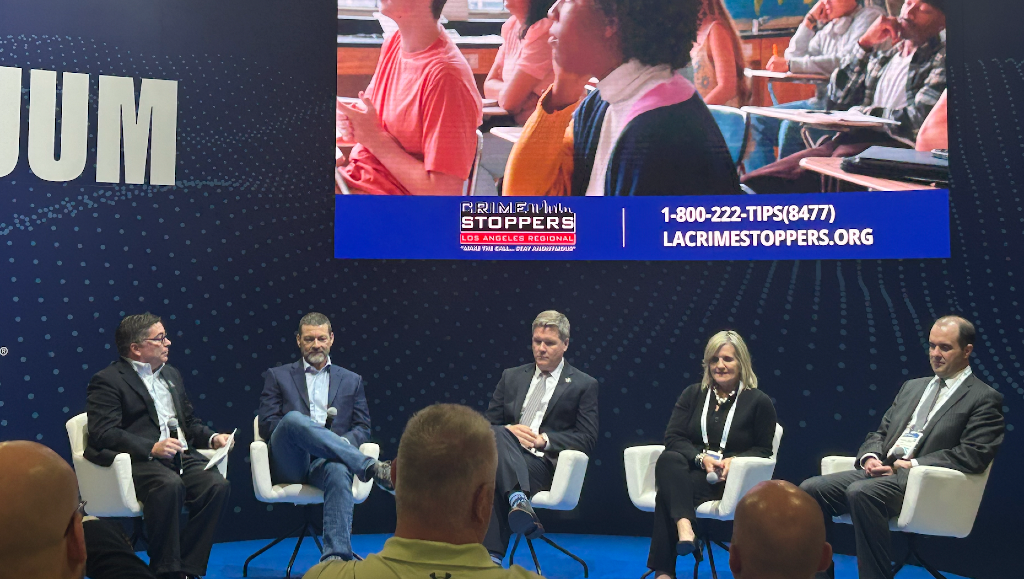
From left: Former FCC Commissioner Michael O'Rielly, Comcast Vice President of Network Maintenance Mike Spaulding, NCTA- The Internet & Television Association Vice President & Lead Legislative Counsel Alex Minard, Charter Communications SVP of Corporate Physical Security Jane Rhodes, and Robert Cochrane from the FBI.

WASHINGTON, Oct. 1, 2025 Communications industry leaders and federal officials are warning that copper theft is evolving into a broader threat to U.S. broadband infrastructure, with some cable cuts showing signs of intentional sabotage.

At the TechExpo25 conference in Washington on Tuesday, executives from Comcast, Charter, and NCTA – The Internet & Television Association joined the FBI to call for stronger laws and coordinated industry action. The event was hosted by former FCC Commissioner Michael O’Rielly, who is now president of MPORielly Consulting.

A new initiative called STRIKE — the Strategic Threat Response & Infrastructure Knowledge Exchange, was also part of the discussion. The executive-level coalition is co-led by the Society of Cable Telecommunications Engineers, a subsidiary of CableLabs, and NCTA, and includes senior leaders from Comcast, Charter, Cox, GCI and Mediacom. 

STRIKE is designed to align industry and government efforts against criminal and potentially deliberate attacks on broadband networks.

“This type of destruction is happening on our critical infrastructure. It’s absolutely an impact to the communities that we’re serving, to the businesses and the government institutions that we provide service to as well” said Janes Rhodes, senior vice president of corporate physical security at Charter Communications. She named California as one of the hotspots for copper theft, such as recent reports of thieves leaving severe damage to a utility pole and surrounding businesses in a South Bay neighborhood in Los Angeles.

Under $1,000 of copper was stolen but repair costs were estimated at $22,000. Rhodes added that the act of theft can take only minutes, but repairs can take up to twelve hours.

Mike Spaulding, vice president of network maintenance at Comcast, addressed the reputational damage of their companies’ as an additional issue to the monetary problem of copper theft.

From the law enforcement perspective, Robert Cochrane of the FBI said in some instances closer attention is needed. “They can appear to be deliberate.” 

He urged the public to report suspicious activity targeting critical infrastructure, warning that both criminal and politically motivated actors may attempt to disrupt communications between law enforcement agencies. 

He later added that certain “intentionality” within the cuts is visible. “I’ve seen situations where the cuts were in a difficult location that indicated that there was some pre-knowledge of what they were going after.”

Alex Minard, vice president and lead legislative counsel at NCTA, emphasized that copper theft affects the full range of communications systems. “But [we need to] make sure that everybody understands that this is something that is hitting all components, wired and wireless across the country.”

Minard also said the variation in state laws is part of the problem, with some statutes still mentioning telegraph wires and classifying wire theft as a misdemeanor. He noted that a bill has been introduced in the House and that he hopes to see one in the Senate that would expand an existing law making it a crime to attack government-owned communications networks to cover all networks “regardless of ownership.”

On solutions, Rhodes said: “The ease of selling it is really an issue that we’re fighting to deny them their ability to do that, strengthen the laws that are in place, require more identification and proof that the bad actors are authorized to hold that material.”

She added that prosecutors need to understand the impact. According to Rhodes, Charter is doing outreach to prosecutors and first responders as well as homeless encampments and recyclers to address the problem. “Arresting our way out of the problem isn’t a long-term solution,” she said, pointing to Charter’s awareness and rewards programs as alternative strategies.

Member discussion

Popular Tags