
Ligado Case Might Not Upend Spectrum Auction Certainty: Former NTIA Administrator
The ruling will be ‘very fact-dependent,’ former NTIA Administrator John Kneuer said.

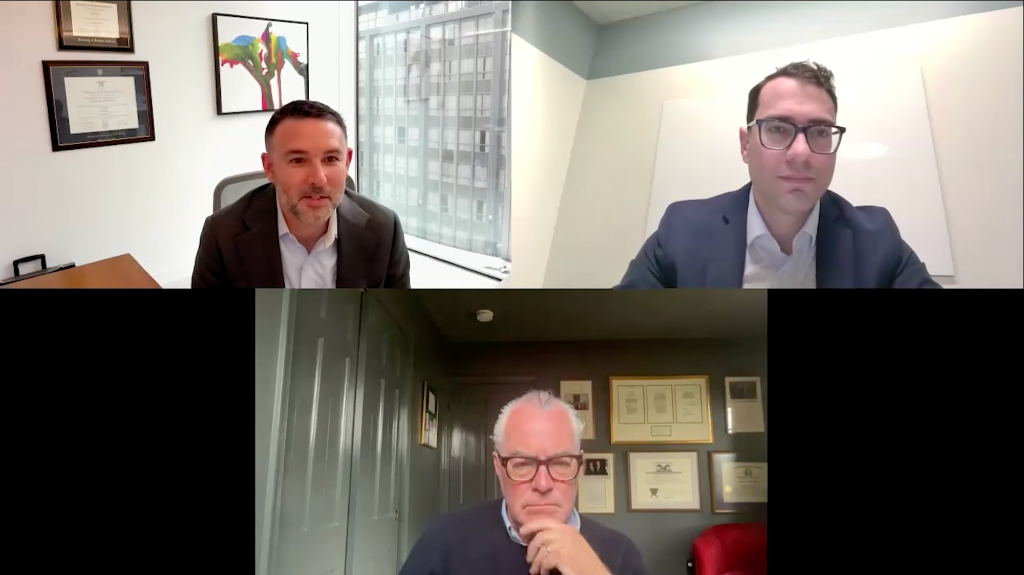
WASHINGTON, April 1, 2026 – Companies that bought spectrum licenses at auction will likely still be able operate with a level of certainty after a case dealing with the property rights of license holders is resolved, a former spectrum regulator said.
“I don’t think an auction participant, who got their license at auction, needs to look at this case and say, ‘Oh, the FCC can just change their mind willy-nilly, or the Defense Department can come in and decide to say, "I want that spectrum,"'” John Kneuer, former head of the National Telecommunications and Information Administration, said.
The case at issue involves Ligado’s suit against the Defense Department, which alleges the government is operating a secret national security system using spectrum that Ligado was licensed to use by the FCC. Ligado is seeking $40 billion in compensation, arguing it’s been prevented from deploying 5G infrastructure by the military operations.

He spoke on a Federalist Society webinar posted Sunday.
The issue of whether FCC spectrum rights create a property right drew interest from major industry group USTelecom, which told judges last year that wireless carriers could be less willing to bid on licenses if the government could freely seize those airwaves.
But auction participants might have less to worry about than Ligado because “those license terms are settled,” Kneuer said. “Any interdependence or conflict between the fed and the non-fed actors are all resolved in the rulemaking that establishes the spectrum as appropriate for auction.”
In Ligado’s case, the company asked the FCC to change the authorization on L-band satellite spectrum it already held and allow terrestrial 5G infrastructure. That kicked off a separate rulemaking in which DOD and NTIA, which manages federal spectrum use, participated.
The two agencies initially told the FCC they feared interference with GPS systems, but after some collaboration came around and “essentially supported” Ligado’s request, Wiley Rein partner Ari Meltzer noted.
The agencies later reversed and submitted a letter saying they still had GPS-related concerns – a move Ligado alleges was cover for the secret military system – but the FCC weighed the prior approval more heavily and granted Ligado’s application in 2020.
The controversy in this case stems from the “ad-hoc” effort to change license rules after the fact, Kneuer said. Satellite spectrum like L-band isn’t auctioned for cash by the FCC.
Still some uncertainty
Still, he and Meltzer said the question of whether spectrum licenses grant property rights with respect to government agencies other than the FCC was not well settled. Kneuer said the case was likely to go to the Supreme Court, something a federal judge hearing the case said last month.
“If DOD wants to use spectrum that has been allocated for commercial purposes by the FCC, where’s the law, where’s the regulation that says how that works? The answer is, there isn’t,” Meltzer said.
Kneuer said the FCC can’t force an executive branch agency to do anything, and spectrum use parameters were usually hammered out by FCC and NTIA before allocations were made.
The uncertainty from the Ligado case will inevitably bear on the minds of future auction participants to some extent, both panelists said.
Ultimately though, Kneuer said “the FCC and market participants will be able to take a step back, and differentiate and distinguish the facts and law, in a way that maintains the certainty that we have typically operated on.”
Upcoming auction
It’s unlikely that companies will have a resolution to the question before the FCC’s AWS-3 auction begins on June 2. The U.S. Court of Appeals for the Federal Circuit sent the case back to federal claims court last month for more briefing.
Judges said the issue of whether Ligado had a property right that would entitle it to compensation for DOD’s occupation of the spectrum hadn’t been fully fleshed out and they couldn’t decide without more information.
The military’s position is that electromagnetic spectrum is a public resource that the FCC grants access to, and thus licensees don’t actually own anything and should not be compensated if the government operates in bands they were licensed for. Ligado is arguing that even if the FCC can through its regulatory powers alter licenses, other government agencies can’t interfere with spectrum licenses without compensating the licensee.






Member discussion