Major Telecom Trade Groups to Supreme Court: FCC Can’t Fine Us

The high court will hear arguments on the issue in April

Major Telecom Trade Groups to Supreme Court: FCC Can’t Fine Us
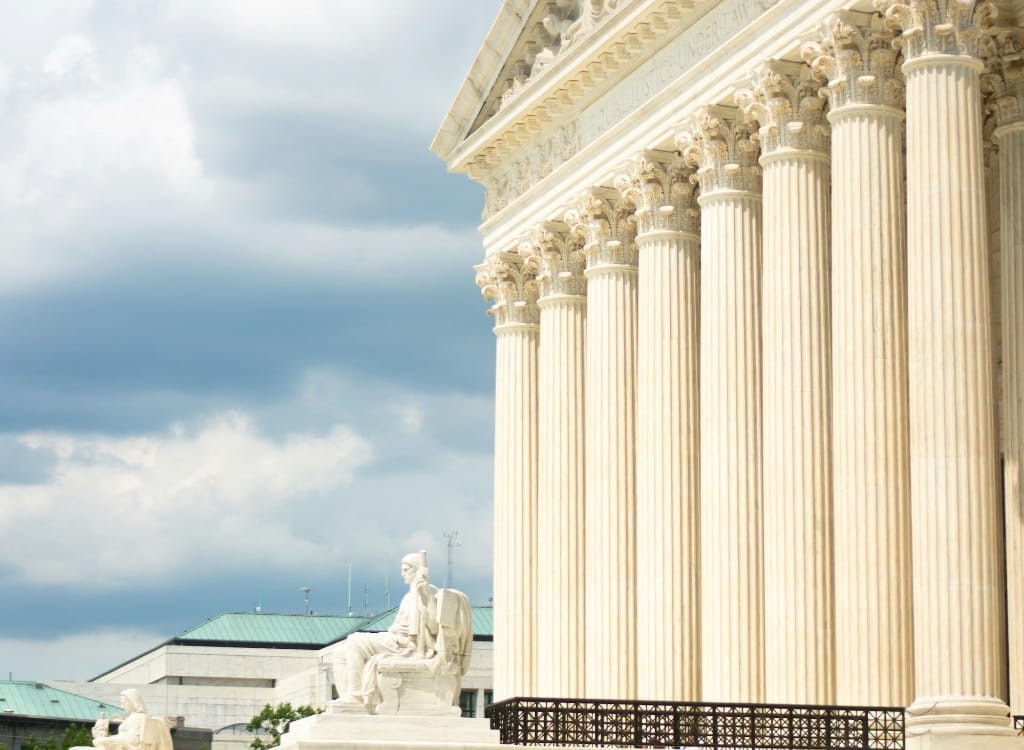
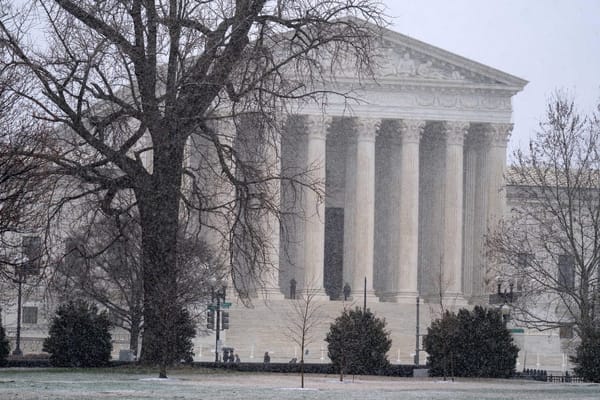
Photo of the Supreme Court building by Juliana Uribbe / Unsplash

WASHINGTON, Feb. 27, 2026 – Major telecom trade groups are urging the Supreme Court to find that the industry’s main federal regulator can’t issue fines for violations of its rules.

CTIA, NCTA, and USTelecom submitted a joint filing with the high court Wednesday arguing the Federal Communications Commission’s process for fining companies, as outlined in the Communications Act, was unconstitutional. 

They, and the major wireless carriers who were fined in 2024, pointed to the Supreme Court’s 2024 decision in SEC v. Jarkesy, which found that under the U.S. Constitution, companies need the option of a jury trial before paying fines.

The FCC’s process does allow for that, provided companies don’t pay and wait for the Department of Justice to bring a collection action. The trade groups argued that, in practice, withholding payment is not a viable option.

“Doing so triggers an avalanche of consequences, the whole point of which is to render nonpayment functionally impossible. But under the statute, nonpayment is the only path to a jury,” the groups wrote. “The result is that there is no such path at all. This Court should not condone a jury right that exists only on paper.”

The case, in which the Supreme Court will hear on April 21, is significant for the FCC, as fines are one of its main enforcement mechanisms. The agency told justices in October that if precedent in favor of the carriers’ position stands it would have “no alternative avenue for seeking monetary penalties, seriously impairing the agency’s ability to enforce” its rules.

The agency noted it can require the forfeiture of equipment or suspend licenses, but said it only uses those “draconian” punishments in more severe cases.

The FCC’s position is that companies aren’t actually required to pay anything before DOJ collection suits, and don’t suffer meaningful consequences for denying payment and choosing to go that route.

The trade groups, represented by Wiley Rein partner Joshua Turner, countered that companies with consistent business before the FCC don’t see it this way, fearing being treated as delinquent debtors by an agency they depend on to operate.

In 2024, the FCC fined AT&T, Verizon, and T-Mobile collectively $200 million for, in the agency’s view, not vetting third parties enough before selling them customer location data. The carriers each appealed after Jarkesy came down.

The D.C. Circuit and Second Circuit sided with the FCC, finding the carriers didn’t actually have to pay anything without a jury trial, while the Fifth Circuit ruled in AT&T’s favor. AT&T, Verizon, and the FCC each asked the Supreme Court to resolve the split on the issue.

FCC Chairman Brendan Carr, a commissioner at the time, dissented from the fines, but the agency has been defending its enforcement power under his leadership.

Several conservative legal groups filed petitions in support of the carriers, as did the U.S. Chamber of Commerce and T-Mobile.

Member discussion

Popular Tags