
Rep. April McClain Delaney Hopes to Pass New Quantum, AI Measures
McClain Delaney talked social media age verification, BEAD program and rural broadband access.

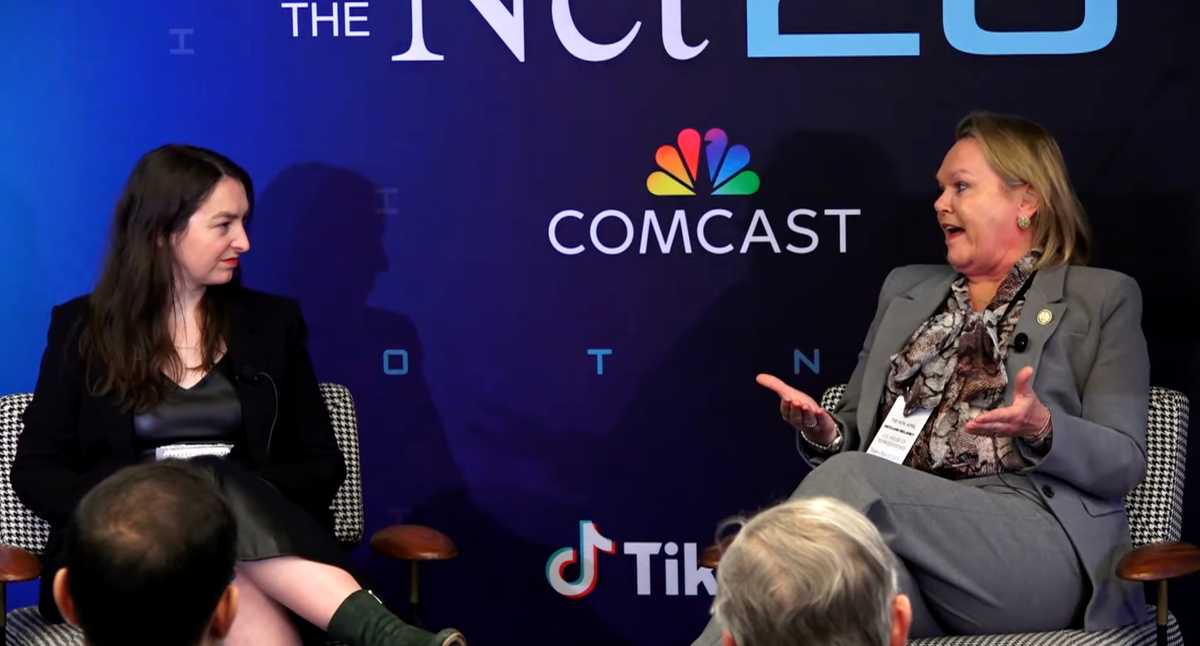
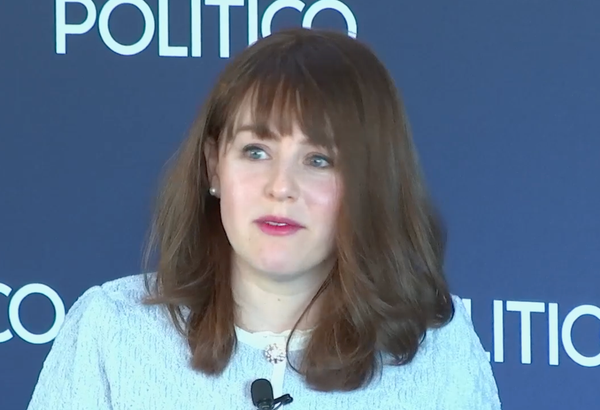
WASHINGTON, Feb. 9, 2026 – Rep. April McClain Delaney, D-Maryland, is preparing a bill on standards surrounding quantum technology that she plans to release in about a month, she said at the State of the Net Conference here on Monday.
While she acknowledged that this bill may not see “the light of day being in the minority,” McClain Delaney affirmed that Democrats are continuing work on legislation.
She also emphasized the importance of new legislation on artificial intelligence, data privacy and cybersecurity accountability. The current piecemeal state-by-state legislation on this topic “does not meet the moment” in a changing technological landscape, she said.

In the Biden administration, McClain Delaney served as deputy assistant secretary of communications at the National Telecommunications and Information Administration, the Commerce Department agency responsible for administering the bipartisan infrastructure law’s broadband programs, including the Broadband Equity, Access and Deployment program.
McClain Delaney explained how broadband continues to be a priority for her and her district, which includes farmers in the rural parts of Maryland.
“I have been very much focused on broadband and also how we drive investment into our rural communities, and particularly with respect to the cuts with Medicaid and other cuts, about figuring out how we can help our rural hospitals with telehealth,” McClain Delaney said.
When asked about her thoughts on the difference between the Trump and Biden administration versions of BEAD, she said while “no administration ever gets it 100 percent right,” she said she favored the work of the Biden era’s Internet for All Initiative, particularly in its support for underserved rural communities.
When it comes to present-day BEAD progress, she said she believes both zoning and permitting needs to be streamlined. She also believes fiber is the most scalable, climate resistant and affordable, fundamentally supporting rural America and making it a good focus of BEAD.
McClain Delaney shared about one of her biggest priorities, which is social media safeguards for children through the Algorithm Accountability Act. Introduced in November 2025, the act would require social media platforms to design algorithms that prevent foreseeable harm to children.
“I really do believe for there to be accountability and change [for social media platforms]. There must be some type of liability or some sort of penalty, or it’s never going to change,” she said. “As a lifelong child advocate, I think that enough is enough.”
A large part of legislation similar to the Algorithm Accountability Act brings in controversy regarding an infringement on First Amendment rights because of the implementation of age verification.
“I’m not sure that some of those First Amendment issues that are being brought up are necessary, or that they’re always valid. I think that you can work through them,” McClain Delaney said.
She pointed to European Union’s social media and AI legislation — including the Digital Services Act and the Digital Marketing Act — as a good example of protections that the United States should look at integrating.




Member discussion