Roth Says U.S. Must Lead Global Network Standards to Protect Speech
Commerce official warns foreign regulations and infrastructure battles threaten free expression
Sergio Romero
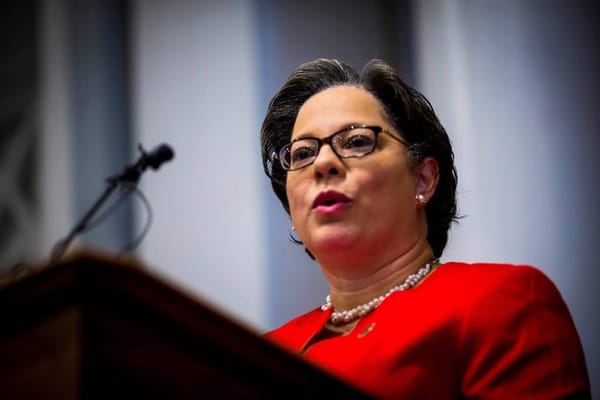
WASHINGTON, Feb. 25, 2026 – Arielle Roth, assistant secretary of commerce for communications and information, said Wednesday that the United States must lead in shaping global telecommunications standards and next-generation networks to prevent foreign governments from embedding speech restrictions into the architecture of the internet.
Speaking at the Media Institute’s monthly luncheon, Roth argued that control over communications infrastructure now defines the boundaries of free expression.
“If you want to control speech in the 21st century, you don’t just ban words or books,” Roth said. “You regulate infrastructure, networks, platforms, standards, algorithms, and market access.”
Roth spoke to regulatory regimes in the European Union, the United Kingdom, Canada and Australia, saying certain content moderation and platform oversight laws risk extending foreign speech mandates beyond their borders. Because global platforms cannot realistically operate under dozens of conflicting speech codes, she said, companies often adopt stricter rules worldwide, effectively importing those standards into the United States.
She said the administration would oppose extraterritorial enforcement actions and resist efforts to expand centralized regulatory authority over the internet through international institutions.
Roth said standards-setting bodies and global telecommunications forums are central to that fight. If the U.S. does not actively participate in shaping technical specifications for sixth-generation wireless networks, artificial intelligence-driven systems and satellite communications, she warned other governments could influence those standards in ways that favor surveillance and centralized control.
To counter that risk, Roth said the National Telecommunications and Information Administration plans to launch a new notice of funding opportunity using approximately $50 million in remaining innovation funds to support development of a domestic, interoperable artificial intelligence-driven 6G technology stack.
She also said the U.S. supported the reelection of International Telecommunication Union Secretary-General Doreen Bogdan-Martin and is preparing U.S. spectrum positions for upcoming global negotiations. The agency will expand training programs with developing countries to promote market-based satellite regulation and spectrum coordination.
“If we want an internet that remains a force for liberty rather than a tool of coercion, the United States must lead,” Roth said.

Member discussion