Special Report: Five Questions for Shentel President and CEO Christopher French
Fiber ISP leader stepping down after 37 years in charge amid rapid industry change.
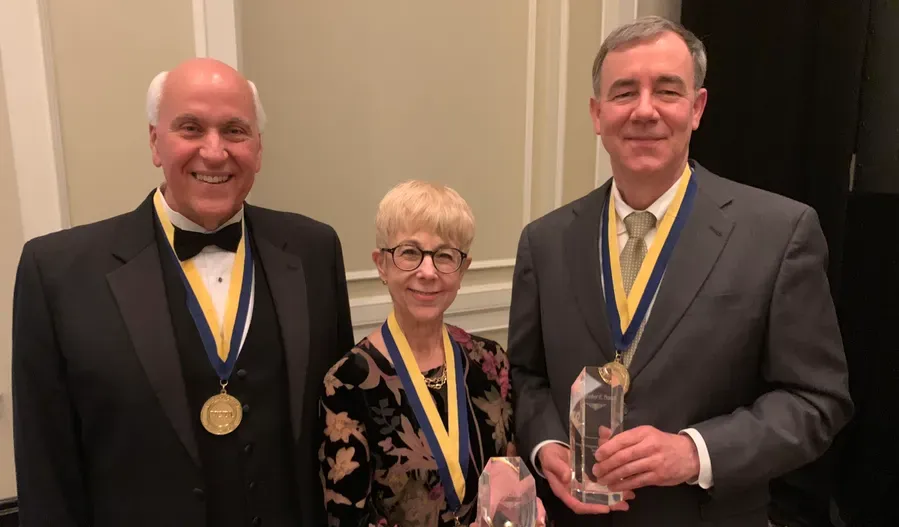
Preview: Shentel President and CEO Christopher French has announced that he is stepping down to become Executive Chairman of the Board. He became company president in 1988, succeeding his father Warren, who became the company’s leader in 1973. His father joined the company as general manager in 1954 and was appointed President in 1973.
During his decades at the helm, French led the Edinburg, Va., organization as it expanded its reach into cable TV; vied in the mobile phone business that ended with a lucrative sale to T-Mobile in 2021; and developed the multi-Gig Glo Fiber broadband network that now has 379,000 passings in Ohio and several mid-Atlantic states combined.
Policyband wanted to check in with French before he turns over the reins to his successor, current EVP and COO Ed McKay, on Sept. 1, 2025.
Five Questions for Shentel CEO Christopher French:
Q: You became President of Shentel in 1988. What has it been like navigating Shentel through a communications sector revolution for nearly four decades?
A: It has been quite a ride! From the time I officially joined the company in 1981, I’ve had a front-row seat on some pretty significant industry changes: electromechanical to electronic switching; analog to digital; twisted pair to coax and fiber; shift from voice to data; competition and deregulation; introduction of cellular and PCS; launch of Internet access and growth of broadband.
Q: How satisfying is it to know that you are connecting people to an indispensable technology like fiber broadband Internet?
A: It is extremely satisfying. Demand for quality broadband access was growing for many years, and of course the pandemic solidified its importance. Fiber not only meets today’s demand but will meet customer needs as they continue to grow and evolve, so it is great to know the investments being made now will serve customers well into the future. Of course, the challenging part is physically building those networks, and a lot of satisfaction comes from seeing our teams execute all the underlying tasks and resolve the issues that arise as we make the infrastructure investment.
Q: Do you see Artificial Intelligence as a plus or a minus or neither for fiber-first Shentel?
A: We see significant potential for AI to improve service reliability by proactively detecting and addressing network issues before they impact customers, enhance customer acquisition by targeting the right prospects with tailored offers, and drive greater operational efficiency across our organization.
More broadly, I think there will be both positives and negatives to AI. It is a rapidly evolving, very powerful technology that will be very beneficial when applied thoughtfully. Unfortunately, I suspect there will also be unforeseen or unintended negative consequences, and it will also be misused by bad actors. Hopefully, the negative aspects can be mitigated or constrained.
Q: Where do you see Shentel in ten years?
A: A solid and growing company focused on constantly improving and expanding services. We will be well past our current heavy investment cycle but will still be investing in new technologies. Focus will continue to be on growing revenues and profitability, while being disciplined in evaluation of further expansion opportunities.
Q: If you had one message for today’s Washington regulators, what would it be?
A: Probably the same message goes for anyone in Washington: Addressing the issues facing our industry (and country) requires all parties working towards reasonable compromise.
Bonus Q: Warren Buffett, age 94, is retiring as CEO of Berkshire Hathaway at the end of 2025 after 60 years in the job. Are you sure your decision is final?
A: Yes, my decision to step away from the CEO role is final, but in my new role as Executive Chairman of the Board, I will still be an actively contributing member of the executive team.