
States Race to Win the Tech Economy in 2026 State of the State Addresses
Here’s what 30 governors said about broadband expansion, AI growth, and online child safety.

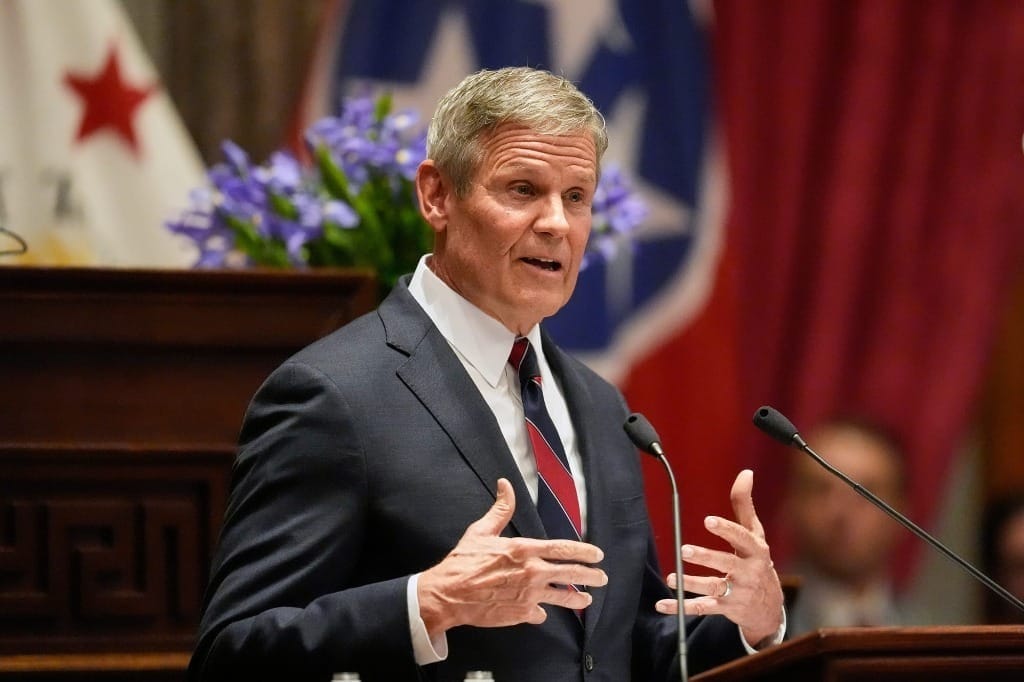
WASHINGTON, April 2, 2026 – Broadband and technology were a hot topic in State of the State addresses this year, with nearly 30 governors putting connectivity at the forefront.
Beyond that, states are competing to win — whether it be in closing the digital divide, the data center race, or who can drive the most Big Tech investment.
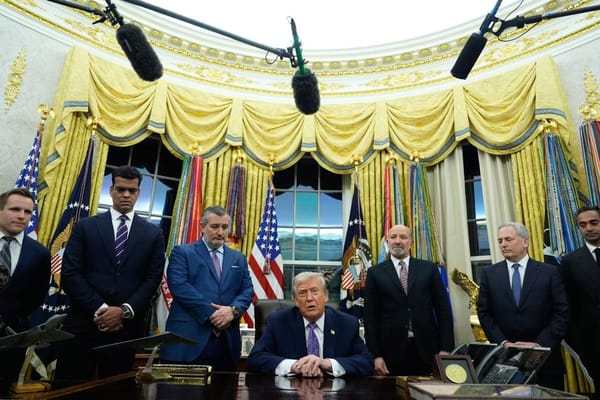
In President Donald Trump’s State of the Union speech on Feb. 24, he only briefly mentioned energy for data centers, but governors seemed to have a wider breadth, from internet access and online child safety to artificial intelligence and data centers.
Here’s what governors said about all things technology during their addresses to residents of their states, territories, or commonwealths.
Broadband and internet access
Access to broadband served as a popular topic during the addresses as states continue to work toward providing their residents with this key resource. When it came to closing the digital divide, governors disagreed on which state would be the first to do so.
“Delaware is closer than ever to being the first state in the country with universal high-speed broadband,” said Gov. Matt Meyer, D. “Today 72% of Delawareans can make a high-speed video call from home. That’s darn good for America, but it’s not good enough for Delaware in 2026.”
However, Maine Gov. Janet Mills, D, implied that the divide has already been closed.
“As a matter of fact, right now every person who wants an internet connection has access to one, thanks to the good work of the Maine Connectivity Authority, fulfilling the promise I made to you in 2022,” Mills said.
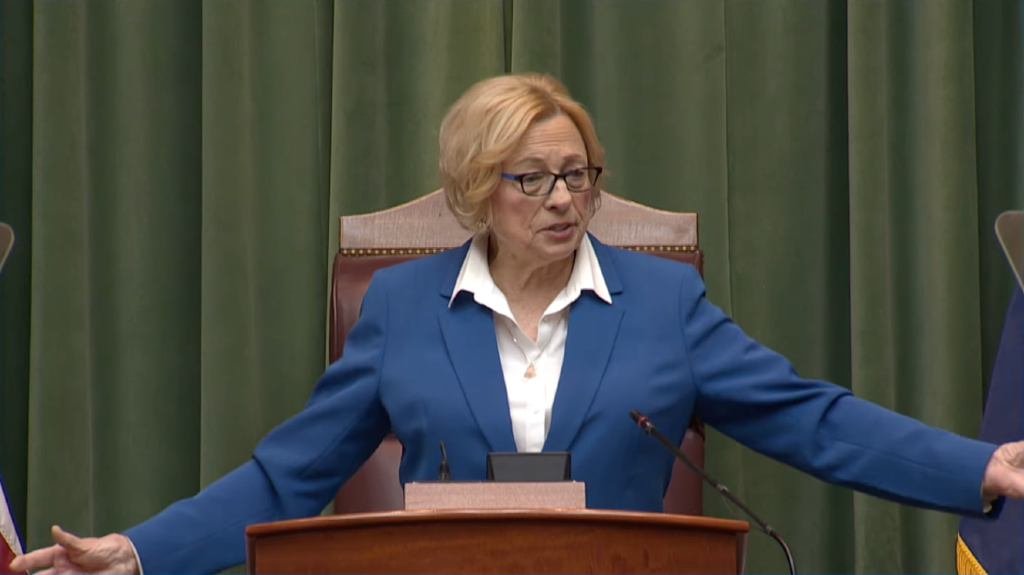
She said “more than a quarter million homes and businesses” now have broadband through investments and work with hundreds of communities and internet service providers.
Wisconsin Gov. Tony Evers, D, said “affordable, high-speed internet in the 21st Century is a necessity, not a luxury,” and has worked toward expanding broadband. He boasted about the 410,000 businesses and households across the state with new or improved internet access through the help of federal funding and investments, while Meyer also mentioned the secured “historic funding” for high-speed internet.
Arizona, Idaho, and Alaska governors also addressed their dedication to broadband infrastructure development and continued work in accelerating permitting for expansion in their states.
California and Kansas leaders discussed their expansion of broadband for rural communities throughout the states, with Kansas’ Democratic Gov. Laura Kelly’s accomplishment of connecting more than 117,000 households and businesses with high-speed internet.
Virgin Islands Gov. Albert Bryan Jr., D, said internet access is now in every park, library, and public housing community throughout the territory, allowing every resident to participate in the global economy.
“No recreational facility would be complete in today’s age without internet,” Bryan said. “We dedicated a lot of time and effort to ensure that we provide free internet to those who need it. This year, we can boast that our territory-wide internet program is almost complete, with over 50,000 users per month.”

The governors of North Dakota and Guam also addressed the health care benefits that come with increased connectivity, including North Dakota’s Rural Health Transformation Program and Guam’s focus on integrating electronic health records, health information exchanges, and telehealth.
Navigating artificial intelligence growth
Maryland Gov. Wes Moore, D, spent far longer delving into AI than any other governor in their addresses. He highlighted three key pillars: workers cannot be left behind, AI needs to better serve the public, and AI should be a tool to drive economic growth.
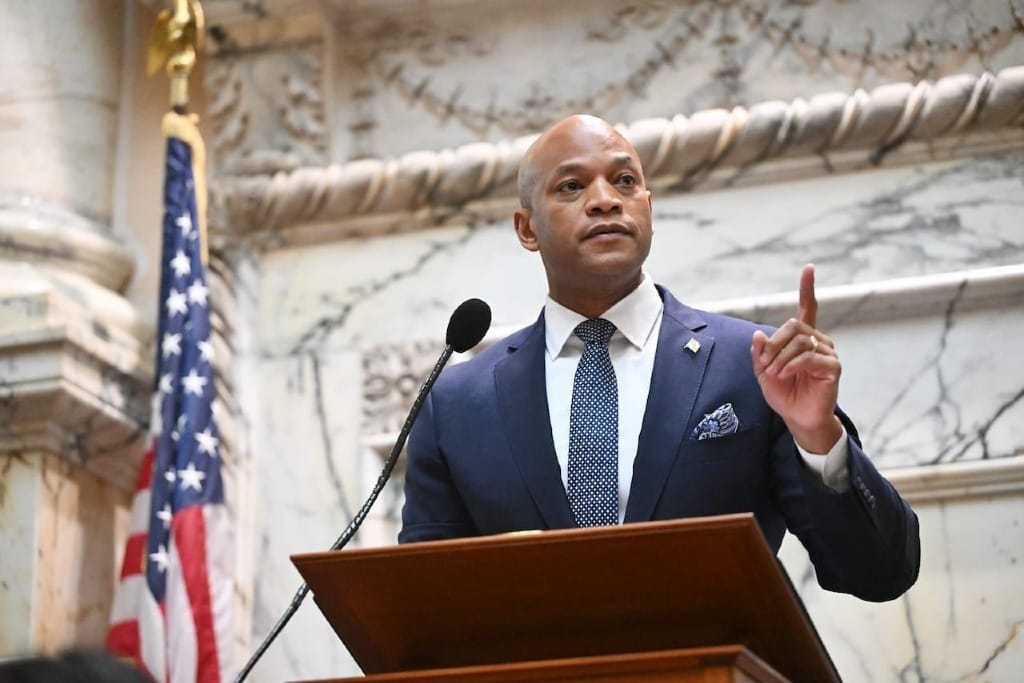
Moore announced in his address that Maryland will invest $4 million for workforce training in AI, and will need help from employers and workers to design programs that will create opportunities for Marylanders. He also emphasized the importance of partnering with AI to prove that it can help residents access Medicaid, unemployment insurance, and child care subsidies.
“AI companies want to move to Maryland because we have some of the best universities and research institutions in the world,” Moore said. “If we offer the assets, they’ll bring the jobs. This technology can also help us lift the dreams of the small business owner.”
Moore emphasized that these partnerships have already begun with Bloomberg Philanthropies, Microsoft, South Korea’s largest biotech company, and pharmaceutical company AstraZeneca.
Iowa is working with “some of the biggest names in tech to modernize state systems, drive efficiencies, and improve services,” Gov. Kim Reynolds, R, said in her address. Through partnerships with Amazon Web Services and Google Public Sector, Iowa is utilizing AI to consolidate 50 state call centers and creating a modern Comprehensive Child Welfare system.
“That’s what efficiency looks like,” Reynolds said. “And that’s how we keep spending in check — so Iowans can keep more of their money.”
Tennessee Gov. Bill Lee, R, announced the launch of the Tennessee Quantum Initiative during his address. He said the initiative represents a “statewide effort to position Tennessee as the national leader in quantum research, infrastructure and workforce development,” while also continuing to solve the country’s largest problems in AI and quantum computing.
Massachusetts Gov. Maura Healey, D, also said the continued research in science, quantum, AI, and defense technology are the “economic engines of our state.”
Data center difficulties and opportunities
The result of AI expansion also brought conversations about data centers and energy center stage, and many governors made it a point to discuss these technological impacts.
“Let’s talk about data centers,” said Indiana Gov. Mike Braun, R. “AI is going to be key to the jobs of the future, but data centers can’t stick Hoosiers with the power bill. Companies that want big power in Indiana should pay their own way.”
Braun addressed residents’ concerns on increased electricity rates and said Amazon, and every other company that uses energy in Indiana will “pay for every cent of their new power needs, and then some.”
New York Gov. Kathy Hochul, D, echoed this message and said companies should independently generate their own power and avoid burdening the power grid.
However, some state leaders saw data centers differently. Nebraska Gov. Jim Pillen, R, said states are competing on energy capacity, grid flexibility, and regulatory speed — and the data center race is on.
“The facilities of the future, let’s call them ‘AI factories,’ are critical not just for our information economy, but for our national security. We simply can’t lose them to our foreign adversaries,” Pillen said. “Nebraska will win the electricity and AI power game. There’s no other option.”
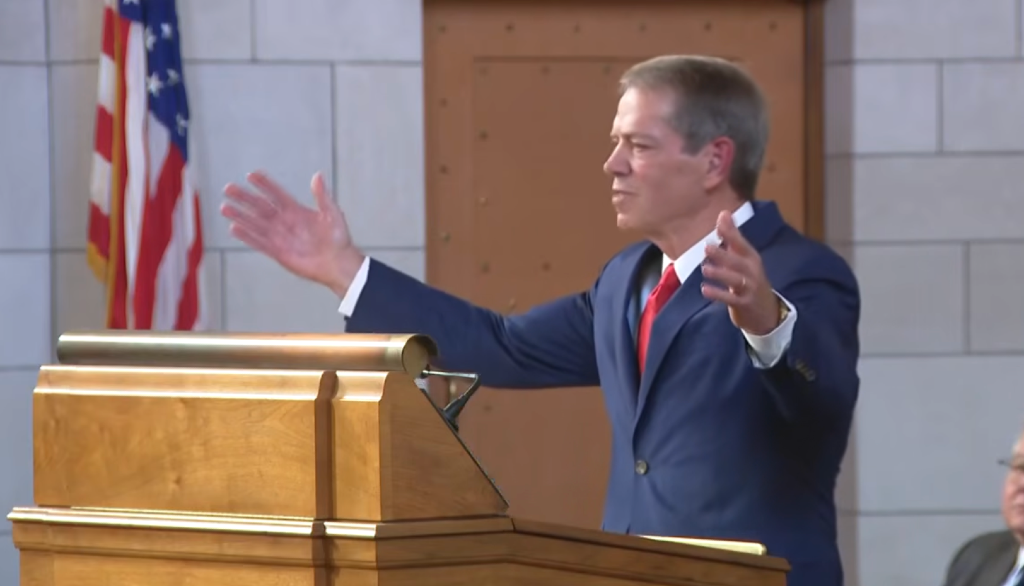
Pillen said regions that produce more electricity will thrive, while “those who fail will shrink.” Fortunately for the state, Pillen said the “unique, only-in-Nebraska public power system has built the most affordable and reliable grid in America,” and he has every intention of ensuring it is kept this way.
Through removing “red tape and obstacles for larger power users,” companies will be able to build data centers and sell excess electricity onto the grid. Pillen called for changes to public power laws and streamlined permitting to make this happen.
Some states including Delaware, New Hampshire, and South Carolina are turning to nuclear energy as possible solutions to combat vast energy use.
“Today, I am directing our Department of Energy to build pathways to foster the next generation of nuclear power generation here in New Hampshire,” said Gov. Kelly Ayotte, R. “I have asked the Department to bring together stakeholders, lawmakers, and organizations focused on nuclear generation to ensure our state is at the forefront of this pivotal technology.”
Similarly, Meyer said affordability and efficiency depends on increased nuclear energy supply, making this a prime priority for Delaware.
Beyond investment from Big Tech companies, some states are also hoping to win big with partnerships with the federal government. South Dakota Gov. Larry Rhoden, R, boasted of the state’s $35 million contract with the Department of Defense to produce “groundbreaking warheads for America’s drone fleet.” He said the state will continue to prioritize national security and warfare-technology companies that lead innovation in the field.
Concern for online child safety
While states drove a competitive attitude toward technology and connectivity, governors seemed to have a consensus for online child protection: protect kids by passing laws to reduce screen time.
“I say we enact new requirements to protect all social media users under the age of 18. Let’s block direct messages from would-be child predators, number one. Let’s disable AI chatbots that can cause serious mental health problems. Let’s block location sharing,” Hochul said. “We can get that done. I know we can.”

Braun and Ohio Gov. Mike DeWine, R, echoed these words. They emphasized that decisions around cell phone use must land in the hands of parents, not Big Tech.
For many governors, this must start with cell phone bans during the school day, according to Kansas Gov. Laura Kelly, D, and Utah Gov. Spencer Cox, R. They both emphasized the need to protect children from technology and credited various members of Congress for drafting state legislation to confront this issue.
“This session, we must pass the bipartisan proposal to ban cell phone use during the school day,” Kelly said. “Get that bill to my desk, and I will sign it into law.”
Managing Editor Ted Hearn and Reporter Eric Urbach contributed to this report.






Member discussion