Broadband's Impact
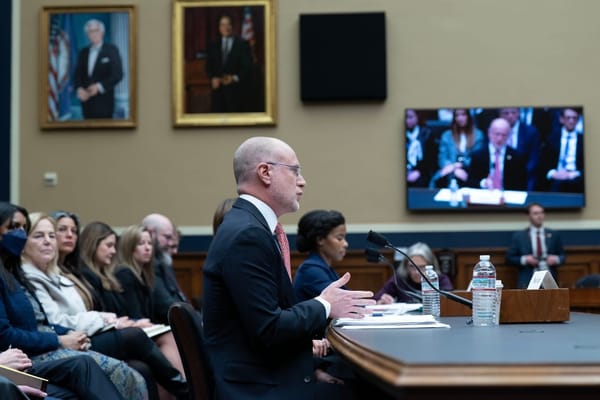
NTIA Releases Accountability Report, Calls for Independent Audits of AI
Davidson said that the NTIA looked to financial auditing as inspiration for the new proposed rules.

The National Telecommunications and Information Administration, an agency within the U.S. Department Commerce, is responsible for implementing the bipartisan infrastructure legislation, including managing federal broadband funding programs to expand high-speed internet access.

Broadband's Impact
Davidson said that the NTIA looked to financial auditing as inspiration for the new proposed rules.

Digital Inclusion
Their Republican counterparts and conservative groups have opposed the agency's low-cost policies.

FCC
It's a time of changing seasons in Washington, and in Rural America.
NEPA
The agency said it will be announcing additional permitting initiatives ahead of BEAD.
Defense Department
Democratic lawmakers supported using proceeds to fund the Affordable Connectivity Program.

FCC
The bills deal with network security and studying 6G technology.

Tribal
Federal agencies must compensate Tribes or consulting parties for services performed on historical sites.

Vermont
Four other states are accepting challenges and three more are planning to begin the process soon.
Energy and Commerce
The bills focus on thwarting potential efforts by China to exploit security vulnerabilities in networks.

ARPA
Minnesota began accepting applications for its $50 million program. Oregon finalized guidelines for awarding $149 million from CPF.
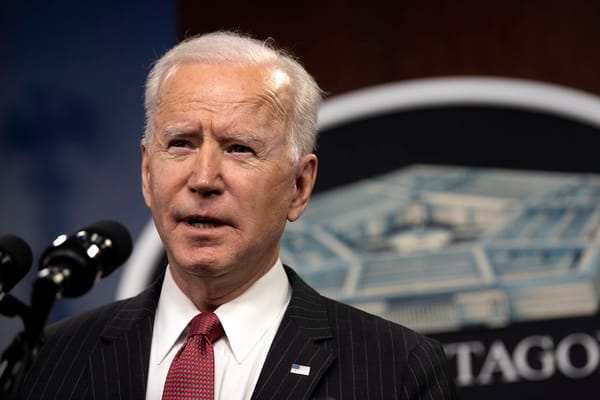
Defense Department
The implementation plan aims to bolster the U.S. spectrum workforce to support future wireless policy and innovation.

Louisiana
More than 20 think tanks asked Republican lawmakers to push the NTIA to approve lighter touch state plans.

Defense Department
The bill would also require the NTIA to flag 2,500 megahertz of federal spectrum for repurposing.

FCC
The pre-challenge modification permits the inclusion of speed test data gathered from phones and devices equipped with GPS chips.

BEAD
Several state offices expect to utilize nondeployment funds in conjunction with infrastructure deployment funds for BEAD.

IIJA
The waiver exempts specific BEAD-funded equipment from the domestic manufacturing requirement outlined in the IIJA.