Trump Taps Gail Slater for Justice Department Antitrust Head
The department reviews major telecom deals but isn't seen as a bottleneck for currently pending transactions.

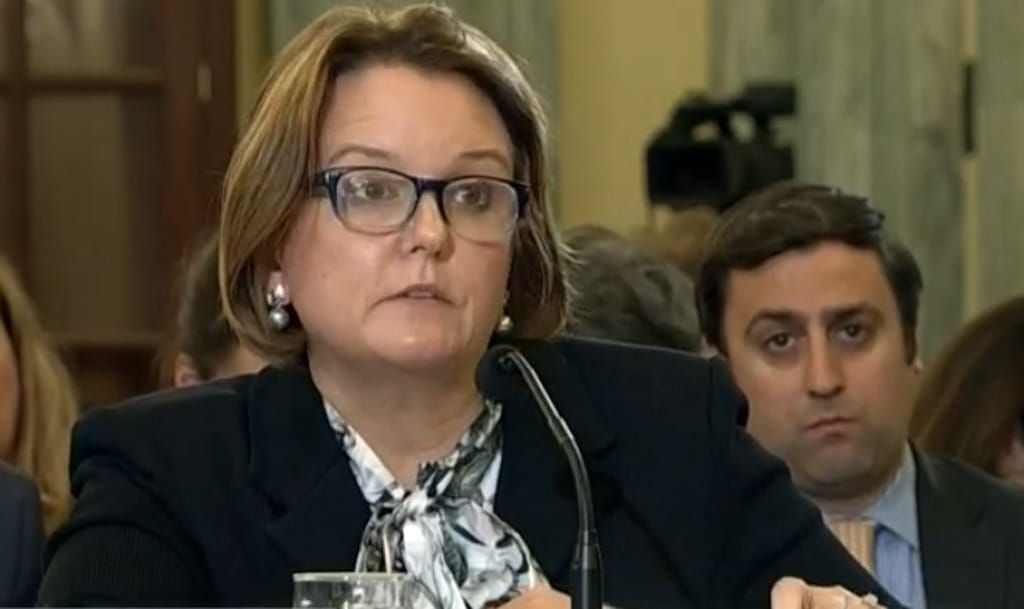
WASHINGTON, Dec. 5, 2024 – President-elect Donald Trump wants Gail Slater to head the Justice Department’s antitrust division, he announced Wednesday. Slater spent a year advising Trump on tech and telecom issues in his first term and is an advisor for Vice President-elect JD Vance.
“Big Tech has run wild for years, stifling competition in our most innovative sector and, as we all know, using its market power to crack down on the rights of so many Americans, as well as those of Little Tech!” Trump posted on his social media platform Truth Social.
“I was proud to fight these abuses in my First Term, and our Department of Justice’s antitrust team will continue that work under Gail’s leadership.”
The continued bashing of big tech companies is likely bad news for the industry, as Slater will take over lawsuits accusing Apple, Amazon, and Google of antitrust violations. She was reportedly friendlier to the 5G industry during her time at the Trump white house.
Multiple telecom deals, like Verizon’s purchase of Frontier, T-Mobile’s acquisition of UScellular, and the same carrier’s joint venture to take over Lumos, could trigger DOJ antitrust reviews. ISPs are also expected to continue buying up smaller fiber providers.
Analysts at New Street Research have predicted the Frontier and UScellular deals would ultimately get the Justice Department's – and the FCC's – greenlight regardless of who won the presidential election.
Supporters say the deal could expand broadband investment, onshore customer service jobs, and improve employee wages.
The company said it would seek a waiver to use the terrestrial spectrum for satellite service.
Verizon is asking Supreme Court to resolve a split between the D.C. and the Second Circuits, on the one hand, and the Fifth Circuit, on the other.
More than 200 individuals urged the FCC to abandon rules they say erode local rights and speed tower approvals.
Member discussion