
Virginia Broadband Leader: How I Deal With ISPs Attempting to Change Contracts
She added that she would be tuning into the NTIA’s listening session on Wednesday at 2 p.m.

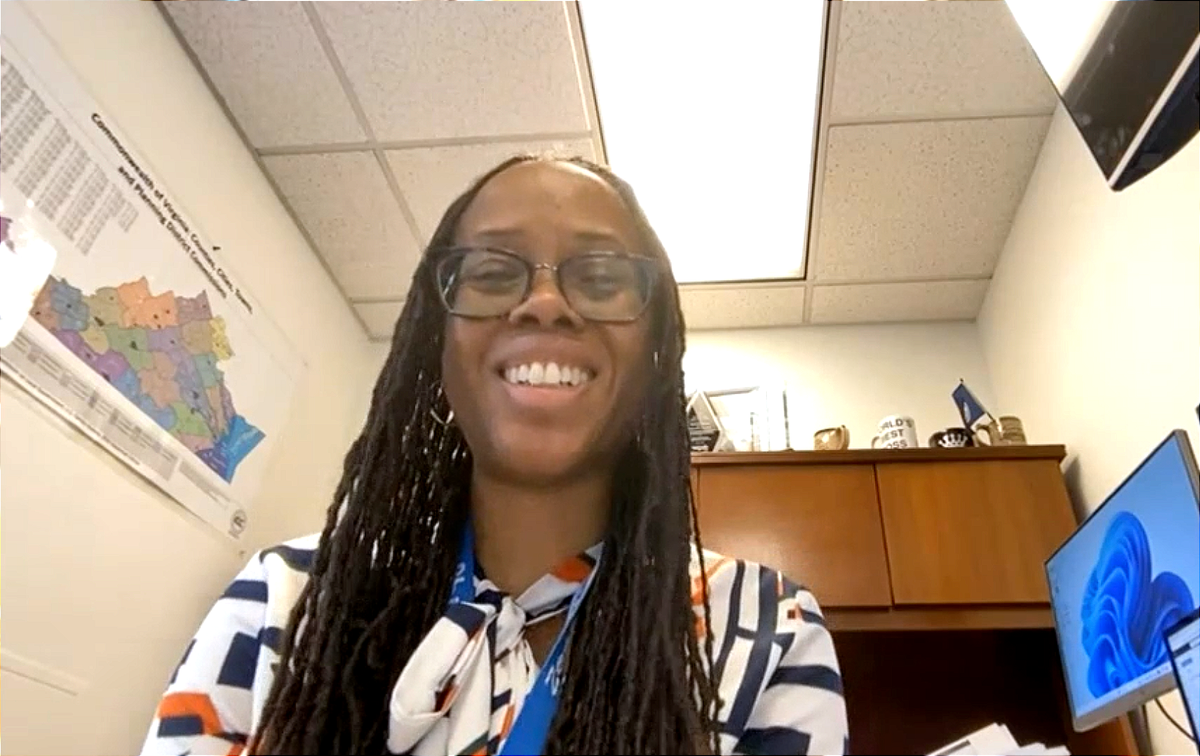
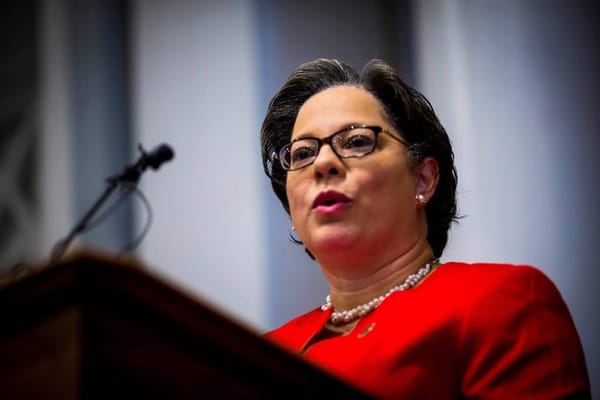
WASHINGTON, Feb. 11, 2026 – As grant funds rolled out from Virginia's Department of Housing and Community Development (DHCD) toward broadband access programs across the state, Dr. Tamarah Holmes, director of the broadband office at the agency, found herself on the phone constantly with ISP lawyers rebuffing attempting to change the terms of their contracts.
On her appearance on the Fiber Broadband Association’s weekly “Fiber For Breakfast” event Wednesday, Holmes said that agreements with ISPs are mostly carried out on the local level, and that they use a standard contract with all ISPs that does not get customized per provider.
Holmes also provided an update on her office’s attempts to close the digital divide. Although the state will receive $545 million for deployment funds un the Broadband Equity, Access and Deployment program, that's only 36 percent of funds originally awarded to the state.
 Broadband Breakfast
With projects currently underway or slated to start under the state's approved plan under BEAD, 90 percent of Virginia will have access to broadband. Virginia has a goal of universal broadband adoption by 2029.
While the state will mostly carry fiber service, Holmes said that local communities are making the decision on what type of broadband connection works best for their communities.
She noted that when adopted, 80 percent of the state will be serviced by fiber, 13 percent by satellite internet, six percent by coaxial cable and 1 percent from fixed wireless. All contracts, according to Holmes, have a requirement for ISPs to run tests at the consumer level and provide broadband at 100 Megabits per second (Mbps) * 20 Mbps designation.
BEAD update
Holmes noted that the National Telecommunications and Information Administration has yet to provide any guidance on the undistributed BEAD funding withheld through the “Benefit of the Bargain” program. She noted that she would be tuning into the NTIA's listening session at 2 p.m. ET Wednesday.
She noted that a canceled grant, initially funded by BEAD, was slated to go toward an educational house installed with smart tech and a high-speed broadband connection.
That was designed to show the public how this broadband works and how it could benefit residents. She compared the idea to educational houses set up by electricity providers in the early days of rural electrification.
Holmes said she was unsure if this particular grant would be reauthorized as she waits for further guidance from NTIA.



Member discussion