
Appropriators Would Give FCC $416 Million Budget for FY2026
That’s in line with the agency’s request and up from its $390 million FY2025 budget.

Jake Neenan
WASHINGTON, Jan. 13, 2026 – Appropriators from both chambers of Congress would set the Federal Communications Commission’s budget at more than $416 million for fiscal year 2026.
That’s what the agency had asked for back in June, and more than the agency’s roughly $390 million budget for fiscal year 2025. The FCC funds itself via regulatory fees, meaning the money likely won’t be appropriated from the Treasury.
The funding bill, released Sunday as part of an effort to avoid another government shutdown at the end of the month, would set aside $13.5 million of the FCC’s budget for its Office of Inspector General, in line with the agency’s request.
The FCC said it needed the extra money to fulfill its obligations under the 202 Broadband DATA Act, which requires the agency to collect and maintain national broadband availability data. Money appropriated in 2020 to fund the law’s mandate ran out in April last year.
House appropriators would have kept the agency’s 2026 budget flat in a September bill, but in October broader funding negotiations stalled and the government shut down for a record-breaking 43 days. The government re-opened via continuing resolutions that provided consistent funding until Jan. 30.
The legislation would also decide the budgets for the Treasury and State Departments, plus other agencies and programs. It was released less than a week after another three-bill spending package appropriators put forward Jan. 5.
Since then, the House easily passed the first package of bills 397-28 and the Senate advanced it Monday 80-13, teeing the “minibus” up for a vote as soon as this week. That legislation included funding for the National Telecommunications and Information Administration.
Two bills were bipartisan and agreed upon by both chambers
The two bills released Sunday, like the previous tranche, were bipartisan and agreed upon by appropriators in both chambers of Congress.
As part of the bill, Legislators would also ask the FCC to submit briefings on the process for challenging its broadband coverage map, its Rip and Replace program, and other things. Lawmakers also wanted the agency to “consider mobile 5G connectivity nationwide as well as changes in technology and service within the 5G framework when allocating resources in the Universal Service Fund (USF).”
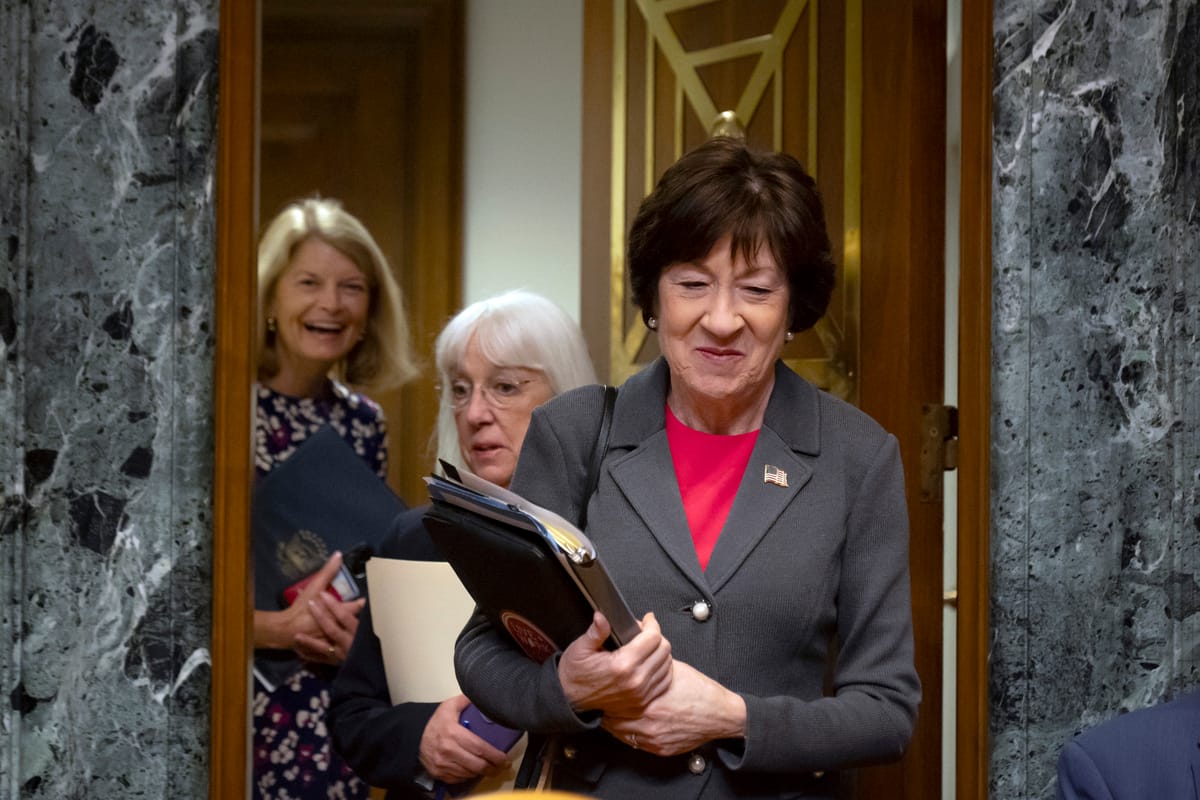
“These were tough negotiations under extremely challenging circumstances, and while I strongly disagree with some of the difficult spending decisions that were ultimately made, there is no doubt in my mind that this bipartisan compromise is a significantly better outcome than another yearlong continuing resolution that provides President Trump with slush funds and more power – and that fails to address urgent problems,” Sen. Patty Murray, D-Wash., vice chair of the Senate Appropriations Committee, said in a statement.
In a shorter statement, Sen. Susan Collins, R-Maine, chair of the committee, called the bills “fiscally responsible” and said “the appropriations process continues to move forward and advance the priorities of the American people.”
The NTIA, which manages the $42.45 billion Broadband Equity, Access, and Deployment program, would under the other funding bill package also have 30 days to provide legislators a briefing on “its plans and timeline for expending all remaining funds provided by the [Infrastructure Law] for the BEAD program.”
The program is estimated to have $21 billion left over after funding infrastructure projects, and NTIA hasn’t released official guidance on how state broadband offices can use the money. NTIA Administrator Arielle Roth has suggested she would favor providing funding for streamlining local permitting processes, but has been directed by the White House to make states with “onerous” laws on AI companies ineligible for non-deployment funding.



Member discussion