
At CES, Automakers Push Software-Defined Vehicles and Autonomous Vehicles
Ford sets 2028 target for Level 3 ‘eyes-off’ driving

Akul Saxena
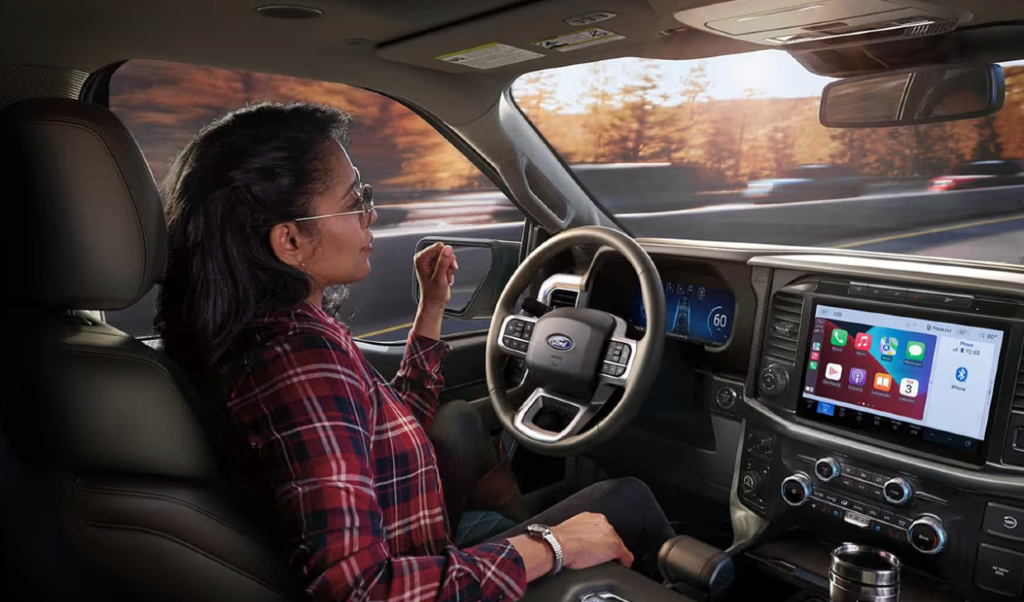
LAS VEGAS, Jan. 8, 2026 — Autonomous driving and software-defined vehicles moved closer to real-world deployment this week at the Consumer Electronics Show, as automakers and technology companies outlined timelines and platforms aimed at expanding hands-free and eyes-off driving under defined conditions.
Ford Motor Company said it planned to introduce Level 3 driver-assistance capability in 2028, allowing drivers to take their hands and eyes off the road under defined highway conditions.
Speaking at CES, Doug Field, Ford’s chief electric vehicle digital and design officer, said the company’s strategy centered on software-defined vehicles built around centralized computing.
Field said the Level 3 system would enable eyes-off operation only within specific operational domains and would require drivers to retake control when prompted. He emphasized that Ford was not announcing fully autonomous consumer vehicles.
Ford said the technology would be enabled by a new electric vehicle platform being developed by a specialized team in California, designed to support advanced software features and continuous over-the-air updates.
The Detroit automaker said the platform was intended to allow higher levels of automation to scale across vehicles over time rather than remain limited to premium models.
Field said Ford’s approach relied on improving software efficiency and vehicle computing architecture instead of adding large numbers of sensors, a move he said was critical to controlling cost while expanding capability.
Ford executives said the company’s existing advanced driver-assistance system, BlueCruise, had logged more than one billion miles of real-world driving across 18 countries, data the company said was being used to train and validate next-generation systems.
The Ford announcement came amid a broader push at CES toward AI-driven vehicles.
Other companies at CES showcased complementary efforts underscoring the industry’s shift toward AI-driven vehicles. Bosch, German engineering company, highlighted new in-cabin AI technology designed to monitor drivers and passengers and respond proactively.
Also GPU-chip giant Nvidia unveiled Alpamayo, an initiative aimed at helping autonomous systems reason through complex driving decisions. Nvidia CEO Jensen Huang described the effort as a turning point for applying generative AI to physical systems.
The Associated Press's Rio Yamat contributed background information for this article.









Member discussion