Author of California AI Legislation Calls Trump Executive Order 'Outrageous'

Wiener explains that his landmark state AI legislation faced backlash and roadblocks, but ultimately is a win for AI regulation.

Author of California AI Legislation Calls Trump Executive Order 'Outrageous'
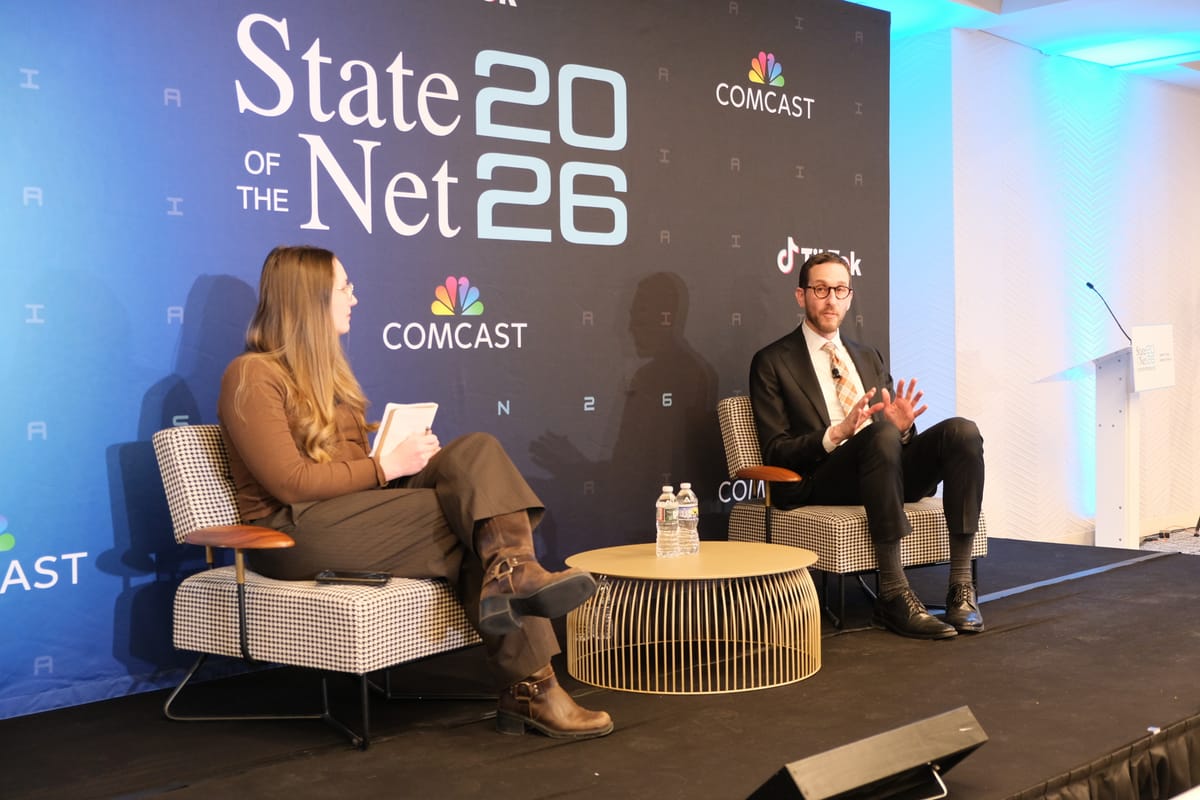
Photo of Wired Senior Writer Makena Kelly and Sen. Scott Wiener, D-Calif., at the State of the Net Conference on Tuesday, Feb. 9, 2026.

WASHINGTON, Feb. 10, 2026 – California State Sen. Scott Wiener, D-San Francisco, said the state’s recently passed artificial intelligence safety law would make a good national standard at the federal level, despite President Donald Trump’s AI executive order discouraging state regulation of AI. 

Wiener was referring to the Transparency in Frontier Artificial Intelligence Act, or SB 53, which was signed by Gov. Gavin Newsom on Sept. 29, 2025. The law took effect on Jan. 1. 

SB 53, a landmark AI safety measure proposed by Wiener, made California one of the first states to pass a law governing AI. In February 2024, he introduced a prior bill to regulate advanced AI models. Although the prior measure, SB 1047, passed the state legislature, it was vetoed by Newsom because of objections from the tech industry.

Although more limited, SB 53 now faces a threat from the Trump administration’s efforts to establish a nationwide uniform AI policy through its Dec. 11 executive order.

Speaking Monday at the State of the Net Conference here, Wiener said it’s unreasonable to simultaneously take no action on regulating AI at the federal level – and to tell states to do the same. 

“That is absurd, and it’s actually outrageous,” Wiener said. “It shows that this administration and the current leadership of Republicans in Congress: They do not seem particularly interested in actually protecting the public. They just want to protect the companies that are helping them and supporting them.”

Federal preemption is both broad and dangerous, especially with the harmful capabilities of AI, such as deepfakes.

Provisions regarding third-party audits?

SB 1047 originally contained a section on third-party audits that was ultimately removed in SB 53. But Wiener – who is running for U.S. Congress to the seat currently held by former Speaker Nancy Pelosi, D-Calif. – predicted that such provisions could eventually return under California’s next governor. 

Wiener said it’s too soon to judge the law’s effectiveness, being in effect for only a month.

The law also requires advanced AI companies to report catastrophic risks, implement public safety measures and provide whistleblower protections for employees. The law is transparency-focused but still pro-innovation, he said, instead of impeding technological development with regulations. 

Despite concerns from OpenAI and other similar companies against SB 53, Wiener said opposition is healthy for a democracy, because it shows the legislation is “actually doing something.”

Looking into the future, he expressed concern about the disproportionate effects of AI: It could benefit a small percentage of people, while simultaneously leaving “a bunch of other people who are eating cat food in the gutter.” 

Member discussion

Popular Tags