AWS Says Telecoms Will Outsource AI Infrastructure as On-Premises Costs Prove Prohibitive

Capital budgets already stretched across broadband and capacity are constraining room for GPU investment for the industry.


AWS Says Telecoms Will Outsource AI Infrastructure as On-Premises Costs Prove Prohibitive
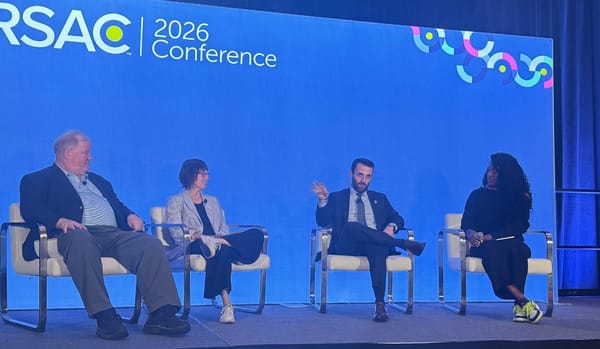
Photo of (from left) Abhishek Sandhir, managing director of Sand Corporation; Alec Mulonga, general manager of technology at Mobile Telephone Networks; Chika Ekeji, chief executive of MTN-i; and Ajay Ravindranathan, principal architect at AWS.

BARCELONA, March 5, 2026 — AWS, the cloud computing division of Amazon, said telecommunications operators are shifting from manual to autonomous network operations and will increasingly depend on outside cloud infrastructure to run artificial intelligence workloads, the company’s principal architect said Monday at Mobile World Congress in Barcelona.

Ajay Ravindranathan, AWS's principal solutions architect for telecommunications, said the transition requires application programming interfaces, standardized software connections that allow different systems to exchange information, to be embedded at every layer of network operations. He said that architecture would replace human-monitored dashboards with automated systems that manage traffic, faults, and capacity without intervention.

Ravindranathan said most operators will run large-scale AI model training on cloud infrastructure. A smaller share of computing power will stay inside their own facilities - known as "on-prem" infrastructure —-for data that cannot leave due to regulatory or sovereignty requirements. 

The specialized processors required for those workloads, known as GPUs, are too expensive for most operators to build independently. The result, he said, is a hybrid model where cloud handles the heavy lifting and on-prem handles what regulators will not allow to travel.

Mobile Telephone Networks, the South Africa-based multinational telecommunications company operating across 15 African and Middle Eastern countries, said hyperscalers were the more rational path than building its own GPU infrastructure.

Alec Mulonga, MTN's general manager said capital budgets for operators are already stretched across broadband expansion, capacity upgrades, and automation. Building proprietary GPU infrastructure, he said, leaves little room in what remains. Partnering with hyperscalers, he said, is the more rational path for most.

Mulonga said most telecom networks across Africa and the Middle East remain reactive rather than predictive, held back by legacy systems, power gaps, and coverage limitations. These are challenges MTN is actively working to address in its markets.

Member discussion

Popular Tags