Broadband and AI in the Next Congress
An all-day event at the National Press Club
Tuesday, December 1, 2026, 8:30 a.m.
The 'must-attend' event on the 'must-attend' topic!
Artificial Intelligence is now driving infrastructure investment and public policy. AI's future will depend not only on breakthroughs in computing, but on the networks, data centers, energy systems, workforce, and institutions that support it.
Beginning at 8:30 a.m. on Tuesday, December 1, 2026, Broadband Breakfast brings together lawmakers, regulators, industry leaders, and technology innovators at the National Press Club to examine the infrastructure behind intelligence, and the policies that will shape America's competitiveness in the AI era.
Grand Ballroom, National Press Club
529 14th Street NW
13th Floor
Washington, DC 20045
Keynote Addresses by Sen. Ed Markey (Massachusetts) and Rep. Buddy Carter (Georgia)
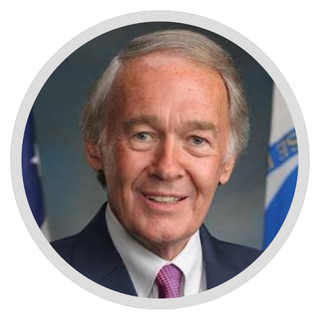
Sen. Edward J. Markey has represented Massachusetts in the U.S. Senate since 2013, following 37 years in the U.S. House of Representatives. He serves on the Senate Commerce, Science and Transportation Committee. In the House, he spent 20 years as chair or ranking member of the subcommittee overseeing telecommunications and the internet, where he authored the Telecommunications Act of 1996, the 1992 Cable Act and the Children’s Online Privacy Protection Act. He also introduced the first net neutrality bill in Congress. Markey has introduced the AI Civil Rights Act to set guardrails on algorithms used in decisions affecting people’s rights. In July 2026, he released an AI Accountability Agenda, including a proposal requiring data centers to pay for the grid infrastructure they need.
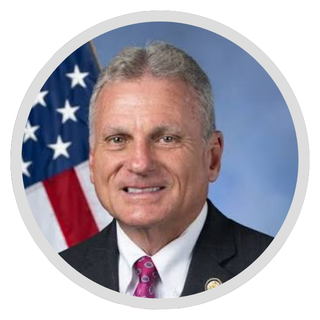
Since 2015, Congressman Earl L. “Buddy” Carter has represented Georgia’s First Congressional District in the United States House of Representatives. He serves on the House Energy and Commerce Committee, including its Subcommittees on Communications and Technology and Health. Carter is the lead sponsor of the American Broadband Deployment Act, legislation aimed at streamlining broadband permitting and accelerating network construction. He also helped introduce the bipartisan Doctors Not AI Act, which would require health insurance coverage decisions involving medical judgment to remain in the hands of qualified health care professionals.
Sponsors
Gold Sponsors


Silver Sponsor

See below more more information about sponsors.
Panel 1: What Do We Have to Fear? AI and Catastrophic Risk
Concerns over data centers and the risks of artificial intelligence, including artificial superintelligence, have transformed the midterm elections. And, in the next Congress, policymakers will be forced to confront the risks confronting America, both from rogue machines and rogue humans. Which threats deserve Washington's attention first? Should the most powerful AI models be restricted before release? How can the U.S. government hold bad actors accountable when the tools they use are cheap, powerful and widely available?
Panelists
- Miranda Bogen, Director of AI Governance and Chief Technologist, Center of Democracy and Technology
- Elizabeth Chernow, Associate Vice President, Public Policy, Comcast
- Rachel Appleton, Head of Government Relations for the Americas, Reflection AI
- Other panelists have been invited
- Cat Zakrzewski (moderator), White House Reporter, The Washington Post
Panel 2: Permitting Reform and the AI Race
The federal government wants the United States to lead the global race in artificial intelligence. But the telecom providers and hyperscalers face years of red tape before they can lay fiber or break ground. Congress is weighing the American Broadband Deployment Act (H.R. 2289), which would streamline local and federal permitting, as well as creative right-of-way solutions. Pressure is also mounting to speed environmental reviews under the National Environmental Policy Act. How quickly can Washington act?
Panelists
- Chip Pickering, CEO, INCOMPAS
- Other panelists have been invited
- Christopher Cole (moderator), Senior Reporter, Telecom, Law360
Panel 3: The Data Center Power Crisis and Ratepayer Protection
AI data centers require unprecedented amounts of power. That demand has triggered intense concern in Congress that they have driven up utility bills for everyday consumers. The Power and Water for Families Act (H.R. 9419) aims to force large-load facilities to pay for their own grid upgrades. Major hyperscalers have signed the White House's Ratepayer Protection Pledge, but are voluntary commitments enough? Beyond consumers, Congress must decide how to modernize the grid itself, including incentives for off-grid power, nuclear energy from small modular reactors.
Panelists
- Tony Clark, Executive Director, National Association of Regulatory Utility Commissioners
- Cy McGeady, Head of Energy Policy, Equinix
- Josh Levi, President and CEO, Data Center Coalition
- Other panelists have been invited
- Lauren Feiner (moderator), Senior Policy Reporter, The Verge
Panel 4: Federal Preemption vs. State AI Patchworks
With Congress slow to pass comprehensive technology laws, states have stepped in. California, Colorado and Illinois have enacted aggressive AI regulations, creating a complex operating environment for interstate telecom networks and platforms. Hence the debate over federal preemption: Should Congress should set a single national framework to reduce compliance burdens?
Panelists
- Matt Schruers, President and CEO, Computer & Communications Industry Association
- Alan Butler, Executive Director and President, Electronic Privacy Information Center
- James Maroney, State Senator, Connecticut’s 14th District
- Doug Fiefia, State Representative, Utah’s 48th District
- Other panelists have been invited
- Rebecca Kern (moderator), Senior Correspondent, The Capitol Forum

Panelist Bios
Panel 1 – What Do We Have to Fear? AI and Catastrophic Risk

Miranda Bogen is the founding Director of CDT’s AI Governance Lab & CDT’s Chief Technologist, where she works to develop and promote adoption of robust, technically-informed solutions for the effective regulation and governance of AI systems. An AI policy expert and responsible AI practitioner, Miranda has led advocacy and applied work around AI accountability across both industry and civil society. She most recently guided strategy and implementation of responsible AI practices at Meta, including driving large-scale efforts to measure and mitigate bias in AI-powered products and building out company-wide governance practices. Miranda’s writing, analysis, and work has been featured in media including the Harvard Business Review, NPR, The Atlantic, Wired, Last Week Tonight, and more.

Elizabeth Chernow is associate vice president of public policy at Comcast, where she helps develop the company’s positions on broadband, cybersecurity and artificial intelligence. She joined Comcast in 2010 and brings nearly two decades of policy experience. Chernow serves as treasurer of The WICT Network’s Washington, D.C./Baltimore chapter and co-chairs the Communications Sector Coordinating Council’s Outreach, Plans and Reports Committee. She holds a law degree from American University Washington College of Law and a bachelor’s degree in journalism from George Washington University.

Rachel Appleton is head of government relations for the Americas at Reflection AI, where she leads policy strategy and government engagement for a company developing open AI models. An attorney and technology policy professional, she previously served as head of federal affairs at Anthropic, where she advocated for legislation requiring transparency around frontier AI models to address national security risks. Her experience spans government and industry, including senior counsel positions at the U.S. Department of Justice and the Senate Judiciary Committee, technology policy work at Instacart and litigation practice at Quinn Emanuel. She holds a law degree from Loyola Law School and a bachelor’s degree from New York University.

Cat Zakrzewski (moderator) is a White House reporter for The Washington Post. She focuses on the ways tech billionaires are shaping the Trump administration. Previously, she spent a decade covering technology from Washington and San Francisco. Most recently, she was The Post's national technology policy reporter, tracking global efforts to regulate Silicon Valley. In that role, she exposed the limits of the government’s attempts to rein in new technologies and the secretive ways tech companies wielded their influence in D.C. She joined The Post in 2018 as the first anchor of The Technology 202 newsletter, The Washington Post's daily guide to the relationship between the tech industry and regulators. Before that, she worked as a venture capital reporter based in San Francisco for the Wall Street Journal.
Panel 2 – Permitting Reform and the AI Race

Chip Pickering is CEO of INCOMPAS, the internet and competitive networks association, which he has led since 2014. For nearly three decades, Pickering has played a prominent role in telecommunications policy, beginning as a Senate Commerce Committee staffer helping shape the Telecommunications Act of 1996. He subsequently served six terms in the U.S. House of Representatives representing Mississippi's Third District, where he served on the Energy and Commerce Committee and chaired a subcommittee overseeing the transition to the commercial internet, domain names and internet governance. Under his leadership, INCOMPAS has advanced broadband competition, infrastructure investment and permitting reform. Pickering also founded the association's Artificial Intelligence Competition Center, expanding its work into AI policy, data center development and the energy infrastructure needed to support emerging technologies.

Christopher Cole (moderator) is a senior reporter covering telecommunications for Law360, where he has reported on federal communications policy and litigation since 2018. His reporting has followed major legal battles over net neutrality, including the Sixth Circuit's 2025 decision overturning the Federal Communications Commission's rules, as well as the Supreme Court challenge to the Universal Service Fund. Cole has also covered congressional efforts to streamline broadband permitting and disputes involving utility pole access. Before joining Law360, he worked at Inside Washington Publishers, covering federal health and labor policy, and held reporting and editing positions at BH Media Group and the Uvalde Leader-News in Texas. He earned his journalism degree at Georgia Southern University.
Panel 3 – The Data Center Power Crisis and Ratepayer Protection

Tony Clark is executive director of the National Association of Regulatory Utility Commissioners, which represents the nation’s state utility regulators. He served on the Federal Energy Regulatory Commission from 2012 to 2016 and the North Dakota Public Service Commission from 2001 to 2012, including more than five years as chairman. He was also NARUC president from 2010 to 2011. His career includes service as North Dakota’s labor commissioner and a state legislator, followed by consulting on regulatory and public policy matters. He holds undergraduate degrees from North Dakota State University and a master’s degree in public administration from the University of North Dakota.

Cy McGeady is head of energy policy at Equinix, where he leads the company’s power sector policy work. His focus includes expanding electricity supply to support growing data center demand while maintaining affordability, reliability and declining emissions. He brings more than a decade of experience in the electric power sector, including commercial roles involving project development, asset management in short-term electricity markets and long-term transactions. Before joining Equinix, McGeady was a fellow in the Energy Security and Climate Change Program at the Center for Strategic and International Studies, where his research examined electricity markets, infrastructure investment and the power supply constraints facing artificial intelligence. He holds a bachelor’s degree in economics from the University of Rochester.

Josh Levi is President and CEO of the Data Center Coalition, the membership association for the U.S. data center industry. Its member companies build and operate the infrastructure behind cloud computing and artificial intelligence. Since taking the helm in 2019, Levi has led the coalition’s strategy, operations and growth as data center demand, power needs and policy scrutiny have surged. Before that, he spent nearly two decades as vice president of policy at the Northern Virginia Technology Council. Levi holds a political science degree from Virginia Tech and a law degree, cum laude, from the University of Richmond School of Law. He is a member of the Virginia State Bar.

Lauren Feiner (moderator) is the senior policy reporter at The Verge, where she covers the intersection of Silicon Valley and Capitol Hill from Washington, D.C. Prior to that, she spent five years at CNBC, where she covered the Google search antitrust trial, industry lobbying, tech Supreme Court cases, and many efforts to enact new privacy, antitrust, and content moderation laws. When she’s not writing about Congress, she’s probably catching up on her many podcasts on 2x speed.
Panel 4 – Federal Preemption vs. State AI Patchworks

Matt Schruers is President & CEO of the Computer & Communications Industry Association. He represents the Association before Congress, courts, and the Administration and advises industry on matters including internet law, intellectual property, competition and international trade. He joined CCIA from private law practice in 2005 and has previously served as Vice President and Chief Operating Officer. He has also been an adjunct professor for over 10 years, teaching courses on intellectual property and internet law at the Georgetown University Law Center and Graduate School, and American University Washington College of Law. Schruers received his J.D. from the University of Virginia School of Law, where he served on the editorial board of the Virginia Law Review, and received his B.A. from Duke University.

Alan Butler is executive director and president of the Electronic Privacy Information Center, a Washington-based organization advocating for privacy and civil liberties. He joined EPIC in 2011 and previously managed its litigation and amicus program, filing briefs in privacy and civil liberties cases before the U.S. Supreme Court and other appellate courts. His work includes an amicus brief in Riley v. California cited in the Supreme Court’s unanimous decision protecting cellphone searches under the Fourth Amendment. Butler has argued privacy and open government cases before federal appeals courts and state supreme courts. He holds a law degree from UCLA and a bachelor’s degree in economics from Washington University in St. Louis.

James Maroney is a Connecticut state senator representing the 14th District, first elected in 2018. He serves as co-chair of the General Law Committee and vice chair of the Energy and Technology Committee. His legislative work includes consumer data privacy protections, children’s and health data privacy laws, and legislation governing state government use of artificial intelligence. He was named to the inaugural Leadership Council of the Future of Privacy Forum’s Center for Artificial Intelligence. Before entering politics, Maroney founded an educational consulting business in Milford and served on the Milford Board of Education. He graduated from Yale University in 1996.
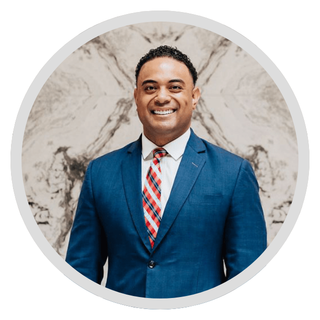
Doug Fiefia is a Republican member of the Utah House of Representatives representing the 48th District. He co-chairs Future Caucus’ National Task Force on State AI Policy, a bipartisan group helping state lawmakers develop approaches to artificial intelligence governance. His legislative work includes authoring Utah’s social media data control law, and he serves on the Utah Cybersecurity Commission. Fiefia brings private-sector technology experience from leadership roles at Google and Workday and currently serves as head of partnerships at Domo. A first-generation American whose parents immigrated from Tonga, he holds bachelor’s degrees in marketing and business administration from Utah State University and an MBA from Rice University.

Rebecca Kern (moderator) is a senior correspondent at The Capitol Forum, covering antitrust and competition issues on Capitol Hill and the White House. . She has more than 15 years of experience reporting on technology policy and politics in Washington, including previous roles at POLITICO and Bloomberg Government. Her reporting has covered social media platforms, children's online safety, data privacy, cybersecurity and the legal protections afforded to technology companies. Kern also served as a public affairs officer at the Federal Trade Commission under Chair Lina Khan, where she oversaw communications concerning major technology enforcement actions, including the agency's children's privacy case against TikTok. She holds a degree in journalism from American University.
Sponsors
Gold Sponsors

Comcast Corporation is a global media and technology company. From the connectivity and platforms we provide, to the content and experiences we create, our businesses reach hundreds of millions of customers, viewers, and guests worldwide. We deliver world-class broadband, wireless, and video through Xfinity, Comcast Business, and Sky; produce, distribute, and stream leading entertainment, sports, and news through brands including NBC, Telemundo, Universal, Peacock, and Sky; and bring incredible theme parks and attractions to life through Universal Destinations & Experiences. Visit www.comcastcorporation.com for more information.

Broadband Nation Expo returns November 18-20, 2026, in New Orleans at the Hilton Riverside New Orleans Bringing together service providers, government leaders, investors, infrastructure providers, and technology innovators, Broadband Nation Expo explores the future of broadband, connectivity, and digital infrastructure.Co-located with the Data Center Excellence Summit, the event connects the worlds of connectivity and compute, focusing on Scaling the Infrastructure Behind the AI Economy and the challenges of powering next-generation digital services.
Silver Sponsor

INCOMPAS, the internet and competitive networks association, is the leading trade association advocating for competition policy, innovation, and economic development. INCOMPAS represents internet, competitive communications, infrastructure, energy, and technology companies both large and small. Our members are catalysts for creating economic growth and improving the quality of life of all Americans through technological innovation, new services, and greater choice for consumers and businesses. Visit incompas.org for more information.
Partner with us
Sponsorship opportunities are available. Contact Sales & Marketing Director Quinn Nghiem at quinn@breakfast.media.
Broadband and AI in the Next Congress
Breakfast Club Members take an additional $100 off!
Registration Only $245!See Broadband Breakfast's coverage of AI, Permitting, Energy and Data Centers:
 Broadband Breakfast

 Broadband Breakfast

 Broadband Breakfast

 Broadband Breakfast