BEAD Implementation 2026
A gathering at the National Press Club
Join the Breakfast Club to Watch the Videos!Watch the Fireside Chat for free:
See the BEAD Implemenation Summit program:

Arielle Roth, Administrator, National Telecommunications and Information Administration, with Drew Clark, CEO, Broadband Breakfast

Arielle Roth was sworn in as Assistant Secretary of Commerce for Communications and Information on July 30, 2025. In this role, she serves as Administrator of the National Telecommunications and Information Administration, the Executive Branch agency principally responsible for advising the President on communications, broadband, and internet policy. Prior to joining NTIA, Roth spent nearly a decade shaping federal communications and broadband policy, holding senior roles on Capitol Hill and at the Federal Communications Commission. She most recently served as Policy Director for Telecommunications on the U.S. Senate Committee on Commerce, Science, and Transportation under Chairman Ted Cruz, R-Tex, and previously as Legislative Counsel to former Senator Roy Blunt, R-Mo.

Broadband Breakfast CEO Drew Clark, an early proponent of better broadband, better lives, initially founded the Broadband Census crowdsourcing tool to collect and verify broadband data left unpublished by the Federal Communications Commission. Previously, he served as head of the Partnership for a Connected Illinois, a state broadband initiative.
Panel 1: State Broadband Roundtable
As BEAD shifts from planning to execution, state broadband offices are confronting a new set of challenges that vary widely by geography and market conditions. This roundtable brings state leaders together to compare what is working, what is slowing projects down, and where greater flexibility or clarity is still needed.
- Michael Baldino, Director and General Counsel, Massachusetts Broadband Institute
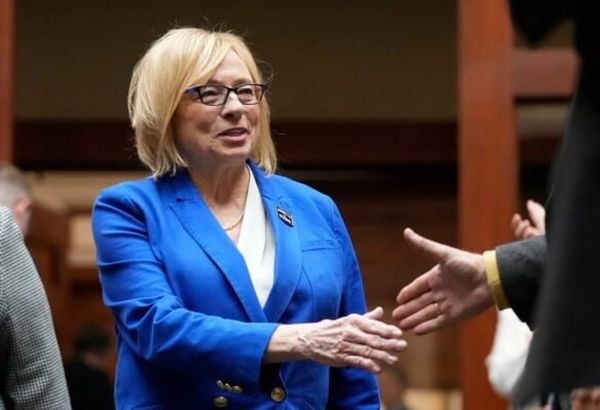
- Kendra Jo Grindle, Chief Program Officer, Maine Connectivity Authority
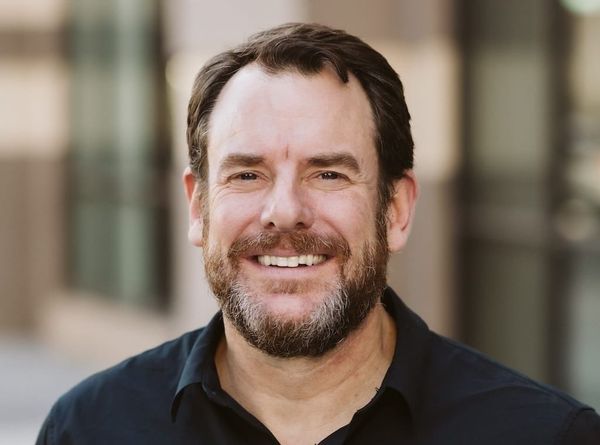
- Christine Hallquist, Executive Director, Vermont Community Broadband Board
- Connor Perry, Executive Director, Delaware Broadband Office
- Chandler Vaughan, Associate Director, Virginia Office of Broadband
- Jake Neenan (moderator), Reporter, Broadband Breakfast
Panel 2: Technology Choices in BEAD Deployment
With awards moving into high-cost and hard-to-serve areas, states are increasingly forced to make difficult technology decisions under real-world constraints. This panel explores how states weigh tradeoffs between cost, performance, and long-term value, and what flexibility exists within BEAD rules when ideal solutions prove impractical.
- Greg Bathrick, Area Vice President of Commercial Development, Calix
- Madeleine Chang, Director of Policy, Satellite Industry Association (SIA)
- Rick Cimerman, Vice President and External and State Affairs Lead, NCTA - The Internet and Television Association
- Chris Disher, Managing Director and Co-Founder, Cajun Broadband
- Carl Guardino, Vice President of Government Affairs & Policy, Tarana Wireless
- Lynn Stanton (moderator), Senior Editor, TRDaily
Panel 3: Using Remaining BEAD Funds
Successful BEAD builds depend on more than construction dollars alone. This panel examines how states are using funds to support planning, workforce, technical assistance and potential priorities for remaining BEAD funds.
- Kathryn de Wit, Project Director, Broadband Access Initiative, The Pew Charitable Trusts
- Christian Hoefly, Senior Corporate Counsel, Policy Strategy, T-Mobile
- Annmarie Lanesey, Founder & CEO, CanCode Communities
- Lyndsay Moyer, Vice President, State Government Affairs, Comcast
- Thomas Tyler, Former Deputy Director, ConnectLA
- Jimm Phillips (moderator), Associate Editor, Communications Daily
Panel 4: Capital Constraints on Financing BEAD
As construction begins, BEAD projects are colliding with a more complex and costly market environment. Rising build costs and supply-chain uncertainty are reshaping project economics and financing strategies. This panel examines how lenders, investors, and providers are navigating compliance, matching requirements, and how cost pressures are influencing which projects move forward, on what terms, and on what timelines.
- Claude Aiken, Chief Strategy Officer and Chief Legal Officer, Nextlink
- Brian Allenby, Director of State Solutions, CostQuest
- Steve Coran, Chair of Broadband, Spectrum, and Communications Infrastructure practice group, Lerman Senter
- Evan Feinman, Vice President of Strategy and Emerging Markets, JSI
- Nat Purser, Senior Policy Advocate, Public Knowledge
- Nancy Scola (moderator), Independent Journalist
Speaker Bios
Panel 1: State Broadband Roundtable

Michael Baldino was named Director and General Counsel of the Massachusetts Broadband Institute (MBI) in January 2019. MBI serves as the central broadband office for the Commonwealth of Massachusetts. During his tenure at MBI, Michael has overseen state-funded Last Mile grants that have expanded broadband connectivity in rural communities in Massachusetts. During the Covid-19 pandemic MBI supported community Wi-Fi hotspots and digital equity pilot projects. MBI also established the Mass Internet Connect program that helped unemployed job seekers reenter the workforce during the pandemic by providing access to affordable internet service, devices, and digital literacy resources.

Kendra Jo Grindle is Director of Community Strategy at the Maine Connectivity Authority (MCA), where she works with municipalities, regional organizations, and Tribal Nations across Maine to advance broadband access and digital equity. Her career has been grounded in community development in Maine's rural and coastal communities, including prior roles at the Island Institute — where she began as a Fellow on Islesboro in 2013 — and the Maine Coast Fishermen's Association. She holds a B.A. from the University of Connecticut.

Christine Hallquist is an executive innovator and leader with vast experience driving operational technology, business development, renewable energy and utility transformation. She has pioneered new technologies including fiber-optic communications; led some of most innovative US firms. Served as CEO, CIO, and expert advisor to C-suite on business and technology strategy development. Advised global corporations in business process improvement and is among the first in U.S. to adopt lean manufacturing.

Connor Perry is the Executive Director of the Delaware Broadband Office. A dedicated public servant and experienced policy professional, Perry brings both strategic insight and a deep personal commitment to expanding broadband access across the First State.

Chandler Vaughan is the Associate Director in the Virginia Office of Broadband. In the Office of Broadband, Chandler leads development under plans and programs for the $1.5 billion investment in both broadband deployment and broadband adoption programs under the BEAD Program. Before BEAD, Chandler played a key role in scaling a $50 million dollar broadband expansion program to accommodate a $700 million investment of American Rescue Plan Act funding in 2021. During his time in the Virginia Broadband Office, over 210,000 homes and business have received broadband access through network construction, with tens of thousands more homes included in projects that are already underway.

Reporter Jake Neenan, who covers broadband infrastructure and broadband funding, is a recent graduate of the Columbia Journalism School. Previously he reported on state prison conditions in New York.
Panel 2: Technology Choices in BEAD Deployment

Greg Bathrick is Area Vice President of Commercial Development at Calix, where he has worked since 2014. With more than 25 years of experience in the broadband industry, he leads Calix's funding consulting practice, helping broadband service providers and rural communities secure government grants and private equity for broadband deployment. A Broadband Forum Distinguished Fellow, Greg holds a B.S. in Mechanical Engineering from the University of New Mexico and an M.B.A. from Cornell University.

As Director of Policy for the Satellite Industry Association (SIA), Madeleine Chang leads the commercial space industry's engagement with the U.S. government. She drives strategic advocacy across spectrum, broadband connectivity, trade, cybersecurity, and other critical domains to accelerate the benefits of American space innovation for the public.Prior to joining SIA, Madeleine led research on Chinese counterspace capabilities, orbital modeling, and global remote sensing marketplaces as a Horizon Fellow with the Aerospace Security Project at the Center for Strategic and International Studies (CSIS). She began her career as a satellite software engineer at Lockheed Martin and holds three degrees from Cornell University, including an M.Eng. in Engineering Management and B.A. degrees in Astronomy and Computer Science.

Rick Cimerman is Vice President, External and State Affairs Lead for NCTA – The Internet & Television Association. He leads a team responsible for engagement with state broadband officials, state cable associations, state and local intergovernmental groups, third parties and strategic partners, think tanks and the academic community. Rick is a member of the Board of Directors of the National Conference of State Legislatures (NCSL) Foundation, the Internet Education Foundation, the TPRC Research Conference on Communication, Information and Internet Policy, and the Advisory Council for New Mexico State University’s Center for Public Utilities.

Chris Disher is co-founder of Cajun Broadband, a company dedicated to bringing affordable and reliable internet access to underserved communities in Acadiana, Louisiana. He is a Professional Engineering graduate of Louisiana State University with 25 years of experience in the global oilfield engineering industry. Under his leadership, the company became the 4th fastest-growing company in Louisiana in 2022 and secured CPF and BEAD grants to deploy 3.5 million feet of storm-resilient fiber serving 15,000 homes. Cajun Broadband has been featured topic in numerous state wide and national publications along their journey to help their community with better connectivity.

Carl Guardino serves as the vice president of government affairs and public policy at Tarana. After three decades in CEO and senior officer roles, including 24 years as CEO of the Silicon Valley Leadership Group, Carl led global government affairs for Bloom Energy. He also serves as Vice Chair of the CA Transportation Commission, which annually programs and allocates nearly $10 billion in transportation improvements throughout the state.

Lynn Stanton is a senior editor at Wolters Kluwer’s TR Daily, where she currently covers policy issues affecting broadband and Internet services. She has reported on issues ranging from universal service to the section 230 safe harbor since the 1996 Telecommunications Act. She has a BA from the University of Maryland and a master’s degree from the University of Virginia.
Panel 3: Using Remaining BEAD Funds

Kathryn de Wit directs Pew’s broadband access initiative, which works with national and state leaders to accelerate progress to universal broadband access. In addition to working with policymakers, researchers, and other stakeholders to improve policy outcomes, de Wit’s work also includes addressing research gaps and bringing together stakeholders for data-driven discussions about how to ensure that every American benefits from universal connectivity.

Christian Hoefly serves as Senior Corporate Counsel, Policy Strategy at T-Mobile, where he leads the company’s engagement on federal broadband subsidy programs, including BEAD and USF. His work ensures that T-Mobile’s policy positions advance both strategic business priorities and broader national goals—particularly expanding connectivity in unserved and underserved communities. He plays a central role in aligning innovative network strategies with practical, forward-looking public policy.

Annmarie Lanesey is the Founder & CEO of CanCode Communities, leading nationally recognized efforts to expand digital and economic opportunity and build an AI-ready workforce. A statewide policy advocate working at the intersection of technology, public policy, and economic mobility, she is shifting mindsets about who can succeed in a tech career. She has scaled Can Code’s programming across New York and Massachusetts, with trainees now participating in 10 states, helping thousands gain the skills, devices, and confidence needed to thrive in today’s digital and AI economy.

Lyndsay Moyer is an accomplished advocacy professional offering experience in the public and private sector, with strong existing political relationships nationwide and experience in coalition and consensus building amongst industry, associations and critical third parties to meet business goals and public policy objectives. Strong background representing a global corporation before key stakeholders, strategic planning, and advancing policy positions. Proven reputation as a dynamic government relations professional, success in a matrix environment with particular emphasis on working across a corporate organization, recognized ability to understand and manage complex relationships, strategic partnerships, and ever‐changing needs for policy and perception campaigns.

Thomas Tyler is the founder of C207 Partners, a consultancy focused on supporting the hardest parts of the BEAD post-award horizon — implementation, compliance, and accountability. Most recently, Thomas served as Deputy Director of ConnectLA, Louisiana’s Office of Broadband Development and Connectivity, where he played a central role in building what became one of the most nationally recognized state broadband programs in the country. Under his leadership, Louisiana became the first state in the nation to receive approvals across its federal broadband programs, and the office secured connectivity for nearly 200,000 locations across all 64 parishes through its GUMBO grant programs — generating an estimated $2–3 billion in economic impact and thousands of new jobs.

Jimm Phillips, Associate Editor, covers telecommunications policymaking in Congress for Communications Daily. He joined Warren Communications News in 2012 after stints at the Washington Post and the American Independent News Network. Phillips is a Maryland native who graduated from American University. You can follow him on Twitter: @JLPhillipsDC
Panel 4: Capital Constraints on Financing BEAD

Claude Aiken serves as Chief Strategy Officer and Chief Legal Officer at Nextlink Internet, where he leads strategic market development, legal affairs, and government relations in support of the company's mission to close the digital divide. He brings more than 14 years of telecom expertise to the role, including four years as President and CEO of the Wireless Internet Service Providers Association (WISPA), where he grew membership by more than 300 organizations and championed policy changes worth billions of dollars to the industry.

Brian Allenby serves as Director of State Solutions at CostQuest Associates, where he supports states in navigating broadband planning, mapping, and BEAD implementation. He previously served as Chief Operating Officer of the Maine Connectivity Authority, bringing more than 20 years of operations experience to his work at the intersection of broadband policy and deployment. Allenby holds a Bachelor of Arts in Communications, Law, Economics, and Government from American University.

Steve Coran is chair of Lerman Senter's Broadband, Spectrum, and Communications Infrastructure practice group. He represents broadband providers, private equity firms, equipment and technology companies, and new technology firms, serving their policy, transactional, compliance, and licensing needs. He also actively represents a trade association before the FCC, Congress, and other federal agencies in matters involving spectrum policy, broadband funding programs, Internet regulation, the Universal Service Fund, and other proceedings affecting wireless broadband service providers and technology interests.

Evan Feinman, the VP of Strategy for JSI, is a national leader in technology and telecommunications. He has served as the director of the $42 billion BEAD broadband program, a principal at the Feinman Strategic Network, and as the architect of the VA broadband office and programs. He has held multiple roles within government, on political campaigns, and in the private sector; including serving multiple governors, a US cabinet secretary, and advising corporate leaders. Evan received his bachelors degree from UVA, his law degree from Washington and Lee, and has completed multiple public policy fellowships. Evan lives in Richmond, VA with his wife Annalisa Feinman, a Richmond public defender, and his children, Bennett and Betsy Feinman.

Nat Purser is a Senior Policy Advocate at Public Knowledge, where she works on issues related to broadband access and affordability as well as artificial intelligence. Prior to joining Public Knowledge, Nat was a Center for Economic and Policy Research (CEPR) Fellow on the Hill, where she performed legislative research for the Congressional Progressive Caucus. She previously worked on competition, content moderation, and net neutrality policy at Yelp and in the Michigan legislature.

Nancy Scola is a veteran Washington D.C.-based reporter and journalist whose work often focuses on the intersections of technology, economics, politics, and policy for publications like New York, Wired, The Information, Washingtonian, and The Atlantic. She is a contributing writer at POLITICO Magazine. Nancy also teaches about the history, theory, and practice of journalism, including as a lecturer at Georgetown University’s McDonough School of Business.
BEAD Implementation 2026 Sponsors
Gold Level:

Tarana is the creator of ngFWA (next-generation fixed wireless access) — an entirely new technology built from the ground up to deliver reliable residential broadband. G1, our ngFWA platform, overcomes previously insurmountable industry challenges for service providers in every market to deliver better broadband more efficiently.

Founded in 1999 and headquartered in Cincinnati, Ohio, CostQuest Associates (CQA) is an internationally recognized, employee-owned firm specializing in network cost modeling, economics, asset valuation, broadband planning, mapping, and data science. Contracted by both the FCC and NTIA, CQA serves as the official and only provider of the National Broadband Serviceable Location Fabric dataset, which underpins the Broadband Data Collection, the BEAD program, and other federal broadband initiatives.

Comcast Corporation is a global media and technology company. From the connectivity and platforms we provide, to the content and experiences we create, our businesses reach hundreds of millions of customers, viewers, and guests worldwide. We deliver world-class broadband, wireless, and video through Xfinity, Comcast Business, and Sky; produce, distribute, and stream leading entertainment, sports, and news through brands including NBC, Telemundo, Universal, Peacock, and Sky; and bring incredible theme parks and attractions to life through Universal Destinations & Experiences. Visit www.comcastcorporation.com for more information.
Silver Level:

Founded in 1982 and headquartered in Washington, D.C., Lerman Senter PLLC is a nationally recognized communications law firm exclusively focused on the legal needs of telecommunications, media, and technology businesses. Consistently ranked Tier 1 in communications law by Best Lawyers and recognized by Chambers and Partners as a top firm for telecom, broadcast, and satellite legal services, Lerman Senter represents clients ranging from Fortune 500 companies to startups before the FCC, Congress, federal and state agencies, and the courts. The firm's practice spans broadband and spectrum policy, broadcast regulation, media transactions, satellite, privacy and data security, and communications infrastructure.
See previous related events: