
Bipartisan Senate Bill Seeks to Expand Grid Capacity by Upgrading Existing Power Lines
Lawmakers said the proposal would cut permitting delays and lower costs

Sergio Romero
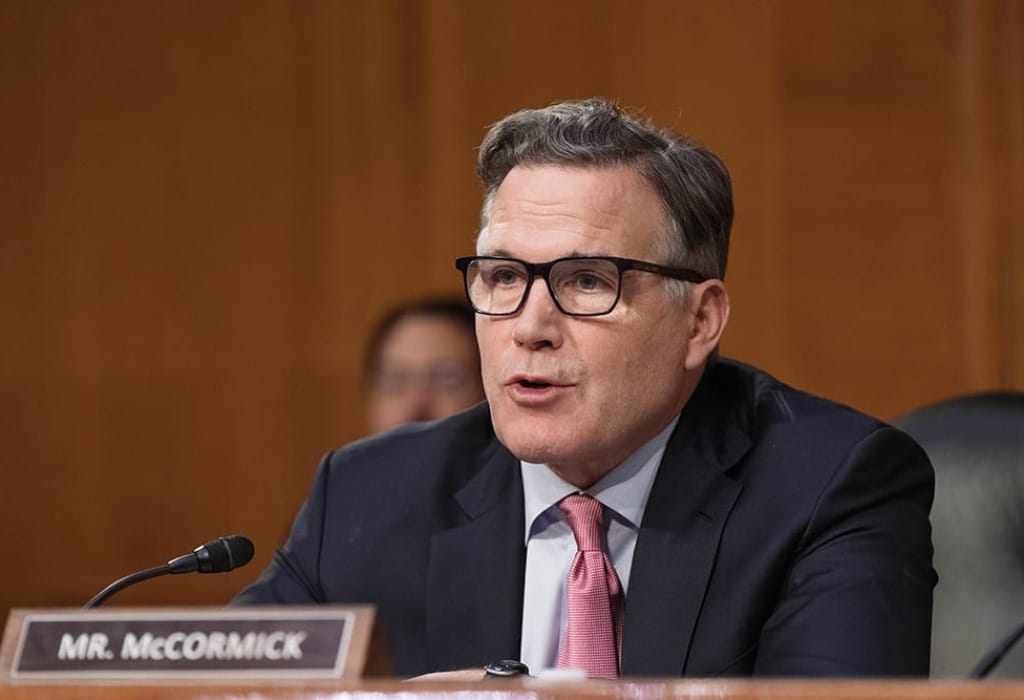
WASHINGTON, March 4, 2026 – Sens. Peter Welch, D-Vt., and Dave McCormick, R-Pa., introduced bipartisan legislation Monday aimed at expanding the nation’s electric grid capacity by upgrading existing transmission lines instead of building entirely new ones.
The bill, titled the Reconductoring Existing Wires for Infrastructure Reliability and Expansion Act, would allow utilities to replace older transmission wires with advanced conductors capable of carrying significantly more electricity. The measure seeks to speed those upgrades by reducing environmental review requirements for projects that stay within existing rights-of-way.
Electricity demand in the United States is projected to rise as much as 5.7 percent by 2030, the fastest growth rate since the 1960s. According to the Department of Energy, meeting that demand would require nearly 5,000 miles of new high-capacity transmission lines each year. In 2024, however, only 322 miles of new high-voltage transmission were completed.
Rather than relying solely on new construction, the legislation focuses on “reconductoring,” a process that replaces traditional aluminum conductor steel-reinforced cables with advanced transmission conductors that can carry at least 70 percent more electricity and have significantly lower electrical resistance.
Supporters said the upgrades could double capacity along existing corridors while avoiding years of new siting and permitting battles.
The bill would create a categorical exclusion under the National Environmental Policy Act for grid capacity upgrades within existing rights-of-way, meaning those projects would not require full environmental impact statements. It would also direct the Federal Energy Regulatory Commission to improve the return on equity for investments in advanced transmission conductors, encouraging utilities to adopt the technology.
In addition, the legislation would allow state energy offices to use Department of Energy funds to study reconductoring projects, establish regional collaborations between national laboratories and universities to model grid performance, and create a federal clearinghouse of best practices for advanced transmission technologies.
Welch said accelerating permitting and incentivizing reconductoring would allow more clean and affordable energy to connect to the grid while saving consumers money. McCormick said rising electricity demand requires cutting bureaucratic delays and making better use of infrastructure that is already in place.
The proposal has drawn support from a broad coalition of energy producers, environmental groups, manufacturers, and electric utilities, including American Clean Power, the Bipartisan Policy Center Action, ClearPath Action, PPL Corporation, and the Solar Energy Industries Association.
Supporters argued the bill provides a near-term solution to grid congestion by unlocking additional capacity along transmission lines that have already been built, reducing costs and improving reliability while larger long-term transmission projects move forward.







Member discussion