
Broadband Expansion Alone Won’t Close the Digital Divide, Panelists Warn
Panelists cite skills gaps, security threats, and the need for more modern infrastructure.


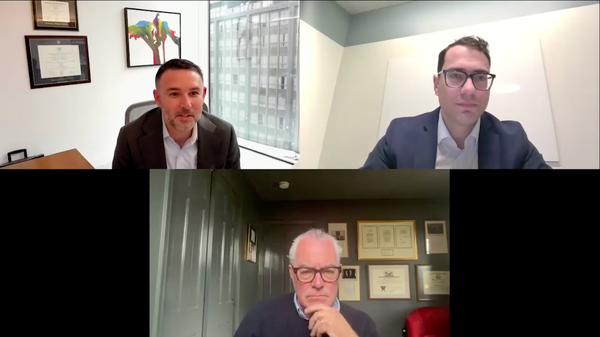
WASHINGTON, April 1, 2026 – Expanding broadband networks alone will not close the digital divide, industry leaders warned Tuesday, arguing that affordability, security, and adoption will ultimately determine whether Americans can fully participate in the digital economy.
Despite billions in federal investment, significant gaps remain, particularly for older adults, rural communities, and small businesses, panelists said at a discussion hosted at Charter’s Washington office.
The $42.45 billion Broadband, Equity, Access and Deployment program has been a major step toward connecting underserved areas, speakers said, but stressed that infrastructure rollout is only part of the challenge.

“Just because broadband is available doesn’t mean people are using it,” said Debra Berlyn, executive director of the Project to Get Older Adults Online.
Twenty-four percent of older Americans remain unconnected, Berlyn said, leaving nearly 19 million seniors without access. The consequences, she said, go beyond convenience: lack of broadband limits access to telehealth, essential services like grocery and pharmacy delivery, and social connection.
The issue is more acute in rural areas, where about a quarter of Americans aged 65 and older live. “They’re more isolated, so broadband becomes even more critical,” Berlyn said.
She added that adoption barriers, particularly lack of digital skills and confidence, are just as significant as access itself, calling for more investment in digital literacy and affordability.
Customer service and scams pose added challenges for older adults, who often face language barriers with overseas call centers and are more vulnerable to fraud, Berlyn noted.
Security threats to infrastructure have also emerged as a growing barrier. Rising incidents of network vandalism, often tied to copper theft, are disrupting service for millions and exposing weaknesses in physical network protection, Alexander Minard, vice president and lead legislative counsel of NCTA, the Internet & Television Association, said.
Addressing those threats will require stronger coordination between industry and law enforcement, as well as tighter regulation of scrap metal markets, panelists said.
Modern infrastructure needed
Looking ahead, the long-term sustainability of broadband will depend on modernizing infrastructure, emphasized Jenna Alsayegh, assistant vice president of USTelecom. She said fiber should be the default for new deployments, citing its reliability, scalability, and resilience, particularly as demand grows with the expansion of artificial intelligence and data centers in rural areas.
“Demand is only going to increase,” Alsayegh said, adding that policies should support transitioning from older copper networks to fiber. She also identified permitting delays as a major bottleneck, backing proposals to streamline approvals through “shot clock” timelines.
The discussion also underscored broadband’s role in trade and economic participation. While agreements like the United States-Mexico-Canada Agreement facilitate cross-border commerce, broadband access ultimately determines who can participate, said Santiago Salas Oiva, manager of government and international affairs for the U.S. Hispanic Chamber of Commerce.
“If businesses and consumers can’t access the marketplace, the framework doesn’t matter,” Salas Oiva said.
He added that while USMCA’s digital trade provisions have helped reduce barriers, complex compliance requirements still limit small business participation. Simplifying those rules, he said, will be critical to expanding economic opportunity.




Member discussion