
Broadband So Important That Even Infringement Needn't Knock Pirates Offline, Cox Says
The Supreme Court will hear oral arguments in Cox v. Sony on Dec. 1.

Jake Neenan
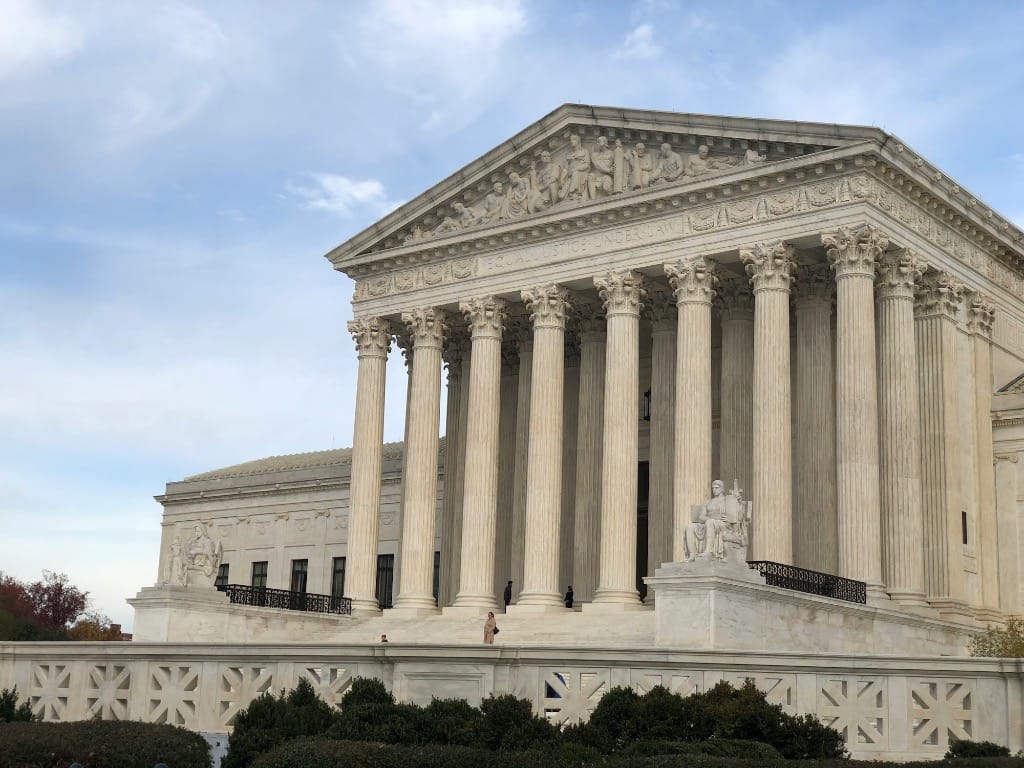
WASHINGTON, Nov. 10, 2025 – Access to broadband is too important to cut internet users off just because those users engaged in copyright infringement, a major ISP argued to the Supreme Court.
The music industry has long argued to the Supreme Court that if an ISP kept a subscriber online who had repeatedly pirated copyrighted music, that provider should be liable for that copyright infringement.
Not so, says cable operator Cox Communications.
Led by Sony Music Entertainment, more than 50 record labels have told justices that Cox kept repeat offenders online because it didn’t want to lose their monthly subscription payments, thus making the company liable because it knew the subscribers would use the connection for piracy.
Cox denies that this was the case, arguing that it was able to eventually curb most repeat infringers without resorting to terminating their connections.
Broadband has so many uses that keeping a user online doesn’t contribute to infringement: Cox
But even if the company were indifferent to its users' activities, broadband connections have so many uses that keeping a pirate online can’t be construed as illegally promoting or aiding the infringement, the company argued in a Friday reply brief to the high court.
Sony’s “argument mistakenly equates Cox’s desire to have paying subscribers with a desire for those subscribers to infringe,” the company wrote. “Cox has no profit motive to foster infringement. It just has an interest in selling internet service to all comers.”
The cable operator argued that fears of punishing innocent users on the same connection as infringers, or fears that cutting an infringer offline altogether would be disproportionate, would be a reasonable motive for maintaining pirates’ connections.
That’s what the company has argued before: axing connections that repeatedly get flagged for piracy would take entire households, businesses, or even regional ISPs offline, and finding that ISPs are liable for infringement if they don’t turn those connections off would disconnect swathes of people.
The case stems from a 2018 lawsuit by the record labels, who sued Cox for not taking subscribers offline fast enough after being notified they repeatedly pirated songs. About 57,000 Cox subscribers are alleged to have pirated about 10,000 works in 2013 and 2014, and Cox received at least three piracy notices for each.
A Virginia jury hit the ISP with a $1 billion penalty, which the Fourth Circuit Court of Appeals later threw out.
That decision also said Cox’s liability was lowered because it didn't profit from the actual infringement, but maintained the company had some level of responsibility. Both sides appealed, with Cox seeking no liability at all and Sony looking to have the fine reinstated.
Trump administration, consumer groups take Cox’s side
The Supreme Court declined Sony’s request but took up Cox’s, a potentially good sign for the ISP. Oral arguments are scheduled for Dec. 1.
The Trump administration has taken Cox’s side, as have consumer advocacy groups, other broadband providers, and big tech companies. They’ve made similar arguments that a ruling against Cox would lead to ISPs overenforcing claims of copyright infringement to avoid massive payouts.
Justices granted Monday the Justice Department's request to participate in the oral arguments.
The film industry, some former members of Congress and former U.S. Copyright Office attorneys, and other copyright holders and proponents have weighed in on Sony’s side.
The former lawmakers and Copyright Office attorneys argued if Cox prevailed, ISPs would have little remaining incentive to take any action against habitual pirates, as copyright owners would have a much tougher time suing.
“Copyright owners would be hard-pressed to satisfy Cox’s intent-based aiding and abetting standard with respect to the deluge of infringements that occur on provider platforms each day, including for the obvious reason that copyright owners are not privy to the intentions or inner workings of online providers,” they wrote.
Separately, Frontier settled a copyright suit with record labels this summer and another with movie companies earlier this year.
Altice and Verizon are also currently fighting copyright cases where large sums are at stake. Both have been put on hold as courts await justices’ holding in the Cox case.




Member discussion