OpenAI Chairman Said AI Model Costs Fell 100-Fold in 18 Months
Chairman Bret Taylor says trillions in AI value unrealized as enterprise deployment lags behind model development

Akul Saxena
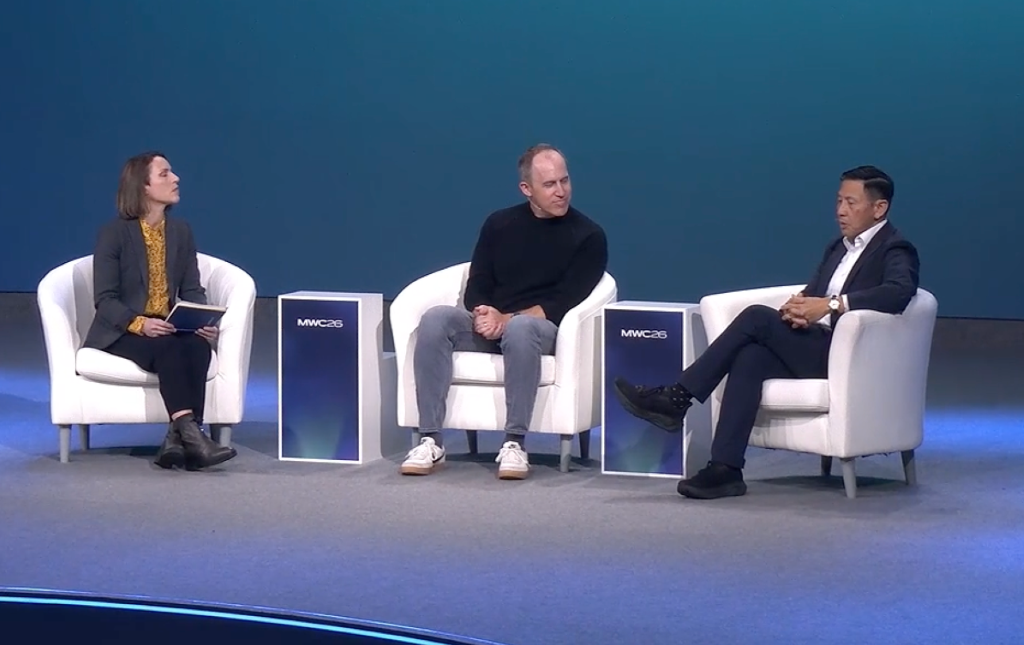
BARCELONA, March 5, 2026 — The cost of running a state-of-the-art AI model dropped 100-fold in 18 months while quality improved 50 percent, OpenAI Board Chairman Bret Taylor said Wednesday at Mobile World Congress here. That compression, he said, would drive the price of a single customer service call toward one cent.
Taylor is also CEO of Sierra, a Silicon Valley startup that deploys AI agents for enterprise customer service. The former co-CEO of software-as-a-service giant Salesforce, Taylor is chairmann of the AI giant of which Sam Altman is the CEO.
GPT-4, OpenAI's large language model, cost $60 per million output tokens three years ago, Taylor said. Its successor, GPT-4o, now costs 60 cents per million output tokens and scored 50 percent higher on human evaluation benchmarks, he said.
Those economics matter for telecoms specifically, Taylor said, because a single customer service call costs mobile operators as much as 10 euros today. Agents capable of resolving those calls at near-zero cost would allow operators to reinvest in subscriber retention rather than treating customer care as a cost center, he said.
"If you bring the price of a phone call down to the price of a page view, how could you reimagine your business," Taylor said.
Rocket Mortgage, the largest consumer mortgage originator in the United States, is already originating billions of dollars in mortgages through AI agents, he said, and home search company Redfin now uses agents to manage property searches.
One telecom's use of OpenAI tools
Ng Tian Chong, chief executive of Singtel, the Singapore-based telecommunications operator and a Sierra customer, said his company built its deployment around a master orchestrator agent, a centralized AI system that routes customer requests across specialist agents handling billing, network operations and service provisioning. The architecture is designed to manage the entire customer journey across discovery, purchase and care through a single interface, replacing what he described as five internal departments operating in silos, Ng said.
Taylor said agents handling complex cases improved 10-fold to 100-fold over the past year, driven by reasoning models, AI systems that work through problems in sequential logical steps. Businesses planning deployments should assume agents will handle most information-oriented tasks within a year, he said.
"If you're planning for the capabilities today, you're planning for the past," Taylor said.
Even if model development stopped today, Taylor said, trillions of dollars in economic value remain unrealized because most enterprise AI has not been deployed. The primary constraint on adoption is market immaturity, not technical capability, he said.
Taylor said the software market is restructuring as a result. Companies will shift from licensing platforms to buying discrete agents for specific functions including lead generation, financial auditing and network diagnostics, he said, replacing the software-as-a-service model that defined the previous decade.
Ng said the organizational challenge may exceed the technical one. Singtel's workforce spans four generations, he said, and the company is reworking how it evaluates seniority and job scope now that managers oversee teams that mix human employees and virtual agents.
Traditional job titles are based on the number of people a manager supervises, Ng said. That framework breaks down when one manager oversees 100 employees while a more junior colleague runs a single human and 300 automated agents, he said.