Chambers Criticizes BEAD Delays, Calls for Clearer Broadband Standards
The BEAD program, Chambers argued, has done more to delay construction than to drive it.

Naomi Jindra
WASHINGTON, Oct. 22, 2025 — What was billed as the nation’s biggest rural broadband push has instead become a roadblock, said Conexon co-CEO Jonathan Chambers, who argued the Broadband Equity, Access and Deployment program’s long delays and muddled standards have frozen construction across rural America.
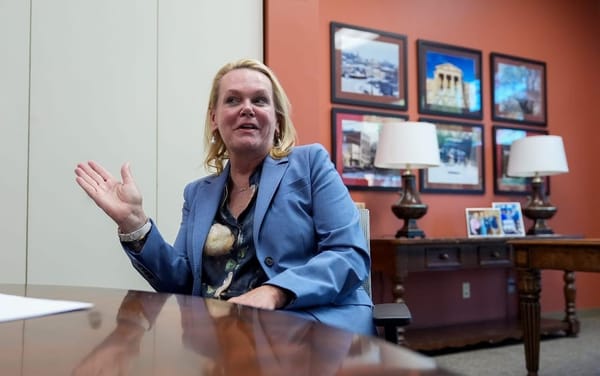
Chambers spoke at the Fiber Broadband Association’s Fiber for Breakfast series, hosted by association CEO Gary Bolton, Chambers said BEAD “had the opposite effect” of its intended purpose.
Chambers, whose company partnered with electric cooperatives to deploy fiber in rural communities, compared BEAD unfavorably to the Federal Communications Commission’s earlier Rural Digital Opportunity Fund auction. He argued that distributing broadband funds through a “single-number” auction model rewarding providers who deliver the best service for the least public cost would have been faster and fairer than the current patchwork of state-level applications.
While he credited the current ommerce Department for finally moving BEAD forward, Chambers criticized the years-long delay. “There has been a slowdown and a stoppage of construction in rural America at the very time that rural America most needed it," he said.
Chambers also urged policymakers to redefine broadband based on actual delivered performance, not marketing claims or “made-up” speed thresholds. He criticized the current federal benchmark of 100 Mbps download and 20 Mbps upload speeds as detached from future needs driven by artificial intelligence and other data-intensive applications.
Chambers also took aim at the industry’s “up to” marketing claims, saying consumers rarely get the speeds they pay for. “There’s no ‘up to’ when you buy a dozen eggs,” he said and called for clearer standards and testing to ensure advertised broadband speeds match real-world performance.
“The next time there’s funding, let’s take a deliberate approach,” he said. “What are the needs going to be in five to ten years from now?”
Member discussion