
Crown Castle Suing Dish
It's the second major tower company to allege Dish is trying to improperly exit its contracts after major spectrum sales.

Jake Neenan
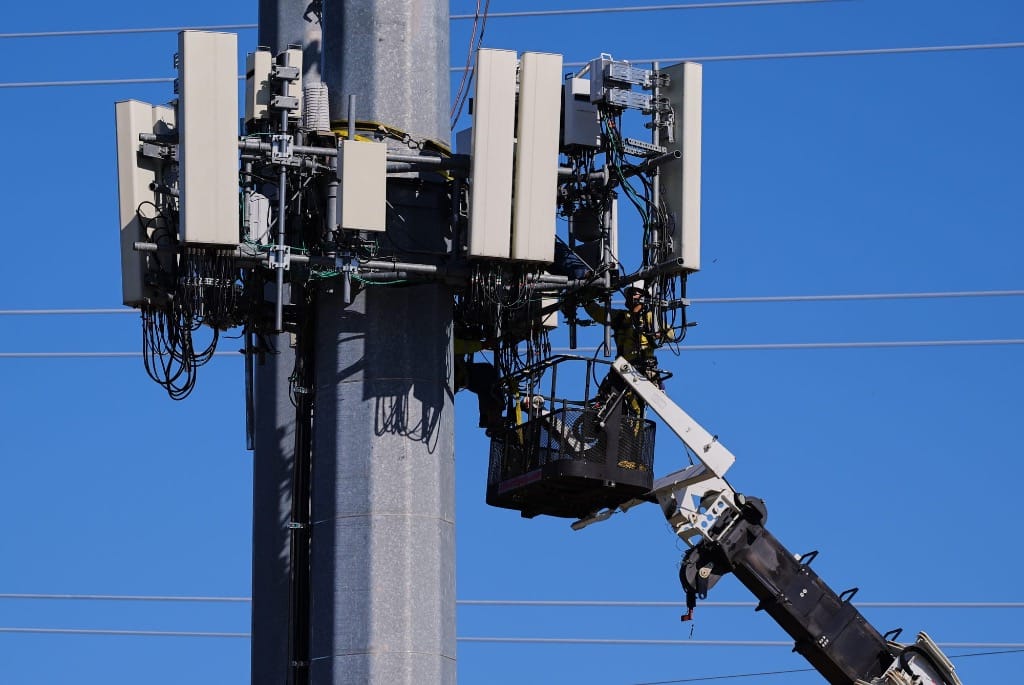
WASHINGTON, Nov. 24, 2025 – Crown Castle and dozens of its subsidiaries are suing EchoStar-owned Dish Wireless for attempting to exit leasing contracts after EchoStar reached deals to sell much of its spectrum for more than $40 billion.
That’s at least the second company to sue EchoStar over the issue, after American Tower sued last month. Crown Castle filed its suit in the U.S. District Court of Colorado on Thursday
Dish is arguing its parent company was forced to sell its spectrum by the Federal Communications Commission, else the agency would likely have revoked the licenses and bankrupted the company.
Dish is casting FCC pressure and subsequent sales as a “force majeure” event, something beyond its control that prevents it from fulfilling its contractual obligations.
Crown Castle and American Tower dispute that. They argue EchoStar reached the deals voluntarily and is now looking to improperly ditch its subsidiary’s contracts despite being flush with cash.
“EchoStar’s spectrum sales do not even remotely approach the stringent requirements of [its contracts with Crown Castle] or controlling Colorado law with respect to force majeure,” Crown Castle wrote. “The only basis asserted for invocation of force majeure – that the FCC ‘compelled’ EchoStar to sell its spectrum – is demonstrably untrue.”
An EchoStar spokesperson said the company wasn't commenting on ongoing litigation.
FCC opened probes into EchoStar's spectrum use
The FCC did open probes into EchoStar’s spectrum use – which it closed after the sales were announced – and FCC Chairman Brendan Carr was clear he thought the licenses should be in the hands of someone who would put them to more intensive use.
But Crown Castle argued the agency never formally compelled EchoStar to do anything, and noted EchoStar consistently argued it met its requirements and that it would be illegal for the FCC to undermine its licenses.
“EchoStar could have continued to contest the FCC’s ability to take any adverse action relating to its spectrum licenses. It chose instead to sell them,” Crown Castle wrote.
Dish had two contracts with Crown Castle to lease tower space as well as fiber and data center infrastructure. The company told Crown Castle it was invoking force majeure in September, soon after EchoStar reached deals with AT&T and SpaceX, according to the complaint.
EchoStar is decommissioning its radios in light of the sales, and will operate its Boot Mobile service largely on AT&T infrastructure. The company is standing up a new arm called EchoStar Capital to manage the cash gained from the spectrum sales.
Wireless Estimator reported last month that Dish was making similar force majeure claims to other vendors and contractors.
“EchoStar has not-so-subtly threatened to bankrupt its own subsidiary, Dish Wireless LLC, in order to shelter the parent company’s cash from the liabilities incurred in EchoStar’s erstwhile effort to build a wireless network,” MoffettNathanson founder Craig Moffett wrote in a recent investor note. “Dish’s creditors will be left to fight over issues of asset conveyance. Creditor on creditor violence.”
The spectrum sales will ultimately have to be approved by the FCC before they close, which is expected to happen next year.
Update: This story was updated to include a response from EchoStar.






Member discussion