
Expert Says Millions of Areas will Remain Unserved After BEAD, Other Federal Programs
Increased competition in already-served markets could leave rural communities behind.

WASHINGTON, April 8, 2026 – After all federal broadband programs, around 2.1 million areas will still remain unserved or underserved, said Jim Stegeman, president and CEO of broadband consulting company CostQuest.
He said while deployment has been both robust and continual, about 28 percent of new fiber is being built in locations that already have both fiber and cable service. This means carriers are making competitive moves in already-served markets, which leaves rural and other underserved communities left without this access.
“There’s about 60 million homes left to serve as we build out fiber to everybody across the country, but when we look at the total addressable market, it’s more like 130 million,” said Fiber Broadband Association President and CEO Gary Bolton. “Because what we’re seeing is second and third and fourth passings of the same homes by other providers.”

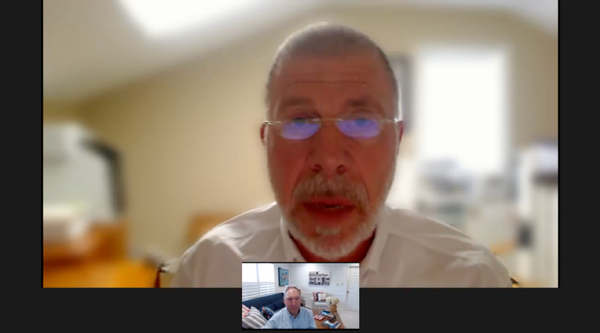
Stegeman joined Bolton on Wednesday in a Fiber for Breakfast webinar for a conversation on CostQuest’s data in its Broadband in America reports, and the recent acceleration in fiber network growth. Based in Seattle, CostQuest is a broadband consulting agency that serves as the Broadband Serviceable Location Fabric data provider for the FCC’s Broadband Data Collection and other federal programs.
Bolton said the Broadband Equity Access and Deployment program’s nondeployment funds could be used to provide service for the “few million unserved locations” that fell through the cracks. Stegeman said he has heard similar thoughts and recommendations for nondeployment funds to be used for a “cleanup” round to account for defaults.
“We know there have been new locations added, and we know there potentially may be some deep defaults as carriers start to look at the agreements in place of whether they can adhere to it,” Stegeman said. “With potential cost increases or other issues, they may actually default, so we’re likely to see all that as part of that cleanup ground should it happen.”
Stegeman presented CostQuest’s recent data on fiber and broadband growth, which has been accelerating across the country. In the last 6 months of 2025, 5.2 million broadband serviceable locations were reported to be served, with a reported 99 percent fiber coverage for 182 U.S. counties. Compared to other states, North Dakota has the most substantial coverage by far, which Stegeman commended the state for.
“The providers in North Dakota used their Universal Service Funds from years ago to build that fiber network that we see there today,” Segeman said. “So it’s really a testament of the ability of those providers to leverage federal funds to really deploy fiber in areas that typically may not be economic to deploy in.”
Now, fiber covers more than 60 percent of all served locations, with a total of 1,561 active fiber providers operating across the country. Providers have also been rapidly deploying networks, with more than 71 providers doubling their footprint in six months. The network provider with the largest growth was Clearwave, which went from 305,000 fiber locations to more than 1.2 million within the six month period.
Stegeman also noted that fiber’s accelerated deployment has brought increasing competition, especially among small providers. He said this can be seen in the way some states have 30 to 40 chosen BEAD carriers responsible for deploying networks.
Either way, federal funding is key to driving a large share of rural access. Nationwide, 8.7 percent of fiber locations resulted from federal funding, but this jumps to nearly 30 percent in rural areas.

Member discussion