
Experts Spar Over Consumers Need For Internet Speeds
Panelists split on whether gigabit broadband was essential or overhyped.

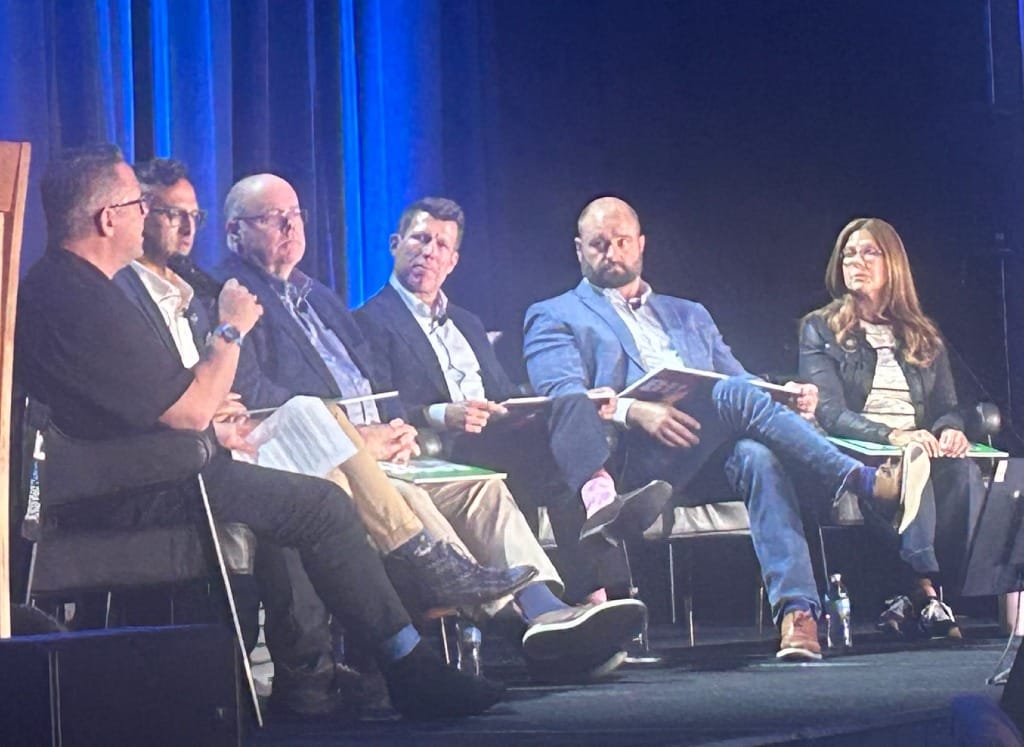
DENVER, August 8, 2025 – Panelists at Mountain Connect sparred Wednesday over whether consumers need gigabit internet speed.
“We’ve been talking about this for seven years, gigabit communities, and I think, quite frankly, we’ve oversold,” Jeff Gavlinski, CEO of Mountain Connect said. “It was marketing hype that is not aligned with reality.”
Christopher Ali, Pioneers Chair in Telecommunications and Professor of Telecommunications at Penn State, disagreed.

“Should our policies and our programs plan not for the connectivity today, but the connectivity we’re going to need 10-20 years from now,” Ali asked. “Otherwise, we’re going to have the exact same problem that we’ve had over the past failures of these programs.”
David Zumwalt, CEO of WISPA, was not swayed.
“We’re still on average seeing something like 25 megabits per second of average usage at the residential level of download. It’s going to take a long time to consume a gigabit of service,” Zumwalt said. “…Forcing 42.5 billion dollars down a pipe to say that we have to do this to be ready for the future when the growth trends are not showing that actual utilization is emerging, deprives us of the ability to get connectivity to people now.”
Zach Hubeck, executive vice president of sales and marketing at WAV, agreed with Zumwalt.
“We have 100 megabit fiber symmetrical for teams only [at a WAV facility in Aurora, Illinois],” Hubeck said. “On any given Tuesday when we have required Tuesdays for everybody in the office, 40-50 people in the office…we’re making that thing sweat at 45 megabits peak. When everybody’s working all at once. So to say we need to bring gigabit to a home to allow it to be served is just bullshit.”
The 40 minute conversation was not limited to gigabit speeds in the home. Panelists also discussed the middle-mile funding gap, and the detrimental effect it has had on AI development.
“I mean, there’s what, 14 states that don’t even have an [internet exchange point],” Brian Hollister, CEO and co-founder of Bonfire Infrastructure Group said. “…If we really think about AI and if we’re gonna win that race, we need a lot more middle, we need a lot more data centers, and we need those data centers to be distributed.”
Achieving digital equity was also a topic of concern
“I think the way that we have now changed the requirements of the BEAD program, we are just inflating expectations,” Ali said. “I think this goes back to the question of whether the digital divide is actually closable. We have to understand that these questions are also connected to things like racism and poverty and discrimination and societal inequality. So the digital divide is so much bigger than just infrastructure.”
Angela Siefer, executive director of the National Digital Inclusion Alliance, argued that the broadband industry often pushes digital equity to the side.
“We’re definitely treating [digital equity] as a side quest,” Siefer asserted. “There was a great digital equity session yesterday and four people were in the room. So it’s definitely a side quest.”




Member discussion