
FCC Looks to Win ‘Space Race 2.0’ with Satellite Infrastructure Buildout
The FCC will open a proceeding to find spectrum for ‘Weird Space Stuff'

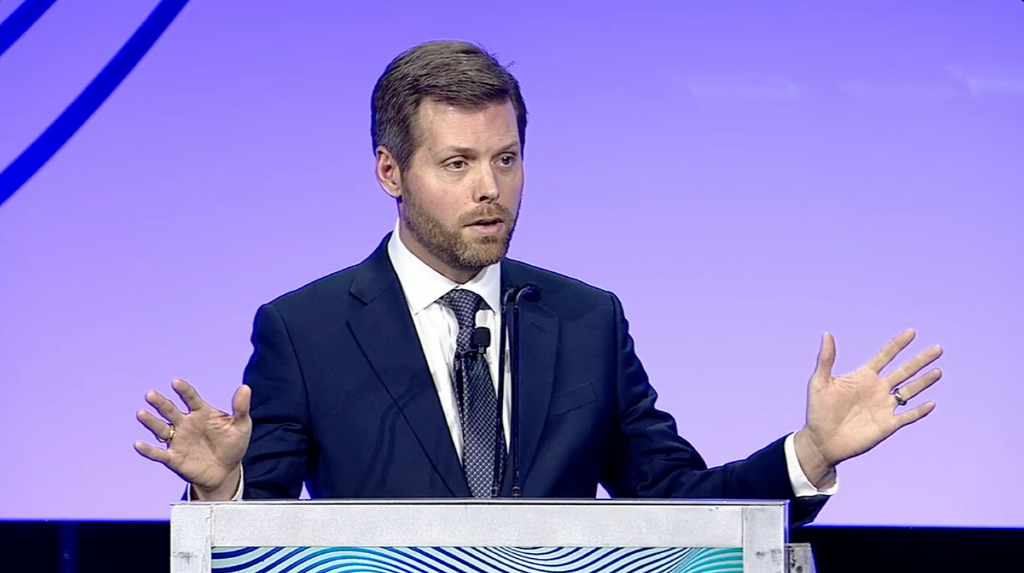
WASHINGTON, March 24, 2026 – The Federal Communications Commission is looking to dominate in “Space Race 2.0” by building out faster and better infrastructure for economic growth and national power.
“We know that which nations win Space Race 2.0 will reshape economies and affect global balances for decades,” FCC Space Bureau Chief Jay Schwarz. “At Space Bureau we are thinking big. We are going fast. We are playing to win.”
Schwarz spoke at the Satellite Industry Association’s dinner in Washington on Monday about scaling space technology for the country and consumers through an “unimaginable array of businesses riding on top.”

The FCC is looking to the emerging space infrastructure economy in energy production, data centers in space and defense capabilities, Schwarz said. But, he noted that this is “just the tip of the iceberg.”
Schwarz outlined the FCC Space Bureau’s two pillars, including rebuilding a faster licensing process and delivering an abundance of spectrum. With licensing delays being a major industry complaint, the bureau is putting regulatory reform into action through a proposed “licensing assembly line.” Schwarz said he hopes this process will allow for speed, predictability and flexibility for space systems and businesses in the U.S.
The bureau is also pushing for a massive spectrum allocation for satellites, which has been a fundamental roadblock in satellite growth. Schwarz said the FCC has proposed more than 20,000 MHz of new spectrum for satellite, which will widen the bandwidth and allow for broadband-from-space and larger defense systems.
Schwarz noted that the FCC will open a proceeding this week to “start finding more spectrum for what we call ‘Weird Space Stuff,’” which are systems that don’t deliver communications services but still require spectrum.
“What’s weird today isn’t weird tomorrow,” Schwarz said. “Space infrastructure is simply becoming infrastructure. Terrestrial and space infrastructure will just be infrastructure. What’s magic one day is mundane the next.”




Member discussion