GAO: FCC’s E-Rate Has Adequate Anti-Fraud Measures

The program fared the best in GAO’s review of five government subsidies.

GAO: FCC’s E-Rate Has Adequate Anti-Fraud Measures
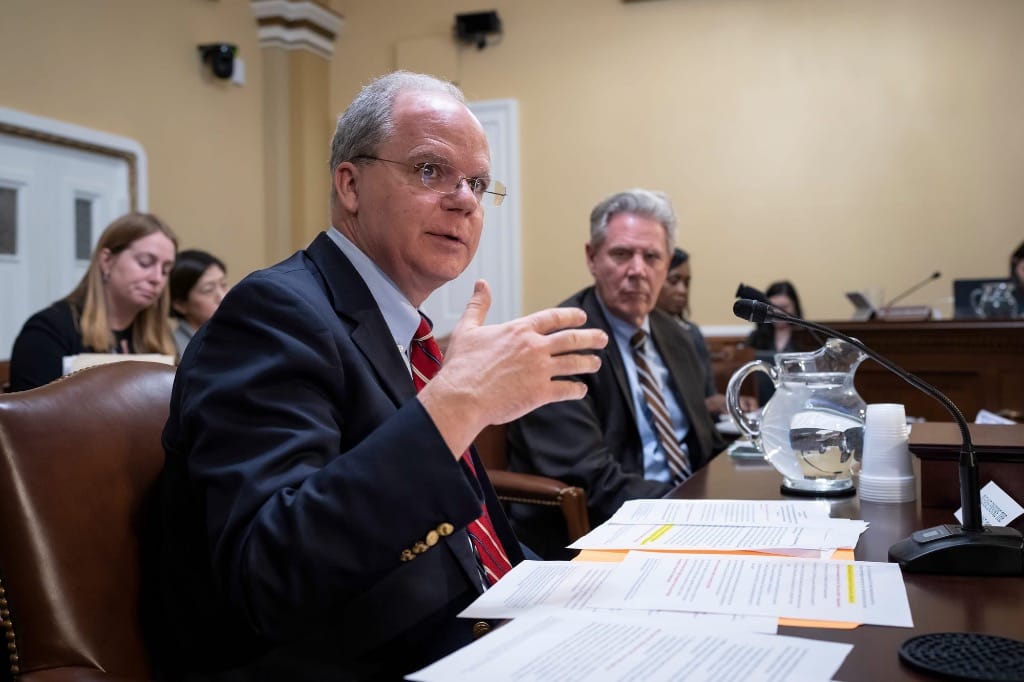
Photo of Rep. Brett Guthrie, R-Ky., chairman of the House Commerce Committee, and Rep. Frank Pallone, D-N.J., the committee's ranking member, by J. Scott Applewhite/AP

WASHINGTON, Jan. 20, 2026 – The Federal Communications Commission’s broadband subsidy for schools and libraries has adequate fraud prevention measures in place, the Government Accountability Office found.

In a review of five government programs, only the FCC’s E-Rate program had implemented all nine anti-fraud measures GAO was looking for. Those include regular audits, reviews of potential program risks, and dedicated anti-fraud staff.

The GAO had recommended in 2023 that the FCC take steps to prevent fraud in its Affordable Connectivity Program. That program has since run out of cash, but the GAO said the agency did everything it asked and thus was in a better position to monitor its other programs.

“Implementing these recommendations better positioned FCC to provide better assurance that its antifraud efforts are effectively preventing, detecting, and responding to fraud and safeguarding program funds,” GAO wrote. “For example, we recommended that FCC develop and implement an antifraud strategy for ACP that aligns with leading practices in the [GAO’s] Fraud Risk Framework and develop and implement processes to monitor certain antifraud controls.”

In its report, released Jan. 5, the GAO did not recommend the FCC take any action in light of its findings. The report was requested by eight GOP representatives, including House Commerce Committee Chairman Brett Guthrie, R-Ky., and other top members of the committee.

The Department of Commerce, whose CHIPs for America Program was analyzed by GAO, disputed the office’s conclusion that it had not implemented all nine policies also.

The GAO said Commerce should have considered using recovery audits, which are designed to identify overpayments. Commerce countered that its pre-payment screenings were actually better at preventing fraud than recovery audits, and that conducting them would not be worth the agency’s time.

E-Rate spent about $2.6 billion in 2024. It’s one of four programs supported by the FCC’s Universal Service Fund, which also provides funding for rural broadband networks and internet discounts for low-income households and rural health care centers. USF is funded by fees on interstate voice revenue.

A fraud case related to E-Rate is headed to trial in May, although it stems from allegations against an AT&T subsidiary that date back to 2002. The Supreme Court ruled last year that at least some E-Rate money was covered by the False Claims Act, which heightens damages for fraudulently seeking government cash, and allowed the case to move forward.

Both AT&T and the whistleblower suing have said they would likely litigate again over exactly how much USF money was covered by FCA, and thus how much AT&T could be made to pay.

The FCC voted last year to roll back two 2024 orders that expanded E-Rate to fund off-campus Wi-Fi. 

Member discussion

Popular Tags