
Jimmy Schaeffler: Broadband, Data, and Broadcasters Are Changing
Six questions frame the importance of broadcasting, broadband, and datacasting

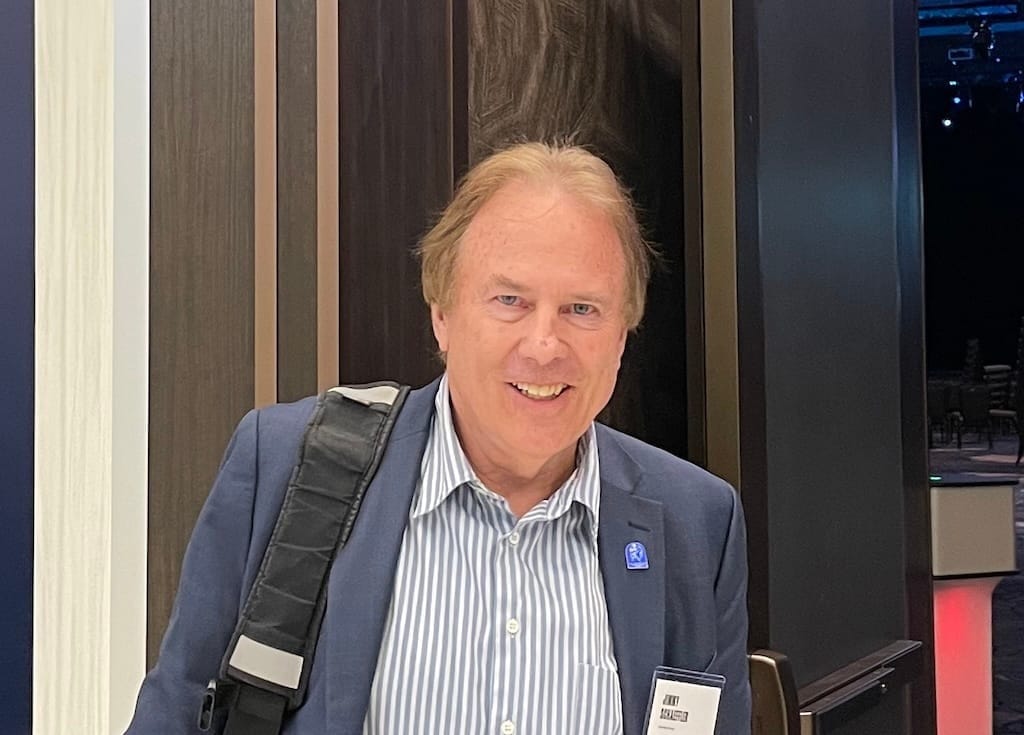
Jimmy Schaeffler
In the early 1990s, The Carmel Group’s first research focused on telecom’s burgeoning distribution trends and technologies. The firm was launched during the initial years of the Direct Broadcast Satellite (DBS) industry’s growth to over 30 million users.
Yet, its larger rival, the cable industry, which began in the 1940s, once dubbed DBS as standing for “Don’t Be Stupid.” This competitive market left plenty for strategy firms such as The Carmel Group to study and advise both sides. And for decades, which continues today, with the infusion of mobile, fixed, and streaming services have become alternatives to these two traditional platforms.
A quarter of the way through the 21st century, watching history repeat itself, another distribution technology is now being proposed by another relatively small, upstart, rival; this David, too, is being challenged by several, far bigger, industry Goliaths. And, one could argue, by the government, as well.
That governmental process is intended to alter the data distribution mandates and capabilities of OTA broadcast stations (presumably to more adequately reflect and respond to today’s hand-held device explosion, by delivering content in the form of a datacasting transmission model – like today’s streaming video – and the Holy Grail for broadcasters, that that development suggests also for device maker like Apple , and the Android communities).
Key opposition to HC2 comes from Sinclair Broadcast Group , the Advanced Television Systems Committee (ATSC) , the National Association of Broadcasters (NAB), and the Consumer Technology Association (CTA). Elemental questions about and grounds for opposition to HC2’s datacasting experiment include an apparent lack of hand-held devices capable of receiving LPTV signals; encryption and other technical standards; business models and monetization; and spectrum control. Questions regarding the new entrant ask if this is simply a continuation of similar business models or a new paradigm shift that will enable access and capabilities at low or more affordable costs.
Recent figures indicate just one of those “Goliaths,” noted above (and below), has assets that are 14 times bigger than HC2 parent, Innovate’s, estimated $67 million market capitalization.
With that introduction, as first occurred with The Carmel Group three decades ago, a set of a half dozen key business questions arise, each addressed below.
What’s the big issue?
The big picture issue here is how do the ones and zeros that constitute digital data get carried, and by whom, by what, and to whom?
This question is important because of the money involved, the efficiency of the networks, and consumers’ decades-long desire to freely and readily watch OTA broadcast TV on their iPhones, Androids, and other portable devices, no matter where they find themselves. Will generally larger OTA entities favoring the ATSC standard rule the roost; or will LPTVs be the ones to first (or best?) access mobile phones nationally – and perhaps one day globally – in the form of something other than just, or predominantly, video channel distribution? Must the constituencies of the FCC, NAB, and the CTA dominate and control that task? Or might both ATSC 3.0 and 5G OTA datacasting be implemented?
A bigger question posed by LPTV is the desire of many communities to promote and launch localized content. The limitations of a LPTV footprint that is not national can be both a hindrance and an asset. The homogenization of content has led to a desire to customize the type of content those audiences would like to watch (albeit, at a somewhat higher cost to create a large scalable platform). “Local” here, however, also means a lower-cost community-based approach. And that may not grab enough “eyeballs” to effectively monetize the services offered. Economists say that growth usually follows a typical S-curve diffusion, assuming content and access is of technical standards, and is valued by its target audience.
Which are the players?
Five to six key classes – or sets – of key participants have invested today. These include the government, trade groups, private concerns, and broadcasters themselves:
- Regulators, like the FCC: The U.S.’s top-of-the-food chain telecom gatekeeper decides if and how LPTV will one day deliver not just datacasting, but also standard video channels. Proponents and opponents are awaiting the FCC’s decision on the HC2 Petition for Rulemaking .
- LPTV Providers, like HC2: HC2 is owned and controlled by Innovate Corporation and its HC2 Broadcasting Holdings, with 251 nationwide stations. Sidecar indie vendors include Corning, NY-based Milachi Media in the form of its Boston, MA market WWOO-LD , to which the FCC in July 2023 granted an experimental special temporary authority to test the new 5G broadcasting. The number of LPTV stations in the U.S today is approaching 2,000, according to the FCC.
- Broadcasters, like Sinclair: Among a larger U.S. group of high-power “first level” local and regional OTA video broadcasters, the ultra technically-savvy Cockeysville, MD based Sinclair is the owner of 85 nationwide stations. Sinclair is further backed in its ATSC 3.0 efforts by vendors including Edgio, Broadspan, USSI Global, Saankya Labs, and Free Stream Technologies, as well as SK Square.
- Trade Groups, like NAB and CTA: CTA represents the huge global consumer technology industry. NAB stands behind -- and for -- hundreds of high-power and low-power TV broadcasters nationwide. ATSC is a technical body that drives the form of datacasting that is ATSC-based (which differs from the 5G version rallied by HC2). And the LPTV Broadcasting Assn. is HQd in Stamford, CT . The Korean Radio Promotion Assn (RAPA) supports ATSC 3.0, while the American Broadcast TV Alliance and 5G Broadcast Collective support 5G.
- Other HC2 Competitors: Most rival plans come via 5G-based signals that get delivered via OTA by ATSC-focused broadcasters and partners.
- Other HC2 Supporters: San Diego, CA-based Qualcomm; and many other brethren LPTV licensees. One assumes.
What are the key core controversies?
Software, e.g., spectrum: Which spectrum – ATSC or 5G – will be allocated, if any (or both?), by the government?
Also, one side says interference is a problem. The other says even if so, the HC2 5G version has a right to get tested, and possibly modified, just like ATSC 3.0 was. Spectrum efficiency, congestion, capacity, and costs are further concerns.
Hardware, e.g., devices: Which devices will be capable of accessing these datacast shows, if any, how, and how soon?
Control: Which entities will control allocations of infrastructure (esp. equipment), spectrum, and business models?
Miscellaneous: Digital Rights Management (DRM) and patent troll concerns, as well as matters involving consumer awareness and adoption.
The debate regarding the business models is paramount. Investment typically follows the need to provide something better than a “me-too” services. In this instance, what will the new technologies serve to the audiences that are deemed exceptional and of value?
Where is this happening?
The U.S. and other countries’ have great control over the content their inhabitants consume. In the U.S., that gatekeeper is the FCC (together with the stations and station groups in this instance), as well as content providers. Thus Washington, DC is central to this controversy.
Also based in or around DC are several trade groups, including the television associations, the ATSC, the NAB, and the owner and operator of the annual Las Vegas CES Show, the CTA.
What and when are the next steps?
Like DBS, very likely years and perhaps decades will be necessary to materially resolve these key answers to the issues above. In the interim, a lot of money will also change hands, as these stakeholders try to enhance and evolve their stakes.
No doubt the FCC is pivotal to the next steps taken. The public responses to HC2’s FCC filing having been received, the clock is ticking for the FCC’s response and possible rulemaking. That is expected before the end of the year 2025.
Why does it matter?
As with DBS, new technologies innovate to create consumer-friendly choices, which serve the public interest. The same appears here. LPTV broadcasters delivering content in the form of 5G standardized datacasting, and the business models and technical efficiency involved, might be that Holy Grail that finally brings accessible OTA-type “normal” TV to consumers’ hand-held devices, wherever an LPTV signal can reach them. That said, failure is still a real risk here, a la technologies such as Betamax, MobiTV, and Immersive Headsets, for example.
Summarizes Richmond, Kentucky-based Wallingford Broadcasting from a recent filing, "Television broadcasters must be open-minded and embrace new technologies that can reach viewers where they are and how they like to be reached."
So, yes, in fact, this burgeoning ATSC 3.0 vs. 5G battle is deeply akin to the cablecasters vs. the DBSers, and savvy players will seek lessons from those past three decades. From a telecom and technology POV, few items rival how digital content will be distributed and to which people and what devices. Success is never guaranteed, yet the amount of investment undertaken by these groups seems to indicate a serious play to compete with traditional players, and to enhance the user experience.
Jimmy Schaeffler is the chairman and chief service officer of The Carmel Group, based in Scottsdale, Ariz. For more than three decades, he has researched, analyzed, and written about telecom, especially pay TV, broadcast, and new digital media, on both the software and hardware sides of the business. This Expert Opinion is exclusive to Broadband Breakfast.
Broadband Breakfast accepts commentary from informed observers of the broadband scene. Please send pieces to commentary@breakfast.media. The views expressed in Expert Opinion pieces do not necessarily reflect the views of Broadband Breakfast and Breakfast Media LLC.



Member discussion