
Lance West: Delivering on BEAD’s Promise to Connect America
Comcast is an awardee in the Broadband Equity, Access and Deployment program across 34 states

Lance West
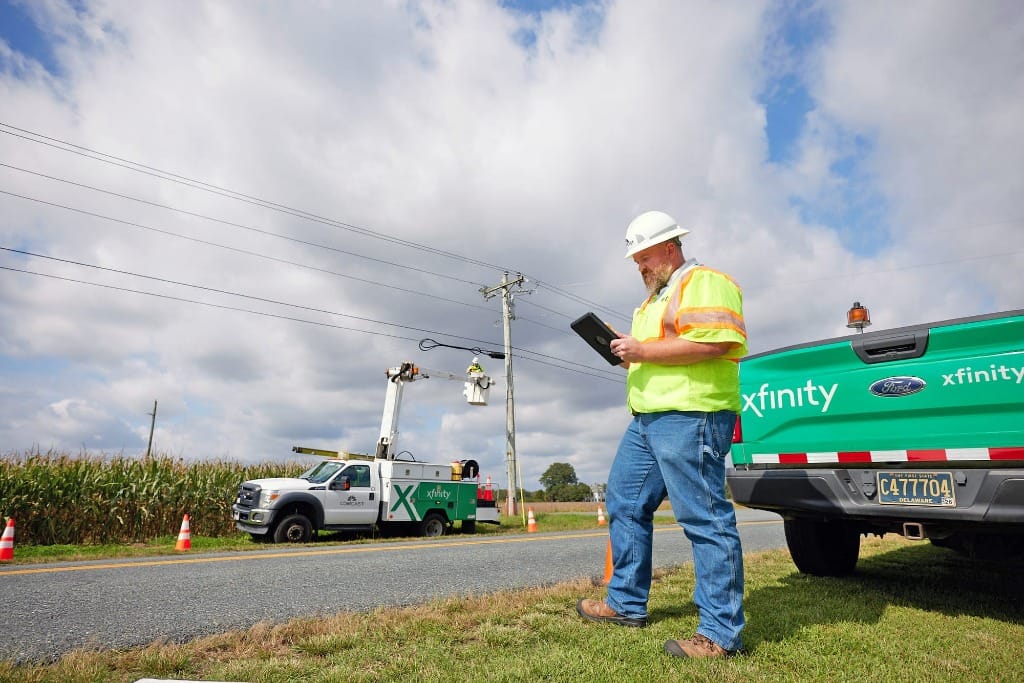
The Broadband Equity, Access, and Deployment program is the largest federal broadband investment program in U.S. history, designed to connect Americans to the power of high-speed Internet.
BEAD represents a once‑in‑a‑generation investment of over $42 billion, uniting federal funding, state leadership, local coordination, and industry expertise to deliver transformational connectivity for unserved communities.
Rural Americans have waited too long for this.
Now, after careful planning, the National Telecommunications and Information Administration has approved the majority of states’ funding proposals. Comcast is proud to be a BEAD awardee across 34 states. We are now in the execution phase, ready to deliver on the promise of BEAD.
In 2026, policy meets reality
The most difficult work begins now. Across the country, states implementing BEAD have identified several common challenges, and some solutions, at this phase that can affect broadband deployment timelines—most notably permitting, pole attachments, and access to easements.
- Permitting: Major infrastructure projects like broadband builds often require navigating hundreds of state and local permits, each with its own process and timeline which can vary widely across jurisdictions, and even within the same state. A recent McKinsey analysis found that the average permitting time is 4-5 years for broadband and telecom projects. Rural communities often lack dedicated staffing for permitting review. Communities that have implemented broadband‑ready practices—such as online permitting, clear review timelines, and single points of contact—have seen more predictable outcomes and fewer downstream delays.
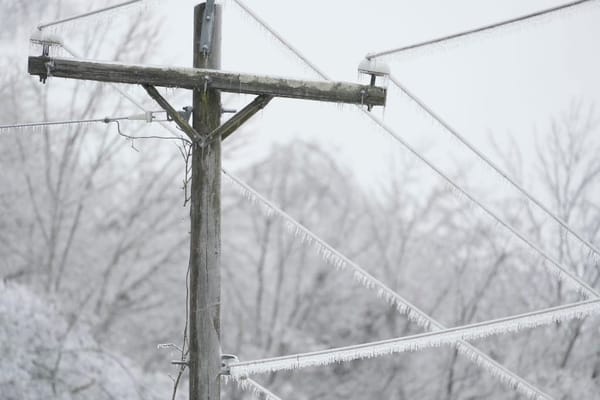
- Pole Attachments: Building out a fiber-based network to new communities often requires attaching cables to existing utility poles. The condition and ownership of these poles often determine construction sequencing and cost. Virtually every state identified poles as a possible barrier to deployment in its 5-year action plan. While there is no nationwide estimate for poles that need to be replaced or restored, one recent report found that more than 12% of just one electric utility’s poles required repair or replacement. Some states have responded with pole replacement or hardening programs or worked to provide further funding for undergrounding to help address these constraints and keep projects moving.
- Easements and Rights‑of‑Way: In many rural areas, access to private property or unclear easement authority has become a critical barrier to connecting new homes and businesses. States that have engaged communities early in the process to educate property owners on the build and obtain easements for access have helped reduce uncertainty and accelerate deployment.
Surplus funds can help overcome these obstacles
Nearly half of the congressionally approved $42.5 billion for BEAD – about $21 billion – remains unspent. These reserve funds can now be strategically deployed to help overcome critical barriers to broadband deployment, with far-reaching benefits to communities beyond the BEAD build.
Putting these taxpayers dollars to use to expedite deployment of high-speed Internet is the fastest, most effective way for us to collectively deliver on the promise of BEAD. Alternate proposals for surplus funds, including deployment of commercial cell towers, risk wasting taxpayer dollars and detracting from our shared mission to overcome barriers to rural broadband deployment and connect Americans to affordable, reliable, secure Internet.
Building with care and accountability
Once construction begins, Comcast deploys modern fiber construction techniques and equipment designed to reduce disruption and maintain public safety. During this phase, our teams coordinate closely with local officials, public works departments, private property owners, and utilities to accommodate local needs and maintain safe, clearly marked work zones.
We recognize that infrastructure construction affects day‑to‑day life in communities, and we commit to working efficiently, responsibly, and with accountability throughout the process.
We are proud to deliver affordable, reliable, secure Internet
Following construction and testing, homes and businesses in project areas will have access to Comcast’s network. This includes:
- The Xfinity Network—our next-generation, fiber-based broadband network delivers affordable, reliable, and secure Internet with a 5-year price guarantee. That includes unlimited data with the best-in-class Xfinity WiFi Gateway, plus a free line of mobile included for one year with no annual contract.
- Xfinity Mobile—combines America’s largest and most reliable 5G network with the nation’s most expansive network of WiFi hotspots to deliver the fastest mobile speeds in our markets. With Xfinity Mobile, customers can save up to $1,000 a year compared to other wireless providers.
- Comcast Business— a leader in business technology, providing small, enterprise, and public sector customers with the advanced network and solutions they need to stay connected and be more effective. Comcast Business connects over 2 million small businesses across America, more than any other provider.
Service availability through Xfinity and Comcast Business marks the realization of the policy and planning decisions that preceded the build and enables residents and businesses to fully participate in the digital economy.
As we work to bring our best-in-class connectivity to unserved communities, we will continue to partner with federal, state, and local agencies as well as community partners to navigate barriers to deployment, ensuring that we are able to connect families to the options that best meet their needs.
Delivering on the promise of BEAD goes far beyond the build – it’s a duty we share as part of our enduring commitment to connect America.
Lance West serves as Executive Vice President, Federal Government Affairs for Comcast Corporation and is the head of the company’s Washington, D.C. office. In this role, he is responsible for the direction of Comcast’s legislative and regulatory affairs teams, assesses the impact of public policy on the company’s business objectives and executes strategies to achieve these objectives with Congress, the Executive Branch, and independent regulatory agencies. This piece was originally published on Comcast's blog on March 6, 2026, and is reprinted with permission.
Broadband Breakfast accepts commentary from informed observers of the broadband scene. Please send pieces to commentary@breakfast.media. The views expressed in Expert Opinion pieces do not necessarily reflect the views of Broadband Breakfast and Breakfast Media LLC.




Member discussion