Lesson 1: The Telephone and the Telephone Network
150 Years of American Telecommunications: The Online Course
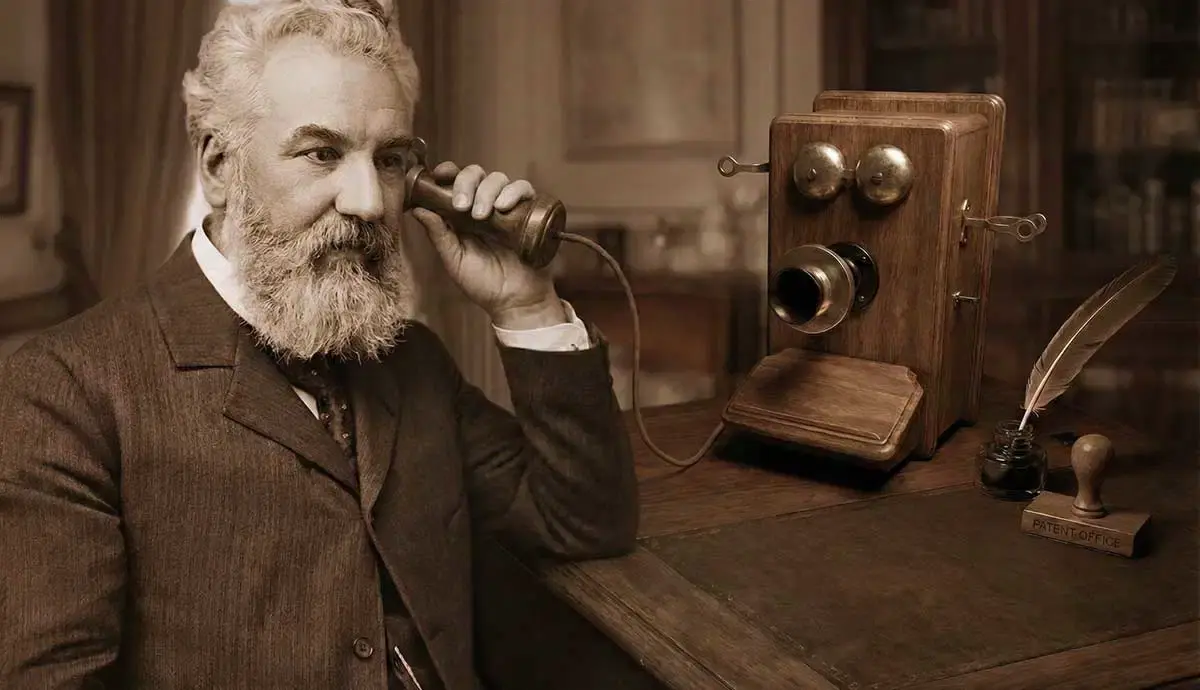
Join Section A for FreeAn attorney filed Alexander Graham Bell's application in Washington on February 14, 1876. Elisha Gray, who co-founded a telegraph equipment maker, went to the same office that day, but filed a caveat rather than an application, a notice that reserved a three-month window to apply later and carried no exclusive rights with it. That difference decided which of the two documents the Patent Office would examine and grant. The Patent Office granted Bell's patent on March 7, three days before he transmitted speech in a Boston laboratory. Courts held that the patent covered the method of sending speech by varying an electric current, so a rival who built a different machine still infringed. Western Union quit the business in 1879 and handed over its exchanges in 55 cities, the Supreme Court upheld the patents four to three in 1888, and roughly 6,000 independents entered once they expired. Control of the American telephone business was settled by litigation and by contract, and every section of this course returns to that pattern.