Lesson 11: Information Services and the FCC’s Computer Inquiries
150 Years of American Telecommunications: The Online Course
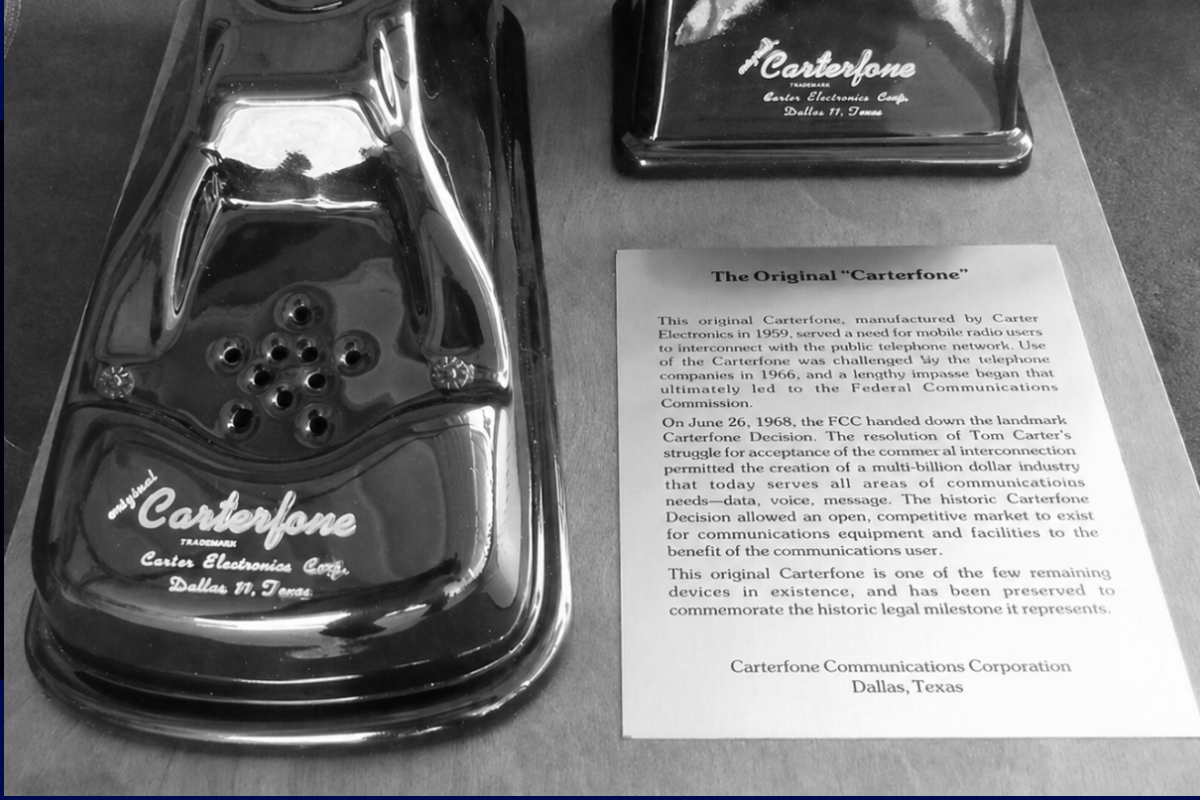
Join Section A for FreeA federal appeals court ruled in 1956, over AT&T's objection, that a customer could snap a cup-shaped attachment onto a telephone mouthpiece to keep people nearby from overhearing a call, and in June 1968 the Federal Communications Commission struck AT&T's ban on customer-owned equipment, which opened the market for the modem. Computers were already sending data over telephone lines, and in 1966 the FCC began deciding whether that traffic counted as a regulated communications service. The FCC answered three times, in 1971, 1980 and 1986, and each order left computing unregulated while the telephone line beneath it stayed regulated. Congress wrote that choice into statute in 1996 as the information service, and dial-up online services grew on the unregulated side. An appeals court placed the broadband connection itself in the unregulated category in January 2025, and that classification now shapes who pays for the Universal Service Fund.