Lindsay Miller and Doug McCollough: Providers Can Better Manage the Risks of America’s Data Center Debate
Broadband providers serving data centers risk reputational damage and overlook regional growth opportunities when they fail to engage with the communities their fiber runs through.


Lindsay Miller, Doug McCollough

Data centers are turning into a trillion-dollar industry - with opportunities that ripple out far beyond the initial development phase. The data center industry is starting to understand the value of building relationships with communities in this process.
Yet the broadband providers that bring connectivity to the data centers have been slower to adopt a community-centric approach, missing out on opportunities and exposing themselves to reputational risk. At a recent Columbus City Council hearing about data center development, for example, not a single internet provider or broadband expert was included in the presentations.
Many providers engaged on data center developments prioritize the hyperscalers: get the fiber to the centers, and move on. If providers were to instead use data center development as the start of a conversation with communities, they could begin to explore future opportunities for local and regional broadband infrastructure buildouts. Connecting directly with communities, in an intentional way, can lead to strategic priorities they had not yet considered. Or, failing to do so can expose providers to unintended consequences and reputational risks.
The risks of ignoring communities - and benefits of engagement
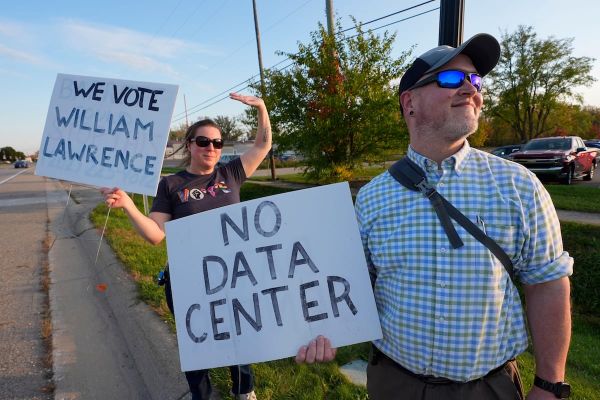
There has been strong pushback in response to data center developments over issues of water use, electricity use, and tax abatements. Most community members do not parse the differences between the hyperscalers who use the data centers, the developers building them, and the broadband providers creating the connectivity. Laying fiber without engaging the community can tie a provider to the negative associations with data centers and damage a provider’s brand.
There is also a difference between the providers that bring service through a community and those that bring service to a community - and the latter can feel negative impacts from the former's lack of community engagement. Even if a last-mile broadband provider is not associated with the data center project, communities can feel the impacts of fiber providers running through their community to serve a data center, and a bad experience can have ramifications on all fiber providers, regardless of their role in the ecosystem.
How to engage communities
If fiber providers working with hyperscalers want to deepen their engagement with community groups, they can do so by:
- Creating a coalition of the willing. Bring together groups interested in increasing broadband in a region and who are supportive of the economic development that comes from data centers. This can include government agencies; chambers of commerce; or other anchor institutions that would benefit from greater connectivity.
- Hosting town hall sessions. The best way to understand a community’s needs is to go out into a community and hear from the people themselves. By inviting residents to town hall meetings, broadband providers and hyperscalers can share their plans for development, understand community needs, and create a plan that benefits all.
- Develop surveys and other ways to source feedback. Surveys are effective ways to source specific feedback from targeted groups, either on general strategy or established plans. Surveys and other electronic feedback methods can also capture a broader range of individuals than hosting in-person town hall events.
- Invest in dedicated capacity. Providers with a large presence in a region can hire in-house or external support dedicated to community engagement. Google, for example, has invested in capacity for direct community outreach. Amazon Web Services has done the same. Broadband providers can follow the hyperscaler’s lead.
Fiber providers can work with municipalities on other connectivity goals to create a more comprehensive “community digital ecosystem.” Providers and communities can think of this ecosystem as meeting the needs of all stakeholders in a region: businesses, government, residents and data centers. The infrastructure of these ecosystems will look different in each community, but should create widespread access to ensure that all can afford, utilize, and benefit from area internet.
Lindsay Miller is a nationally respected voice in broadband strategy and digital infrastructure, based in Columbus, Ohio. With nearly 20 years of experience in the broadband and telecommunications industry, she has worked across the public and private sectors, providing policy, consulting, and legal support to help communities build equitable, future-ready networks. She is the founder of Connected Future Consultancy, LLC, which advances local broadband solutions that work for everyone.
Doug McCollough works to connect people to opportunities, remove barriers, and promote change in initiatives ranging from Smart and Connected Cities, IT Workforce Development, expanding broadband access, Connected and Autonomous Vehicles, and Blockchain. Now serving as the Executive Director of The Beta District in Central Ohio, which organizes innovation, development, and investment in Smart Mobility industry sectors, he speaks as a Subject Matter Expert and advocate on using technology for community development.
This Expert Opinion is exclusive to Broadband Breakfast.
Broadband Breakfast accepts commentary from informed observers of the broadband scene. Please send pieces to commentary@breakfast.media. The views expressed in Expert Opinion pieces do not necessarily reflect the views of Broadband Breakfast and Breakfast Media LLC.