
Monica Sanders: Data Centers Need More Than Permits, They Need Public Trust
With $64 billion in data center projects blocked or delayed, the industry is learning that permits aren't the same as public trust.

Monica Sanders

The next fight over the digital economy will not be about an app or the next Silicon Valley “unicorn.” It will be about buildings.
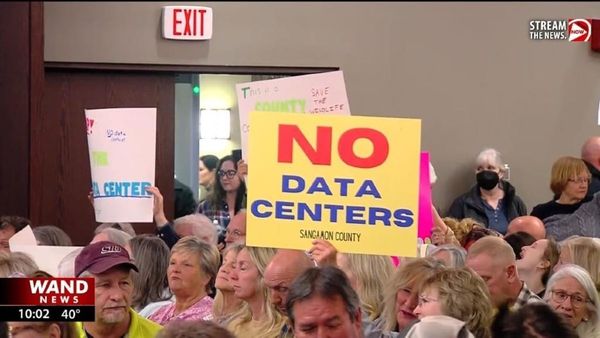
Across the United States, and in some other countries, communities are pushing back on new data center construction. These are essentially the warehouses of the modern internet. They are also increasingly controversial reminders of inequality. One recent report estimates that $64 billion in U.S. data center projects have been blocked or delayed amid local opposition. Much of that opposition is a result of conflicts around water, energy, and land – basic needs.
$64 billion is a lot of money. That number matters for more than just financial reasons. You cannot build critical infrastructure at a national scale if the public believes the process is stacked against them. Data centers power cloud services, streaming, banking, and the AI systems now being embedded across business and government. They also demand land, electricity, water, and transmission capacity. When governed properly, cities, counties, and states undergo feasibility studies, environmental impact assessments, and permitting processes to move these projects forward.
From the perspective of many residents, their first contact with this process is a notice and a hearing date about a proposal. That is then followed by a pile of technical documents and a short window to comment that many people lack the time or capacity to organize. Often those processes don’t give people the clear answers they want about power demand, water use, backup generation, noise, land use… versus what they get in return. Reports tracking local debates describe a growing wave of organized opposition across states, even in places where data centers have delivered tax revenue.
This scenario is the first in a series of asymmetrical interactions between corporations, understaffed local governments, and communities. In other words, it’s an equation for backlash.
This is where community engagement that is justice-focused becomes practical, not ideological. Digital justice means people can access, understand, and challenge the information and assumptions used to make decisions that shape their health, safety, and economic opportunity. I have argued that climate resilience increasingly depends on this kind of digital capacity in “Climate Resilience Requires Digital Justice” and in “Building a Digital Justice Framework”.
Apply that lens to data centers, and the trust problem comes into focus.
First, the impacts are real and local. A large data center can draw enormous amounts of power around the clock. It can require new substations and transmission upgrades. Many use water for cooling, sometimes in regions already facing scarcity or competing demand. Backup generators can add pollution risk. Noise and land-use change can alter daily life in surrounding neighborhoods. None of this automatically makes data centers unacceptable. It does mean the public deserves clear, comparable facts.
Second, the benefits are often oversimplified. Data centers can generate tax revenue and some well-paid jobs. But they do not always create jobs at the scale residents expect relative to the size of the facility. When officials promise “jobs,” residents should be able to see the job categories, credential requirements, and the workforce pipeline that will make those jobs attainable.
Third, enforcement is where trust often collapses. Many communities have learned a hard lesson from other forms of infrastructure. Conditions on paper are not protections in practice. Monitoring can depend on self-reporting. Community benefits can be loosely defined. Enforcement can be unclear. If residents suspect the deal is not enforceable, they assume it will not be honored.
That reality should shape how we approve major digital infrastructure. If the digital economy is expanding through physical projects that rely on public approvals and public infrastructure, then the governance standard should be higher, not lower. Public trust is not a nice extra. It is a risk management strategy.
So what should change?
Start with transparency that a normal person can use. If a project seeks public incentives or local approval, residents should be able to understand baseline facts quickly: expected electricity demand, water use, backup generation, emissions, noise, and grid upgrade needs. Disclosures should include stress scenarios such as extreme heat and multi-day outages. You cannot ask a community to accept risk without giving it intelligible information.
Next, make promises enforceable. If commitments matter, they should be measurable, time-bound, and auditable. If benefits matter, define them. If emissions controls matter, specify monitoring. If water protection matters, establish triggers and reporting. Communities should not have to rely on volunteer labor to track compliance.
Then, treat participation as a capacity issue, not a courtesy. If local decision-making is going to be technical, communities need technical support. That means funded, independent technical assistance so local governments and residents can interpret filings and evaluate tradeoffs. The alternative is a system where expertise substitutes for consent.
Finally, connect the digital buildout to a credible local opportunity. If a region is asked to host major digital infrastructure, residents should have paid training pathways tied to real roles. That includes operations, maintenance, cybersecurity, compliance, and the many support functions that modern facilities require. Create pre-apprenticeships and credential programs before the first shovel hits the ground. Set local hiring targets that can be tracked. A “jobs” claim without a funded pipeline is marketing, not economic development.
The digital economy is not weightless. It has a footprint. It will keep expanding, and the pushback will keep growing if the process feels opaque and extractive. Permits may be enough to start construction. Trust is what lets a community live with the outcome.
Monica C. Sanders is a law professor, climate resilience researcher, and founder of The Undivide Project. She serves as an adjunct professor at Georgetown University Law Center and has advised governments, nonprofits, and international organizations on disaster risk reduction, digital equity, and environmental governance. She is the author of the upcoming book "Climate & Code: Building Digital Justice in a Connected World." This Expert Opinion is exclusive to Broadband Breakfast.
Broadband Breakfast accepts commentary from informed observers of the broadband scene. Please send pieces to commentary@breakfast.media. The views expressed in Expert Opinion pieces do not necessarily reflect the views of Broadband Breakfast and Breakfast Media LLC.





Member discussion