New BEAD Rules Subject to Congressional Review, GAO Finds

Congress should have received a report before the rules were issued, the watchdog said.

New BEAD Rules Subject to Congressional Review, GAO Finds
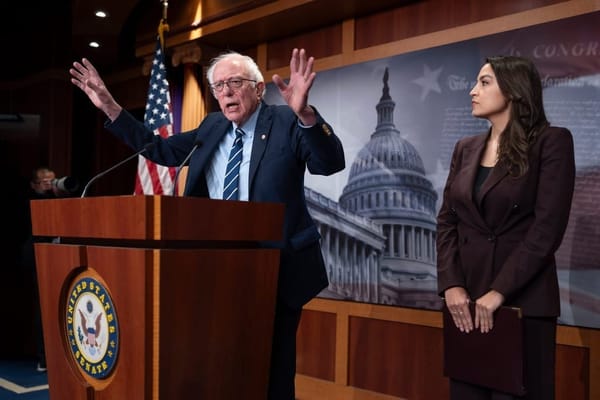
Photo of Sen. Michael Bennet, D-Colo., who asked for the GAO review, by J. Scott Applewhite/AP

WASHINGTON, Dec. 17, 2025 – The Commerce Department’s new rules for its $42.45 billion broadband grant program are subject to Congressional review, a government watchdog found.

The Congressional Review Act allows Congress to nullify agency rules if both chambers pass a resolution to that effect, and requires agencies to submit a copy of any new rule to Congress before it can take effect.

The Government Accountability Office determined in a Tuesday decision that the CRA applied to the restructuring of the Broadband Equity, Access, and Deployment program.

“The Policy Notice is a rule for purposes of CRA,” GAO wrote. “Therefore, the Policy Notice is subject to CRA's requirement that it be submitted to Congress and the Comptroller General before it can take effect.”

The office said Commerce’s National Telecommunications and Information Administration had not submitted a report before introducing the rules, and had not responded to the GAO’s multiple requests for the agency’s legal view of the issue.

It’s not clear what action the agency will take in response to the decision, or how it would affect the administration of the program. NTIA released the policy notice at issue on June 6. Since then, states have already scrapped tentative grant winners, updated their maps, and held additional bidding rounds under the new rules. 

So far 29 states and three territories have had their new grant winners approved by NTIA, and at least one state, Louisiana, has cleared a subsequent review and is able draw down its funds.

The GAO’s inquiry was spurred by a letter from Sen. Michael Bennet, D-Colo. His office did not immediately respond to a request for comment.

More Congressional oversight?

The GAO’s decision noted that in 2023, the watchdog similarly found that a Department of Transportation funding notice for a $5.5 billion program was covered by the CRA. The DOT had also not submitted a report in that case and said it didn’t think the CRA applied.

In response, Sen. Ted Cruz, R-Texas, who had asked for the review, had said he would try to use a CRA resolution to axe the notice because it included provisions related to climate change and equity. It doesn’t appear he actually introduced such a resolution.

“By failing to follow the proper process to ensure Congressional oversight, NTIA has again created additional uncertainty and potentially further delay for states,” Revati Prasad, executive director of the Benton Institute for Broadband & Society said in a statement. “The Benton Institute urges Members of Congress to review the June 6 changes as soon as they are finally submitted and continue to provide meaningful oversight of this critical broadband deployment program, which aims to finally close our access divide.”

Republicans hold a majority in the House and Senate, likely making a CRA resolution against the new BEAD rules an uphill battle. 

For its part, the GAO said that its job was done and it had no position on what happened next.

“Our decision was issued by congressional request and only addresses whether the action taken constitutes a rule for purposes of the Congressional Review Act,” Shirley Jones, a senior attorney at GAO, said in a statement. “GAO does not enforce the provisions of the CRA and therefore takes no position on next steps following the decision issued to the requester.”

NTIA did not immediately respond to a request for comment.

“So what happens now? BEAD is basically done and dusted under the rules of the June 6 policy restructuring notice,” Jade Piros de Carvalho, former director of the Kansas broadband office, wrote in a LinkedIn post.  “If [NTIA] overplayed their hand on rule changes without Congressional input, I'm not sure anything can be done about it at this point!”

The new policy notice also rescinded approval for any non-deployment spending under BEAD, saying more guidance would come later. That funding, the cash left over after states and territories fund deployment projects to each of their eligible locations, is now looking to be nearly half the entire program, about $21 billion by NTIA’s estimates.

Lawmakers, largely Democrats, have pushed the agency not to claw back that money and to allow states to spend it as they had been planning to under the Biden administration. That would include broadband adoption and workforce development efforts, among other things.

But just this week, more Republican lawmakers have been joining in. Six Republican senators signed on to a letter urging NTIA to let states keep non-deployment money. Nebraska’s Congressional delegation, two Republican senators, one of whom signed the former letter, and three Members of Congress, separately pushed the agency to allow states to use the money to support precision agriculture.

Member discussion

Popular Tags