New Bill Would Impose Shot Clocks on FCC Merger Reviews
Denials and hearing referrals would have to be voted on by commissioners.

Jake Neenan
WASHINGTON, Feb. 26, 2026 – Two Capitol Hill lawmakers want to put the Federal Communications Commission on the clock.
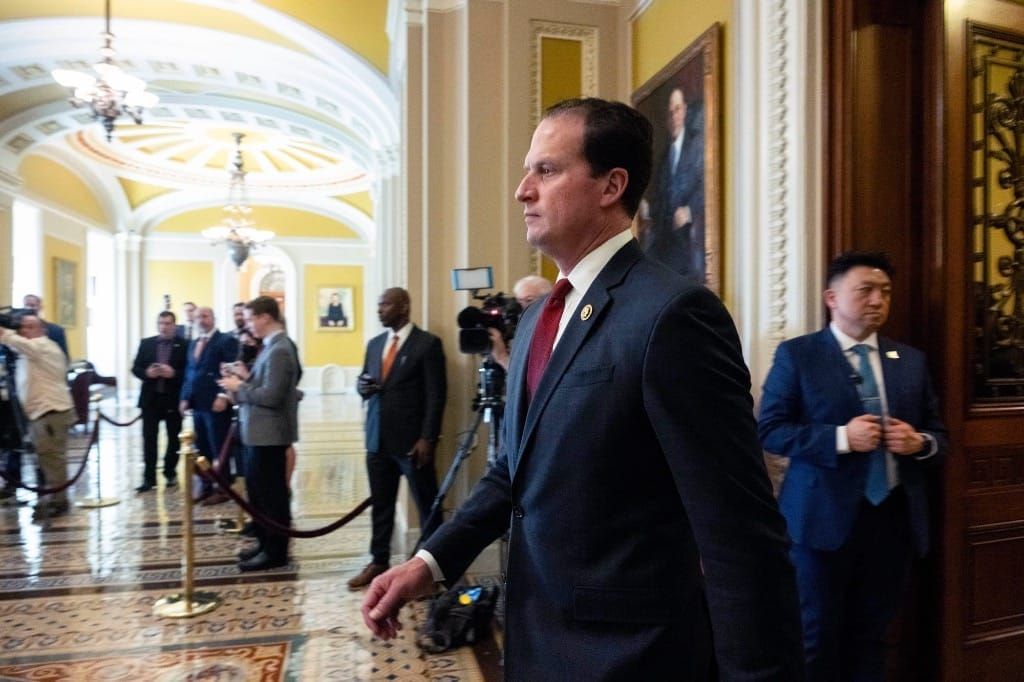
Reps. August Pfluger, R-Texas, and Josh Gottheimer, D-N.J., introduced a bill Thursday to impose shot clocks on FCC merger reviews.
The bill, called the Keep it Moving Act, would codify the FCC’s informal 180-day deadline for merger reviews, which it has at times far exceeded. If the agency missed that deadline, with some exceptions, applicants would be able to get a court to compel the agency to approve their deal. The agency would have to ask the court for permission to deny at that point.
The FCC would also have to vote at the commission level to deny any merger or designate it for hearing.
“FCC Chairman Brendan Carr and the Trump administration have been working to cut through the bureaucratic delays that have held back investment, driven up costs, and left too many communities without reliable service,” Pfluger said in a statement to Broadband Breakfast. “The Keep It Moving Act builds on that work by ensuring the FCC reviews applications based on the facts and acts within a reasonable timeframe, establishing a standard that will endure for years and administrations to come.”
A spokesperson from Pfluger’s office said the bill had support from telecom trade groups including the cable industry’s NCTA, major wireless group CTIA, and the National Association of Broadcasters.
In 2023 the FCC’s Media Bureau designated hedge fund Standard General's proposed acquisition of TEGNA for hearing by an administrative law judge. Those proceedings can take years, and Standard General ultimately pulled the deal.
The referral also came after nearly a year, exceeding the agency’s 180-day clock.
GOP lawmakers criticized the FCC’s handling of the deal, arguing the hearing referral was directed by then-FCC Chairwoman Jessica Rosenworcel in a bid to effectively scuttle the transaction. Carr, a commissioner at the time, was also critical of the hearing designation.
TEGNA is currently about to be acquired by fellow broadcasting giant Nexstar.
Although no decision has been issued yet, President Donald Trump and Carr have both expressed support for the deal. It would require the FCC to waive its broadcast station ownership cap, something there’s disagreement about the agency’s legal authority to do.
The FCC’s Nexstar-TEGNA 180-day shot clock expires June 1, 2026, Nexstar CEO Perry Sook told Wall Street analysts Thursday.
Under Pfluger and Gottheimer’s bill, if the agency designated a transaction for hearing it would have to conclude hearings and issue a final order within 15 months of its initial public notice of the application.
Those public notices would have to be issued seven days after the FCC confirms with an applicant that its filing is complete, which itself has to happen within 15 days of the initial filing.
If the agency decided to request more information about a proposed deal or to refer the transaction to Team Telecom, the 180-day timeline would also be extended.
The telecom industry has been pushing for similar shot clocks on local permitting agencies. Companies and trade groups have asked the FCC and Congress to institute time limits for those agencies to act on permit applications, after which the permits would be deemed granted if no action was taken.
Local governments have opposed the idea, arguing they lack the resources to review as quickly as companies want.

Member discussion