NTIA Highlights Maine, Hawaii LEO Deployments Ahead of BEAD
Maine has registered 500 participants for its Working Internet ASAP program.

Jake Neenan
WASHINGTON, Dec. 30, 2025 – The National Telecommunications and Information Administration is optimistic about the role of low-earth orbit satellites in its flagship broadband grant program. The agency recently highlighted two state broadband officials that said early, smaller-scale deployments in their states are going well.
David Bresnahan, senior grants and programs manager at the Maine Connectivity Authority, said the state had signed up 500 participants for its Working Internet ASAP program, an effort to get free Starlink terminals to places with no other infrastructure nearby.
“We’ve seen no noticeable decline in service as more users are in the program,” he said. Some of the 500 were existing Starlink users that were reimbursed for their installation costs.
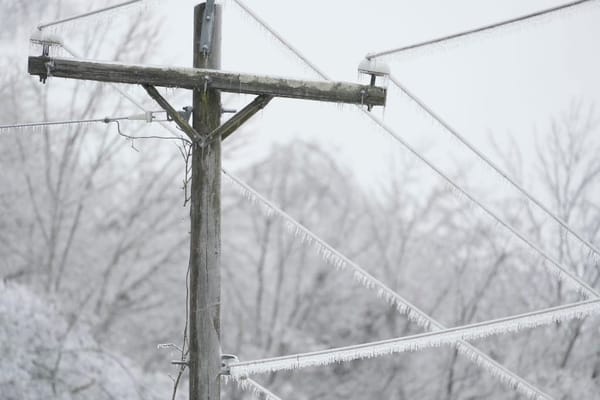
Bresnahan said on a Dec. 19 NTIA webinar that the state also hadn’t received complaints about service degrading during snow storms, but that he couldn’t be sure it wasn’t happening. He said the state was observing speed test results – provided weekly by Starlink – averaging 250 megabits download and 4 Mbps upload for WIA participants.
Launched in late 2024, the WIA program was aimed at providing a speedier installation option for the roughly 9,000 locations in the state that lacked broadband infrastructure.
Ultimately, many of those locations will be relying on SpaceX’s Starlink service for connectivity in the long term. Through Maine’s slice of the $42.45 billion Broadband Equity, Access, and Deployment program about 3,200 locations are in line for satellite service, and Bresnahan said the WIA program will continue to cover installations for 1,000 locations Maine already paid for.
LEO grants fund consumer equipment and installation costs
Under BEAD, LEO grants don’t fund specific satellite units, but cover consumer equipment and installation costs and are aimed at ensuring the grantee has the network capacity to serve locations in a given area. The grants can be paid out in equal installments over a 10-year performance period, or as the provider meets subscription milestones.
The Trump administration updated its rules for the program in June, making it much easier for satellite services like SpaceX’s Starlink and Amazon’s nascent Leo to compete for BEAD grants. The effect is that, based on preliminary results that NTIA is in the process of approving, more than 20 percent of the roughly 4 million BEAD-eligible locations will end up with the option for a satellite connection through the program.
Connectivity advocates were not excited about the change. They worried spectrum capacity issues or obstruction from trees and weather would leave thousands of households with subpar connections at a relatively high $120 per month price point.
A June study from Ookla found that median Starlink speeds in the United States were about 104 * 15 Mbps. That’s not quite BEAD’s minimum service requirement of 100 * 20 Mbps, but is on an upward trend.
SpaceX is currently petitioning the Federal Communications Commission to allow higher power in certain spectrum bands and open up others for satellite broadband, which the company is arguing will improve its service quality.
Hawaii
Jaren Tengen, a broadband coordinator at the Department of Hawaiian Homelands who also spoke on the NTIA webinar, said the state had funded about 100 Starlink users and was planning to add 117 more through a Tribal broadband grant from the agency.
He said the state installed Starlink in a mountainous area in the southern part of Maui, Hawaii’s second largest island, because it would have been more difficult to reach with a terrestrial network. Terrain like forest and mountains can interfere with LEO equipment’s view of the sky, but Tengen said the state was conducting speed tests showing download speeds of 140 Mbps at the locations.
“We were actually kind of surprised how well it would work,” he said. “The angles were just weird because it’s so mountainous out there.”
Fiber is still set to serve the majority of BEAD locations, and several state broadband offices cited the likely interference from trees and mountains when they decided not to prioritize satellite projects even under the new rules.
Hawaii’s BEAD plan, now approved by NTIA, will fund satellite service to another nearly 1,300 homes and businesses.
Tengen said the state is looking to employ the technology for first responders during disasters as Hawaii is vulnerable to tsunamis and wildfires.

Member discussion