
Participants Urge Against Appropriations for USF
Some commenters said Lifeline benefits should be upped to $30 per month.

WASHINGTON, Sept. 15, 2025 – Broadband trade groups participating in the Federal Communications Commission’s Universal Service Fund program urged lawmakers not to fund the program through Congressional appropriations.
“USF funding should not shift to an appropriations-based model. Doing so would undermine all of the programs due to the uncertainty inherent in the annual appropriations process,” the Competitive Carriers Association said in comments to a group of legislators working on modernizing the program. “For example, many carriers plan their builds and maintenance in 3-5 year cycles, so a rational carrier cannot completely shift its annual budgeting cycle to be dependent on appropriations, for it has not been consistent nor reliable.”
The roughly $9 billion-per-year broadband subsidy supports rural broadband networks, plus internet discounts for low-income households, schools and libraries and healthcare centers. It’s been funded since the 1990s by fees on interstate voice revenue, with the accounting work delegated to the Universal Service Administrative Company, which the FCC oversees.

After a lengthy legal battle, the Supreme Court ruled in June that the fund did not violate the U.S. Constitution – nonprofit Consumers’ Research had argued the funding mechanism amounted to an unchecked tax.
The telecom industry generally breathed a sigh of relief, but the contribution pool is still broadly considered in need of reform. Expenditures for the program have remained flat in recent years, but voice revenues are declining. The contribution factor, the portion of that revenue that telecoms will pay into the fund, is expected to hit 36 percent in the third quarter of 2025.
The FCC has the authority to modernize parts of the fund, but assessing fees from a new set of companies is considered to require an act of Congress.
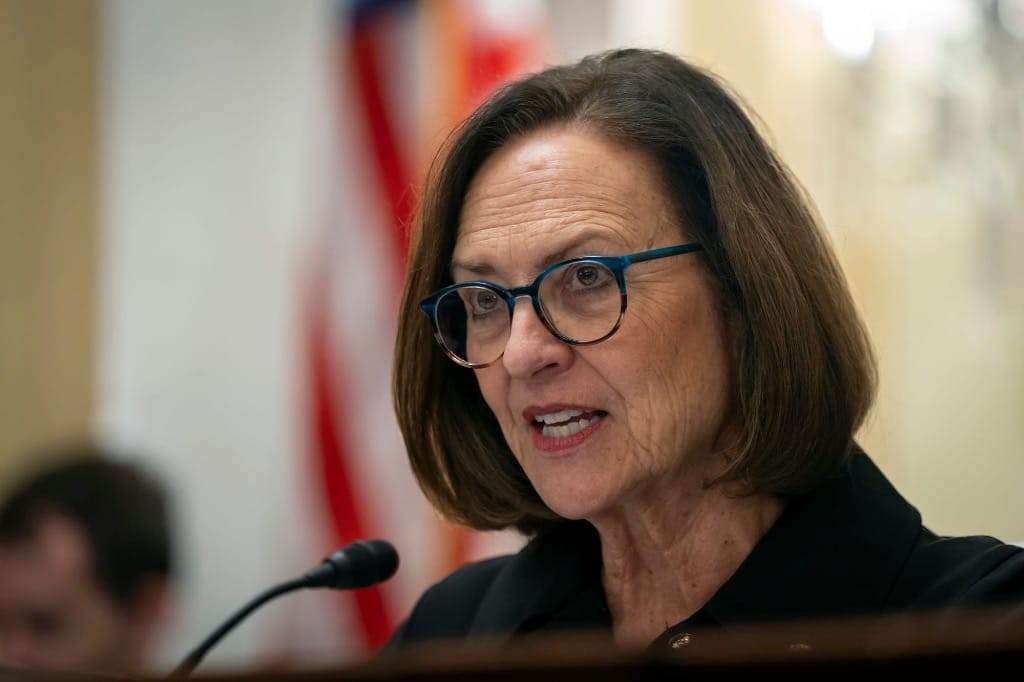
The USF working group, restarted in June before the Supreme Court decision came down, is made up of lawmakers from both parties and both chambers of Congress. Sens. Ben Ray Luján, D-N.M., and Deb Fischer, R-Neb., are taking the lead on the Senate side with Reps. Richard Hudson, R-N.C., and Doris Matsui, D-Calif., heading the House efforts.
Comments on reforms are due to the lawmakers by 11:59 pm on Monday. They won’t be public by default, unless commenters make them available.
Luján had started a group in May 2023 to work on the issue with several of the same members as the current one. The group didn’t release a draft legislative proposal, with the legal issues and turnover in Congress adding to an already complicated task.
ISPs have generally favored adding large tech companies into the contribution mix, while the software giants argued to the first working group that broadband revenues would be sufficient to fund the program.
FCC Chairman Brendan Carr has also supported contributions from big tech. Last year, former FCC Chairwoman Jessica Rosenworcel told the previous working group that collecting from big tech or broadband revenue could raise consumer prices, and floated looking at online ad companies.
Major broadband trade group USTelecom agreed with CCA that appropriations were not the way to go. USTelecom again argued that Congress should give the FCC “the authority to broaden the base to large technology companies offering services such as digital advertising services, video streaming and cloud services.”
Two free market think tanks, the Free State Foundation and the Information Technology & Innovation Foundation, argued for appropriations. Free State submitted comments to the group and ITIF released a report on USF reform on Monday afternoon.
Free State said lawmakers could make multiyear appropriations to avoid volatility and allow providers to make long-term plans without fearing sudden changes in support. The Affordable Connectivity Program, which ran out of cash amid disagreements in Congress, was also a multiyear appropriation.
If legislators preferred expanding the contribution base, the group advocated for including tech giants like Google and Amazon.
Commenters largely said USAC was properly overseen by the FCC and didn’t need to be reworked.
Lifeline, E-Rate reforms
The Schools, Healthcare, and Libraries Broadband Coalition took the chance to urge the FCC not to go through with planned cuts to its E-Rate program, a USF-funded effort that provides internet discounts for schools and libraries. FCC Chairman Brendan Carr, however, is circulating an item to reverse recent expansions that funded Wi-Fi on school buses and hotspots that library patrons could check out and use off campus.
The group also said the FCC should provide more money for cybersecurity support through E-Rate after its pilot program is concluded. Applicants to the $200 million program had requested $3.7 billion in funds.
The National Lifeline Association, which represents companies participating in the USF’s low-income support program, said the program should provide a larger discount of $30 per month, in line with the now-shuttered Affordable Connectivity Program. It said the current $9.25 wasn’t enough for the lowest income subscribers.
“Lifeline discounts should be expected to zero-out co-pays for most subscribers, as eligibility criteria target the benefit to those households most in need of assistance,” the group wrote. “Co-pays can make broadband unaffordable and unobtainable for the eligible population which is likely to be unbanked or under-banked, subject to weekly income volatility, and face challenges in making physical or electronic payments.”
ITIF agreed, saying affordability was a larger long-term barrier to broadband adoption than lack of infrastructure and that USF should be re-oriented to focus on that issue.


Member discussion