
Public Interest Groups Won’t Take Net Neutrality Case to Supreme Court Now
Groups say political climate too hostile for a high court appeal.

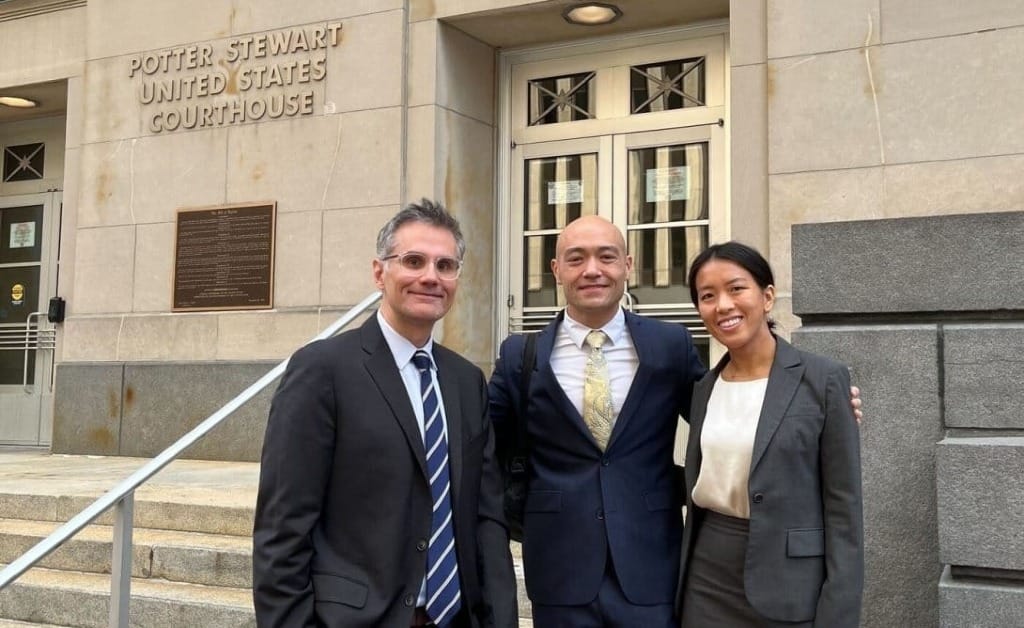
WASHINGTON, August 8, 2025 – Four leading public interest organizations announced Friday they will not seek Supreme Court review of a federal appeals court decision that struck down federal net neutrality rules.
“The Sixth Circuit decision makes bad policy as well as bad law,” Andrew Jay Schwartzman, senior counselor of the Benton Institute for Broadband & Society, said in a release. “Because it is at odds with the holdings of two other circuits, we expect to take the issue to the Supreme Court in a future case.”
The groups — Benton, Public Knowledge, Free Press, and the Open Technology Institute — had intervened before the Sixth U.S. Circuit Court of Appeals to defend the Federal Communications Commission’s 2024 Open Internet Order. They cited the current legal and political climate as a reason to focus their efforts elsewhere.

“The justices making up the current Supreme Court majority have shown hostility toward sound legal reasoning on this precise question and a host of other topics too,” said Matt Wood, vice president of policy and general counsel at Free Press.
“The makeup of this court was simply not favorable to a good outcome at either the certiorari stage or the merits stage,” he added, in a Free Press statement.
“There are other ways we can advance our fight for consumer protections and ISP accountability than petitioning the Supreme Court to review this case – and, given the current legal landscape, we believe our efforts will be more effective if focused on those alternatives,” added Raza Panjwani, senior policy counsel at New America’s Open Technology Institute.
Sixth Court overturned the FCC's net neutrality rules
The FCC’s 2024 Open Internet Order would have restored net neutrality rules, reclassifying broadband internet access as a “telecommunications service” under Title II of the 1996 Telecommunications Act.
That classification subjects broadband to stricter FCC oversight, including requirements that service be offered on just, reasonable, and nondiscriminatory terms. The order also allowed for a range of consumer protections aimed at improving public safety, broadband reliability, and internet affordability.
In May 2024, cable and phone industry groups sued, arguing the FCC’s legal definitions were wrong and claiming the rules harmed broadband investment. Public interest groups and the National Association of Regulatory Utility Commissioners stepped in, participating in oral argument in October 2024.
In January 2025, the Sixth Circuit overturned the FCC’s decision on what the groups described Friday as “unprecedented legal grounds and flawed technological arguments,” reclassifying broadband as an “information service” subject to far fewer safeguards.
The court later denied the groups’ request to rehear the case. After granting petitioners an additional 60 days to seek Supreme Court review, the deadline to file expired August 8 without action.
“We’re disappointed in the outcome of this litigation, but the fight for just and equitable broadband for all is not over,” said John Bergmayer, legal director at Public Knowledge.
“We'll keep fighting for internet affordability and openness in Congress, state legislatures and other court proceedings nationwide,” said Wood.

Member discussion