
Several More State BEAD Proposals Approved–And Where the Funds are Going
The agency also said states were not required to agree to any contractual proposals from participating ISPs.

WASHINGTON, Feb. 4, 2026 – The National Telecommunications and Information Administration has approved final spending plans from at least three more states under its $42.45 billion broadband grant program. That brings the total to 42 states and three territories.
The newly approved states are New Mexico, whose approval was posted Jan. 27, and Oregon, and Tennessee, which said Wednesday they had been approved. NTIA’s BEAD approval tracker temporarily showed Oregon, Tennessee, and Pennsylvania as having been approved Wednesday – an archive of the page is here – before reverting back to its Jan. 27 state.


Oregon and Tennessee’s broadband offices confirmed they had been notified of their approval by NTIA. Pennsylvania's office did not immediately respond to a request for comment, nor did NTIA. Broadband Breakfast will update this story with any agency response.

The NTIA-approved state plans were largely in line with their draft awards under the Broadband Equity, Access, and Deployment program, according to overviews of the documents posted by the agency. Those overviews were also later taken off the agency’s site. Oregon’s broadband office posted its approved plan on its website, which matched the overview temporarily posted by NTIA.
NTIA approval is one of the last steps necessary before states can sign grant agreements and get BEAD-funded projects underway.
Where states are spending their funding
Oregon will spend most of its allotment at $587 million, a rarity after Trump administration rule changes aimed at cutting deployment costs. The state would roughly split its 105,000 locations between fiber and LEO, with fiber getting 52 percent, plus a small amount of fixed wireless. That’s in line with its draft plan.
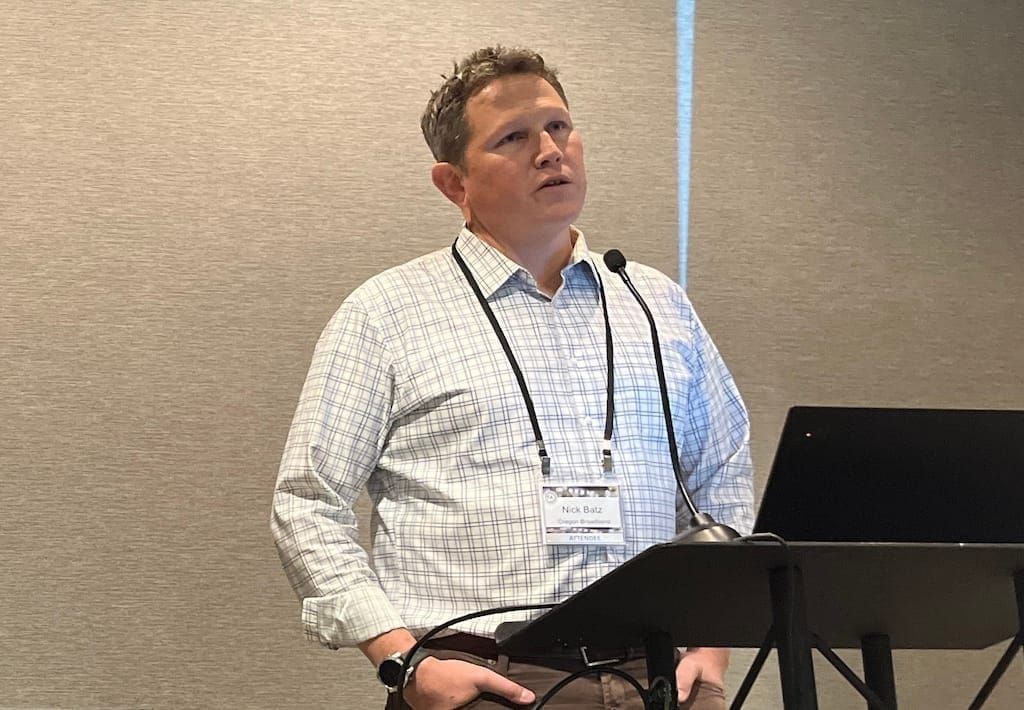
“I am incredibly proud and appreciative of the work done by our team and stakeholders over the past three years,” Nick Batz, director of the Oregon Broadband Office, said in a statement. “They have toiled countless hours behind the scenes to bring high-speed, reliable broadband internet access to Oregonians left on the wrong side of the digital divide.”
According to NTIA's overview, Tennessee was approved to spend $202 million of its $813 million allocation to connect about 44,000 locations. Of those, more than 76 percent would get fiber, with the rest being split between cable and LEO. That’s also largely unchanged from its draft plan.
Pennsylvania is looking to spend about $711 million of its $1.16 billion allocation to serve 129,000 BEAD-eligible locations, nearly 58 percent of which are in line for fiber. About 23 percent would get low-Earth orbit satellite, 14 percent would get fixed wireless, and 5 percent would get cable.
The $711 million in spending is 10 percent less than the state had planned, and a smaller proportion of Pennsylvania’s locations would get fiber, about a seven percentage point drop. There was a corresponding increase in the proportion getting LEO and cable.
An overview of New Mexico’s approved final proposal wasn’t available on NTIA’s website Wednesday afternoon, but the agency’s tracker showed the state as having been approved.
Few changes from draft plans
Other NTIA-approved plans have also changed relatively little from the public drafts posted late last year, although states have said their proportion of locations receiving fiber fell after the Trump administration removed the program’s preference for the technology. Among the 43 approved state plans so far, about two-thirds of the locations would get fiber, compared to 22 percent receiving LEO and 11 receiving fixed wireless, which is similar to the totals across the draft plans of all 50 states.
In total the NTIA expects about $21 billion of BEAD’s budget won’t be spent on deployment, but what it will be spent on is unclear. The agency rescinded approval for any non-deployment spending when it updated BEAD rules in June, and is holding a listening session on Feb. 11 to gather input on how to spend the money.
States with "onerous" laws on AI companies will be ineligible for the funding, per a December executive order. The agency is set to give more details on that next month.
After NTIA approval, states need to get clearance from the National Institute of Standards and Technology, the program’s grants manager, before signing grant agreements. States are receiving NIST clearance, including at least Louisiana, Wyoming, Arkansas, Texas, and North Dakota, but some state broadband officers have said it’s taking longer than expected.
Louisiana said it signed more BEAD grants Wednesday, its second tranche, covering about 76,000 more of the state’s 127,000 BEAD locations.
SpaceX rider
NTIA also released an updated BEAD FAQ document Wednesday with more guidance on grant agreements with ISPs.
SpaceX ruffled some feathers recently by sending state broadband offices a proposed contract rider that would exempt it from several BEAD provisions. The company, which had already bid and tentatively won more than $600 million under BEAD, said in a letter to states that the changes could be necessary to prevent participation in the program from becoming “untenable” for LEO providers like itself.
The agency had declined to comment on the rider and letter after they were published. The FAQ didn’t mention SpaceX specifically, but told states to be weary of BEAD grant recipients seeking to curtail their authority.
“The BEAD subgrant agreement may not redefine program terms, relieve either party of responsibilities established by program rules, or assign responsibilities to the potential subscriber that program rules already assigned to the Eligible Entity or BEAD subgrantee,” NTIA said in the document.
In BEAD terminology, eligible entities are states and territories and subgrantees are the participating ISPs. “Subgrant agreements are between the Eligible Entity and subgrantee, and it is the Eligible Entity’s responsibility to ensure all BEAD program requirements are incorporated into each agreement.”
The FAQ also said locations would be tested at random and testing could not be contingent on any subscriber self-installation practices or on a subscriber modifying their property, something SpaceX had proposed.
“NTIA will not require Eligible Entities to agree to any contractual proposals from a subgrantee and advises Eligible Entities to carefully consider any proposal from a subgrantee that seeks to limit the Eligible Entity’s discretionary authority,” the agency wrote. “NTIA emphasizes that no BEAD statutory requirements or other program rules may be altered by a BEAD subgrant agreement.”





Member discussion