
Some BEAD Winners Seeing Tight Fiber Market
ISPs have reported canceled or delayed orders.

Jake Neenan
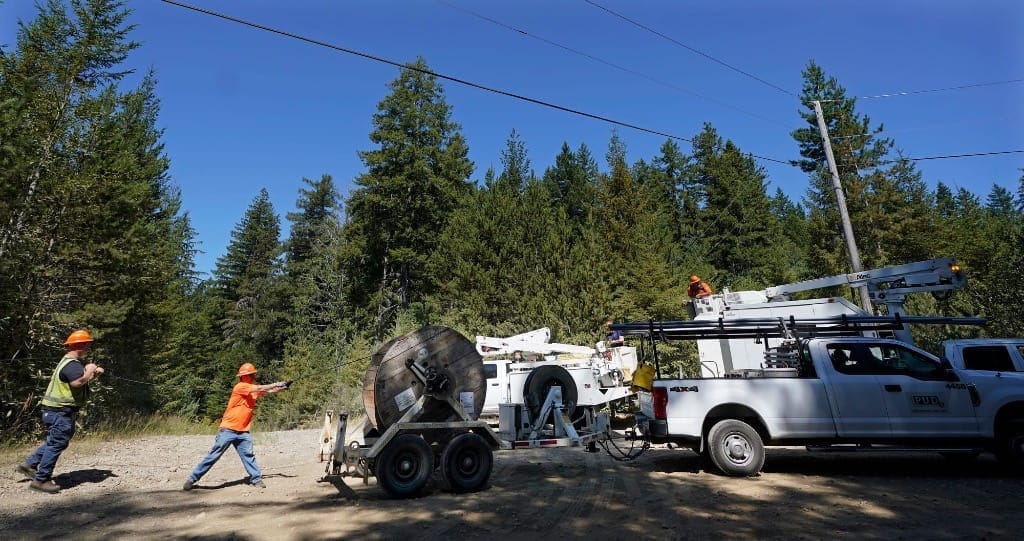
WASHINGTON, March 13, 2026 – Some rural broadband providers are struggling to secure fiber that complies with a $42.45 billion grant program’s domestic manufacturing rules.
Two ISPs participating in the Broadband Equity, Access, and Deployment program, plus a distributor, contractor, and others described orders for fiber being unexpectedly canceled in recent weeks. Most requested anonymity to avoid jeopardizing business relationships.
“We have heard concerns in recent weeks of timeframes slipping, and concerns about the ability to obtain supplies at all, as circumstances change,” said Mike Romano, executive vice president and incoming CEO of NTCA, which represents smaller rural broadband providers. “We haven’t surveyed everybody to get the exact scope of it, but it’s been a significant enough level of concern that we’ve heard about it from repeated corners.”
Demand for fiber-optic cable has been high for months as major tech companies look to rapidly build more data centers. BEAD is just getting into its deployment phase, with most state spending plans approved by the Commerce Department and state broadband offices beginning to sign grant agreements with ISPs to get money flowing.
BEAD rules require certain components of grant-funded projects to be made in America, including the fiber that’s set to connect nearly 2.5 million locations as part of the program according to state plans. It’s that Build America, Buy America (BABA)-compliant fiber that’s been an issue recently, people said.
The CFO of one company participating in BEAD said their contractor often handles procurement, and had placed an order for BABA fiber in November in anticipation of their project.
“We thought we were going to be fine,” the CFO said. “Until maybe two, three weeks ago he received notice that his order was flat out canceled, with not really much of an explanation.”
They said their company was looking at an alternative cable, as the usual loose tube would be a year-long wait, but it wasn’t clear how much the new product would cost.
An engineering director from another BEAD participant whose previous orders were also canceled said their quotes for BABA-compliant fiber were now about 40 percent higher than when the company had applied for grant funding, potentially putting pressure on the build plan.
“Grant applications were due a year ago,” they said. “We anticipated some inflation, but not 40 percent.”
Both said a waiver of the BABA rules, which would have to be requested by states, as they are managing grants under BEAD, could help alleviate the issue.
“We’re not at the point of asking for a waiver,” Romano said. “If this becomes serious enough, I would imagine that’s one option to try to mitigate any concerns. But we’re not to the point of that being something that we’re advocating or encouraging.”
He said NTCA was still working to assess the issue, and noted the group had a longstanding agreement with Corning, which manufacturers BABA-compliant fiber and components, to make some amount of fiber available to NTCA members.
Scope unclear, source ‘upstream’
The exact scope and source of the problem were difficult to pin down, Romano said.
“There’s a lot of folks who are saying that basically there appear to be issues upstream in the supply chain,” he said. “But sorting out exactly where that is a problem and why it’s a problem is something that we don’t have significant visibility into at this time.”
A supply chain executive from a distributor, which coordinates orders between ISPs and equipment manufacturers, said they were also seeing canceled orders, and that in some cases the issue was cable manufacturers’ access to BABA-compliant glass. They said the BABA-certified manufacturers for that glass are Corning, Prysmian, and OFS.
On earnings calls, Corning executives have described high demand relative to the company’s manufacturing capacity, which it’s working to expand. The company, which also makes cable in addition to supplying glass to other manufacturers, has recently struck major fiber deals with Meta and other hyperscalers.
Mike O'Day, an SVP and general manager at Corning, said in a statement that the company was “committed to prioritizing BEAD-funded projects, working collaboratively with award recipients to align delivery lead times with deployment schedules.”
“Without question, the industry is experiencing short-term supply pressures due to unprecedented demand,” he said. “But consider this: Even amid AI demand, the industry passed nearly 12 million U.S. homes with fiber last year. That's a record, and it's a remarkable accomplishment.”
He said the company estimated that peak BEAD deployments would represent less than 5 percent of the industry's total domestic fiber capacity, “well within the capabilities of Corning and other established U.S. manufacturers to manage and prioritize.”
Prysmian and OFS did not respond to requests for comment. The Fiber Broadband Association, which represents companies across the fiber supply chain, declined to comment.





Member discussion