Subcommittee Holds Hearing on Data Privacy Bill
Committee members expressed the need for a national privacy standard while also expressing concerns.

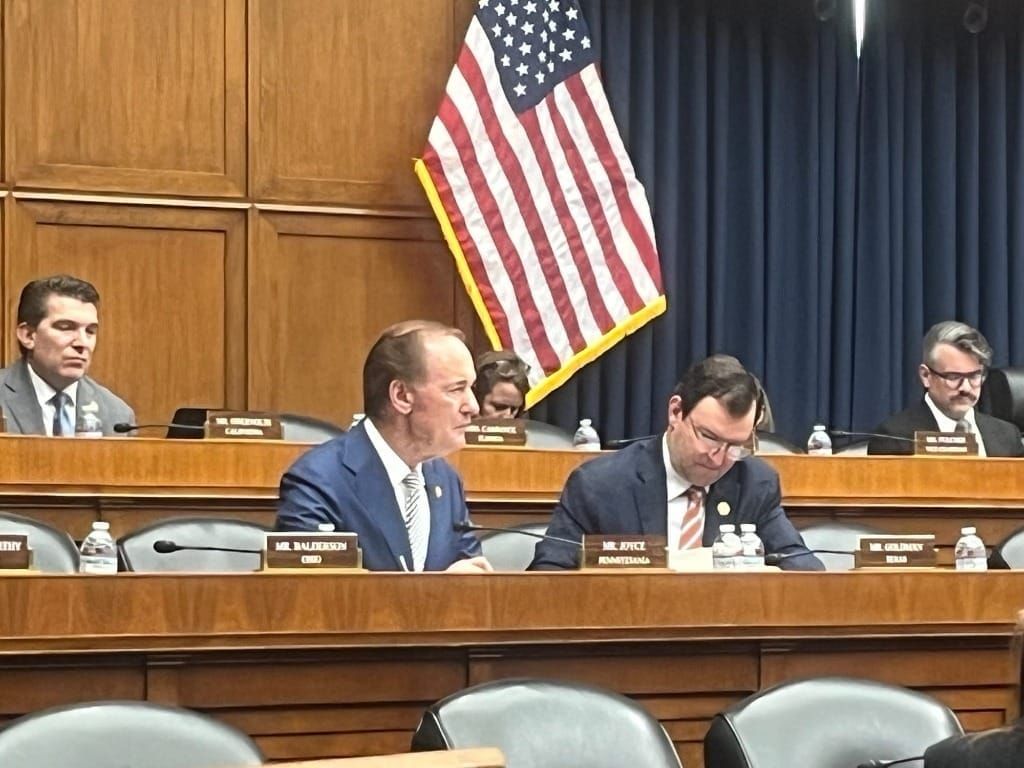
WASHINGTON, June 4, 2026 – Witnesses emphasized the importance of creating a national privacy standard during a Wednesday hearing. The House Subcommittee on Commerce, Manufacturing and Trade discussed the SECURE Data Act, a bill that would create a single federal framework for data privacy.
In his opening remarks, House Energy and Commerce Committee Chairman Rep. Brett Guthrie, R-Ky., discussed the importance of having a bill that protects consumers while allowing businesses to grow. He said, “We have to innovate and also protect individuals' data.”

Several committee members expressed their concerns for the bill because of the lack of accountability for companies, the burden it places on consumers and that the bill would erase existing state laws with stronger protections. Passing the bill could complicate ongoing lawsuits against big tech companies.
Witnesses questioned included Kate Goodloe, Managing Director of the Business Software Alliance; Ashli Watter, the President and CEO of the Kentucky Chamber of Commerce; Caitriona Fitzgerald, the Deputy and Policy Director of EPIC; and Tyler Bridegan, former Director of Privacy and Technology Enforcement to the Texas Attorney General’s Office and Partner at Womble Bond Dickinson.
Goodloe, Watter and Bridegan were in favor of the current bill because it helps support innovation paired with data privacy and helps businesses follow a single framework. Fitzgerald opposed, saying the bill’s data protections are weak and do not go far enough. She said, “Data minimization only works if it actually limits how much data companies can collect, and how they use it.”
Watter noted that the SECURE Data Act is similar to the Kentucky Consumer Data Protection Act, a bill that protects consumer data in the state. The state passed the bill with unanimous support from both Democrats and Republicans. She explained a similar bill on a federal level would end the patchwork of state privacy laws and simplify regulations for businesses.
Rep. John Joyce, R-Pa., sponsor of the SECURE Data Act, noted that the issue is a bipartisan concern that will require the U.S. House of Representatives to work in a bipartisan way. Joyce explained, “The stakes are serious for so many Americans. We need to get privacy right.”
The SECURE Data Act, if passed, will give consumers the right to know and control how companies use their personal data. The legislation draws from data privacy laws in 20 red, blue and purple states.
The bill requires companies to provide clear privacy notices and disclose when data is transferred to foreign adversaries. It also requires consumers to provide consent before processing data, with parental consent being required for minors under 16. The legislation gives consumers the right to opt out of targeted advertising, data sales, and certain automated denials.