T-Mobile Broadband Adds ‘in the Upper 400,000 Range’
The company was pleased by the FCC's plan to auction 2.7 GHz spectrum in 2028

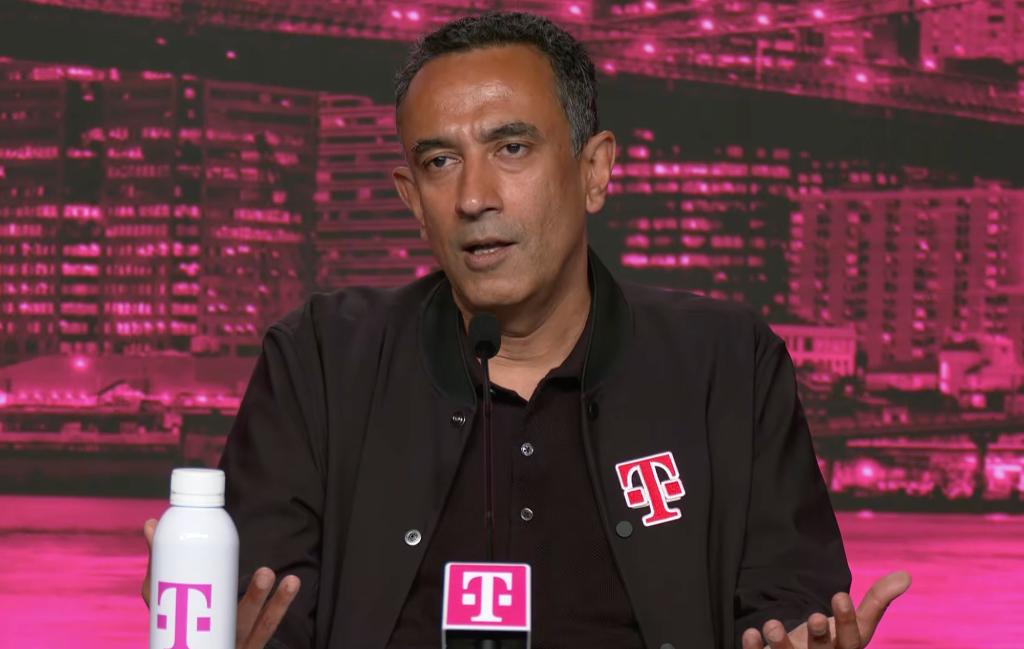
WASHINGTON, July 23, 2026 – T-Mobile added broadband subscribers “in the upper 400,000 range” in the second quarter of 2026, CFO Peter Osvaldik said Thursday.
That’s total broadband additions, and includes fiber and fixed wireless. The company has more fixed wireless subscribers, and has in recent years added more than 400,000 of them each quarter.
The carrier this year stopped reporting specific subscriber numbers, instead opting for accounts. Some accounts have multiple mobile lines, or take both fixed and mobile broadband.
The company reported 277,000 new postpaid accounts, down 13 percent from the same time last year but more than Wall Street expected. That’s below the number of new broadband subscribers, meaning some number of existing wireless subscribers opted to take fixed broadband from the company.
Osvaldik said on the carrier’s earnings call that postpaid phone churn was 0.85 percent, roughly the same as what AT&T reported yesterday.
André Almeida, the carrier’s chief marketing and broadband officer, said about 70 percent of the carrier’s fixed broadband subscribers also take a mobile line. That’s compared to 45 percent at AT&T, which has a larger fixed broadband subscriber base.
T-Mobile reported average revenue per account (ARPA) of $152.91, just shy of analyst expectations and up 2 percent year-over-year.
“While a weaker result we think would have raised concerns around rate plan migration and pricing momentum, that did not materialize,” New Street Research analyst David Barden wrote in a Thursday research note. “ARPA trends remain on track and pricing fundamentals appear to remain healthy.”
The carrier expects postpaid account net adds to be about 250,000 in the third quarter, Osvaldik said, a sequential decline. The company is moving customers on legacy plans to newer, sometimes more expensive, pricing plans, and expects that to result in more subscribers jumping ship than previous quarters.
Spectrum, fixed broadband
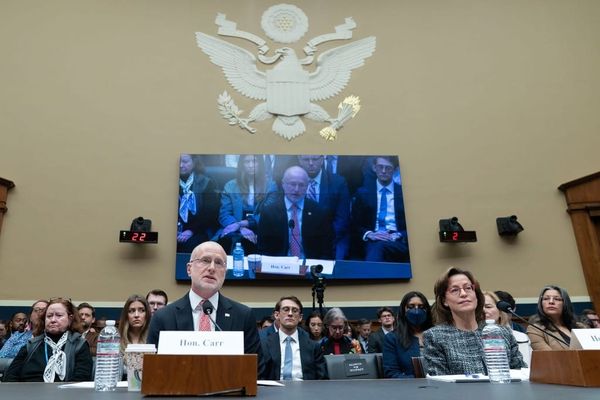
At the Federal Communications Commission’s meeting Wednesday, FCC Chairman Brendan Carr said the agency was planning to auction spectrum in the 2.7 GigaHertz (GHz) band in 2028.
T-Mobile is quite excited about that, CEO Srini Gopalan said, in addition to the upper C-band auction the agency voted to approve Wednesday.
“We believe this is a time to double down on wireless tech and really build out our network superiority, not just in 5G but in 6G,” Gopalan said.
The band is government spectrum currently being studied for repurposing by the Commerce Department. CTIA, the wireless industry group, has pushed for a 2028 auction.
The carrier has more fixed wireless subscribers than the other national wireless carriers. At the end of 2025 it reported 8.5 million, more than the 2.6 million AT&T reported Wednesday or the 6 million Verizon posted after the first quarter of 2026.
But the company wouldn’t be interested in buying spectrum specifically to provide more fallow capacity for that service, Osvaldik said.
The service takes up a majority of the usage on T-Mobile’s network, but Gopalan said the carrier’s actual capacity was “several times” the usage it’s currently seeing. The company is targeting 15 million fixed wireless subs by 2030, an existing projection that doesn’t include additional spectrum.
Still, MoffettNathanson founder Craig Moffett said given fixed wireless’s low revenue compared to the traffic it eats up, future uses like driverless cars or AI products could be a better use of bandwidth if capacity were tight.
“We struggle to see how a service consuming that much traffic – and generating that little revenue – can be as profitable as its characterization as a ‘fallow capacity’ service would suggest,” he wrote in a Thursday note.
Gopalan reiterated the company wasn’t investing in fiber joint ventures to drive convergence — bundled fixed and mobile plans — that the other big ISPs are pursuing, calling increasing passings “irrelevant.” He said the joint ventures the company does have with multiple regional ISPs were nearing 20 percent penetration.
The company had about 1 million fiber subscribers at the end of 2025.
Satellite competition
Like on AT&T and Comcast’s earnings calls, analysts asked about T-Mobile management’s views on competition from SpaceX’s fixed and mobile satellite broadband service Starlink.
T-Mobile already has an agreement with SpaceX to provide direct-to-device service on the company’s spectrum. Gopalan said the exclusivity on that deal doesn’t expire this year, as some had predicted.
He reiterated that usage is low on that partnership, confined to places like national parks. He said he expected the “vast majority” of future satellite partnerships with any of the big three carriers would go through the joint venture they’re forming.
“We should have an update for you shortly on that,” he said.
Analysts saw the joint venture, made to pool spectrum resources for direct-to-device deals, as the carriers banding together and making SpaceX’s odds of a sweeter deal with any one of them worse.
Gopalan has said the carrier would not extend a mobile virtual network operator (MVNO) deal to SpaceX, which would allow it to sell service on T-Mobile’s infrastructure. Moffett has pegged an MVNO as SpaceX’s only path to get large numbers of people on its own mobile service, which the company has big plans for.
On the fixed broadband front, Gopalan said T-Mobile’s fixed wireless was simply faster, and he wasn’t worried about the competition, even in rural areas. Osvaldik said the service’s speeds were comparable to fiber when used over Wi-Fi, which is most common, rather than ethernet.
Almeida noted two-thirds of T-Mobile’s fixed wireless subscribers are in the top 100 largest markets in the U.S., denser places where satellite broadband is less effective.