T-Mobile Touts Fixed Wireless Performance Jump
T-Mobile’s chief broadband officer cites speed and latency gains, rising customer satisfaction

Jericho Casper
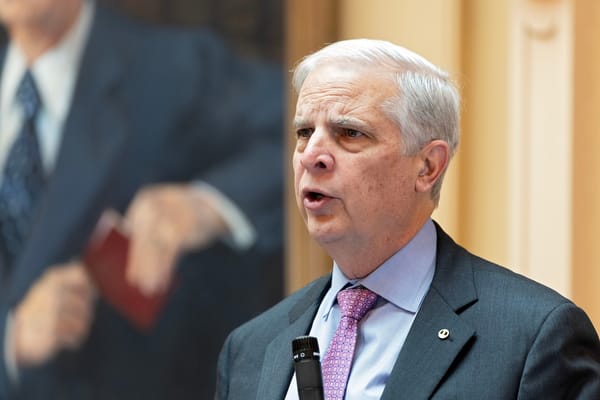
ORLANDO, Nov. 19, 2025 – Fixed wireless access has moved far beyond the rural stopgap many analysts once predicted, T-Mobile’s chief broadband officer Allan Samson said Tuesday, citing the technology now accounts for roughly 11 percent of U.S. broadband subscriptions.
Samson said T-Mobile has migrated all of its fixed wireless customers onto a true, end-to-end 5G core network, rather than routing traffic through older 4G systems, a shift he said has sharply improved speeds and lowered latency. He spoke during a keynote at the Broadband Nation Expo here.
Samson set out to dismantle what he called the industry’s “2021 theses” about the limits of fixed wireless.
Assumptions that FWA could only serve rural America, offered subpar speeds, threatened network congestion, and would only win customers on price simply haven’t played out, he said.
Average T-Mobile fixed wireless download speeds, Samson said, have risen from around 100 megabits per second (Mbps) in 2021 to averaging 229 Mbps as of Q3 2025. The company’s newest “Gen 5” router averages roughly 415 Mbps down with about 30 milliseconds latency, Samson said.
Industry wide, fixed wireless connections have climbed from zero percent of broadband subscriptions in 2021 to roughly 11 percent today, or about 14 million households and businesses. T-Mobile now accounts for near 8 million of those fixed wireless subscribers.
Samson pointed to third party benchmarks finding that fixed wireless was outperforming legacy broadband providers on customer satisfaction.
According to HarrisX, T-Mobile's fixed wireless customers are far more likely to recommend the service to others, scoring a 51.8 on HarrisX’s net promoter index, compared to about 43.8 for other fixed wireless providers and roughly 14.8 for cable broadband.
The American Customer Satisfaction Index reported similar results, giving T-Mobile a score of 78, matching the largest U.S. fiber provider and ahead of cable, satellite and DSL competitors.
T-Mobile’s own quarterly surveys also show high advocacy, with 53 percent of its fixed wireless customers reporting having recommended the service to someone in the past 90 days.
Growing signups from customers leaving fiber
Notably, the company claims about 12 percent of its fixed wireless sign-ups every quarter come from customers leaving fiber, a detail he offered as evidence that “experience and customer satisfaction” sometimes outweigh speeds.
Samson attributed much of fixed wireless’s traction to T-Mobile’s broader attempt to redefine the internet product experience. In 2021, the company removed modem fees, eliminated installation charges, offered a lifetime price guarantee, and allowed customers to set up service within minutes by picking up a self-install router in a retail store.
“You can order online in under three minutes and be online in fifteen. No hidden fees, no surprise price increases. If it doesn’t work, bring it back. You pay nothing,” he said.
Even with fixed wireless growth, Samson said the company plans to expand its fiber footprint through partnerships and joint ventures. T-Mobile expects to end the year with well over 3 million homes passed and roughly 900,000 to 1 million fiber subscribers.
Member discussion